
Reviewed · WALKING TOURS
1-Day Tour from Matsumoto: Walk the Nakasendo Trail
Walking the old Nakasendo between Tsumago-juku and Magome-juku gives you a fine taste of rural Japan in one day. You move through preserved post towns, forest paths, waterfalls, and small settlements along the former road between Edo, now Tokyo, and Kyoto.
I like the way this tour joins history to a real walk, rather than keeping you on a bus looking at scenery. I also like the dedicated vehicle and English-speaking guide, which save you the trouble of piecing together transport from Matsumoto. The catch is simple: the route covers about 8 kilometers, includes hills and stairs, and requires a moderate level of fitness.
Key points at a glance
- Walk the historic Tsumago to Magome route: The main hike takes about 8 kilometers along the old Nakasendo highway.
- Enter an old inn and horse stable: These buildings make the road’s past easier to picture than a museum display alone.
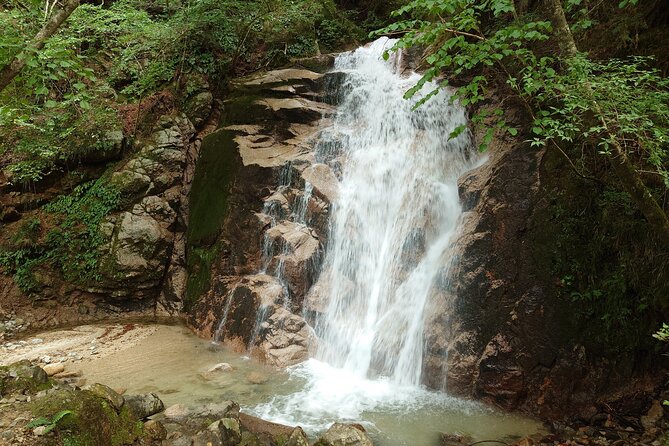
- See waterfalls, hamlets, wildlife, and wildflowers: The walk mixes cultural sights with a proper forest outing.
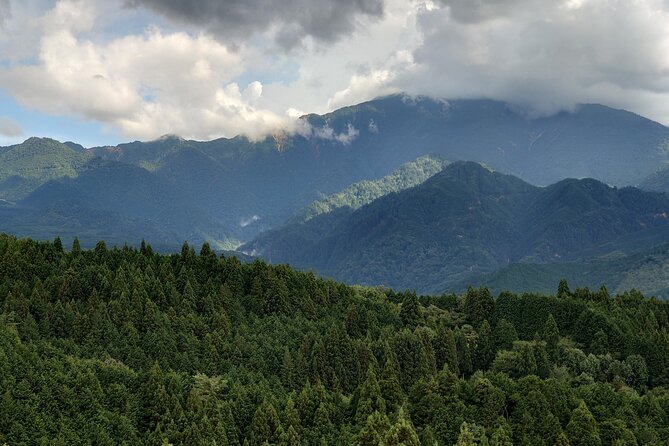
- Finish in steep Magome-juku: The post town rises on a hill and opens toward distant fields and mountains.
- Travel in a small group of up to 20 people: A dedicated tour vehicle handles transport to and from the walking route.
- Plan for lunch and sturdy legs: Lunch costs extra, and the walk includes uneven ground and stairs.
Why the Nakasendo walk feels different
The Nakasendo was one of the main routes linking Edo and Kyoto. In the days of the shogunate, people used it for official journeys, trade, work, and daily travel. The post towns along the road offered food, lodging, and services to people moving through the mountains.
That context matters once you start walking. A path through trees can seem pleasant enough today, but your guide helps you picture it as a working road used by people who had to cross the mountains on foot. You are not just looking at an old village. You are following the route that gave the village its purpose.
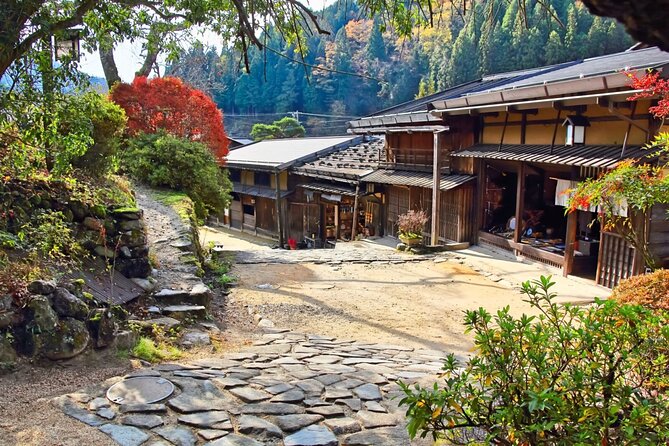
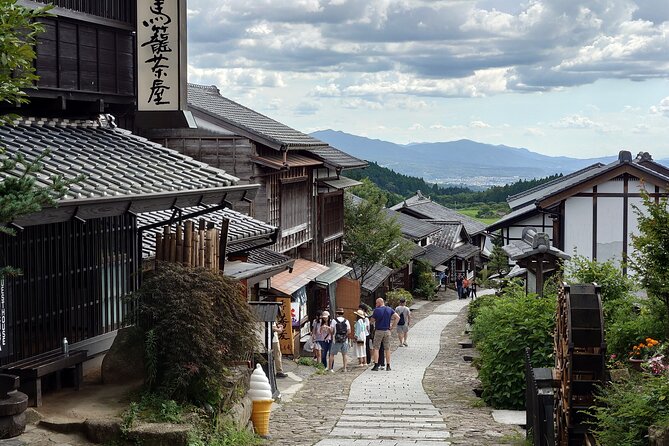
Tsumago and Magome are especially appealing because they retain the look and scale of traditional post towns. The old buildings sit close together along the road, and the walk between them gives you a sense of how the settlements were connected. The experience is less about checking off one grand sight and more about watching the character of the route change step by step.
More Day Trips in Nagano
- 1-Day Snow Monkeys, Zenko-ji Temple & Sake in Nagano
★ 5.0 · 1,020 reviews - Nagano: Snow Monkeys, Zenkoji Temple & Sake Day Trip
★ 4.9 · 833 reviews - From Tokyo: Snow Monkey 1 Day Tour with Beef Sukiyaki Lunch
★ 4.6 · 295 reviews
Starting in Tsumago-juku beside the old post office
The tour begins when you leave the vehicle near the Tsumago Post Office and start exploring Tsumago-juku with your guide. Allow about an hour here. Tsumago was once a station on the Nakasendo, and its buildings help explain how the road worked.
Your guide will discuss who used the route, where people were headed, and how travelers lived during the journey. That introduction is useful because it gives the later hike a human scale. You can look at the town not only as a pretty historic area, but as a place built to serve people on the move.
You also get the chance to enter an old inn and a horse stable. These are valuable stops because they show the practical side of travel. An inn tells you where people rested, while the stable points to the role of horses in moving people and goods. The tour does not leave you to guess what the buildings were for.
Tsumago is a strong opening because it is easy to explore on foot, but do not expect a long free period here. The stop is scheduled for about an hour, and the main focus is the guided introduction before the hike. If you prefer to spend a full morning browsing shops and taking photographs, this schedule may feel brisk.
The 8-kilometer trail through forests and hamlets
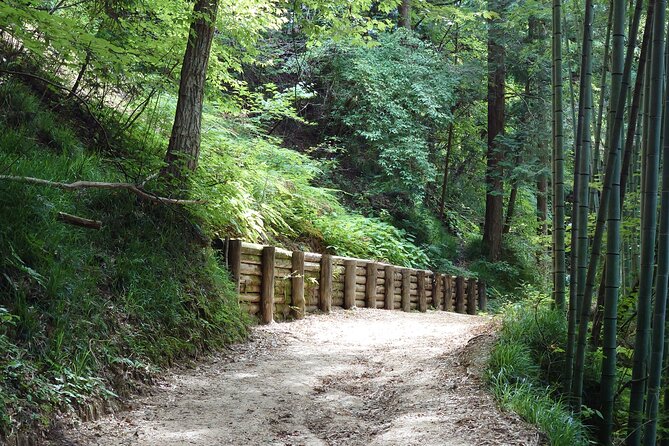
After Tsumago, the main walk begins. The route takes roughly three hours and covers around 8 kilometers before you reach Magome. The trail passes through forest, quiet hamlets, and sections of the old highway. You may also see waterfalls, wildflowers, and signs of wildlife along the way.
This is the part that gives the tour its value. You get outdoor time without giving up the cultural setting. The trail is not simply a nature walk, and the post towns are not simply open-air sets. The two parts make more sense together.
You should expect a real hike, not a flat stroll between two cafés. A previous participant singled out the stairs and advised bringing fit legs. That is good advice. The information for the tour calls for moderate physical fitness, and that requirement should be taken seriously if you are unused to hills or long walks.
Wear shoes suited to uneven paths and bring water. The supplied details do not specify a lunch stop, and lunch is not included, so plan your food before setting out or use the opportunities available during the day. Do not count on a restaurant meal being part of the schedule.
The guide’s role matters most here. A good guide can point out how the route functioned, explain the settlements you pass, and keep the walk connected to the people who once used the road. Kevin is named in the experience information as a guide with a strong interest in hiking in Japan and the history of the trail. Guide assignments can vary, but the English-speaking guide is included in the price.
The walking time is listed as about three hours, while the full experience lasts roughly 8 hours and 55 minutes. That difference is important. You are also allowing time for transport from Matsumoto, the opening in Tsumago, the finish in Magome, and the ride back. This is a full-day outing, not a quick half-day escape.
What makes the waterfalls and small settlements worthwhile
The Nakasendo route works because it keeps changing. One stretch may be shaded by trees, while another opens toward a hamlet or mountain view. The waterfalls add movement and sound to a walk that could otherwise feel quiet and repetitive.
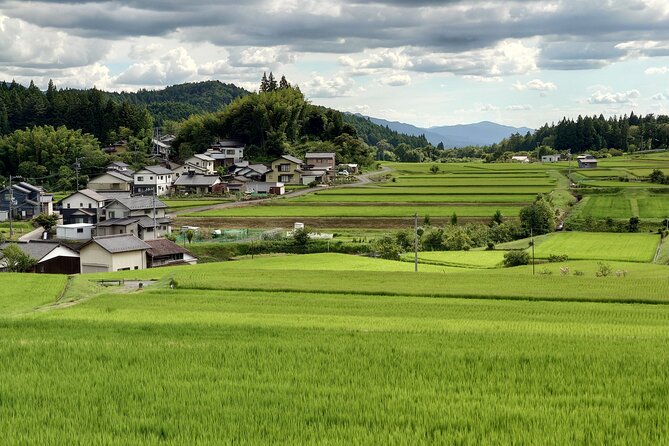
The small settlements are just as important. They show that the route was not an isolated path through the mountains. People lived along it, maintained it, and depended on those passing through. As you walk, keep an eye on the transition from preserved town streets to rural lanes and forest sections.
Wildlife and wildflowers are listed as things to watch for, but they are not guaranteed attractions. Treat them as pleasant possibilities rather than the main reason to book. The strongest reason to come is the combination of a historic road and a sustained walk through the countryside.
Weather can change the feel of the outing. Rain may make a wooded trail less comfortable, and the tour requires good weather to operate. If poor weather forces cancellation, you can choose another date or receive a full refund. That policy is useful, but it also tells you to keep a little flexibility in your Japan schedule.
More Walking Tours in Nagano
- Food & Cultural Walking Tour around Zenkoji temple in Nagano
★ 5.0 · 58 reviews - Matsumoto Castle Town Walking Tour
★ 4.8 · 58 reviews - Matsumoto Discovery – Half Day Walking Tour
★ 5.0 · 43 reviews - From Matsumoto/Nagano: Nakasendo Trail Walking Tour
★ 4.9 · 33 reviews
Arriving in steep Magome-juku
The trail ends at Magome-juku, the second post town of the day. Magome is more vertical than Tsumago and sits on a steep hillside. You finish by descending toward the lower part of the village, with views across fields and toward distant mountains.
After the walk, you have about 30 minutes in Magome. That is enough for a short look around and some shopping, but it is not a long exploration period. The steep streets are part of Magome’s appeal, although they may feel demanding after 8 kilometers on foot.
The contrast between the two towns gives the day a satisfying shape. Tsumago introduces the old road at a gentler pace. The trail then carries you through the countryside. Magome provides a more vertical finish, with wider views and a final chance to browse before boarding the vehicle.
Keep your expectations realistic about shopping time. This is not designed as a dedicated craft or souvenir tour. The stop is a brief reward after the walk, not the centerpiece of the day.
Transport from Matsumoto and group size
Transport to and from the stops is provided in a dedicated tour vehicle, and pickup is offered. This is one of the tour’s practical strengths. Reaching both Tsumago and Magome independently can require careful planning, particularly when you are trying to coordinate a one-way walk with public transport.
The vehicle also means you do not need to return along the trail. You walk from one post town to the other, then ride back rather than retracing your steps. That saves time and keeps the day focused on the best section of the route.
The maximum group size is 20 people. That is not a private outing, but it is more manageable than a large coach group. Group size can affect the pace, especially on narrow sections or when the guide stops to explain a feature. If you want complete control over breaks and walking speed, a private arrangement may suit you better. If you value transport and guiding without paying for a private vehicle, this format offers a useful middle ground.
A mobile ticket is provided, and confirmation is received when you book. The tour is also near public transportation, though the dedicated vehicle remains the main convenience for this full-day plan.
The price and what you get for $211.37
At $211.37 per person, this is not a cheap walking route. You are paying for a full day, a dedicated vehicle, an English-speaking guide, and the convenience of connecting Matsumoto with two historic post towns in one outing.
The price makes more sense if you value time and simplicity. You avoid sorting out separate transport legs, arranging a one-way trail plan, and finding your own historical context at each stop. For a visitor with limited time in the Nagano area, those savings can be worth a fair amount.
Lunch is not included, so add that cost to your budget. The tour also does not turn the walk into a luxury experience. Its value comes from access, guiding, and transport rather than included meals or a long list of extras.
I would compare the price with the cost and effort of arranging the same day independently. If you already understand the local transport system, speak enough Japanese to manage changes, and enjoy planning rural routes, you may prefer to go on your own. If you want someone else to handle the vehicle and explain the old road while you walk, the fee is easier to justify.
Who should book this day out?
This tour suits you if you want a physical activity with a strong cultural purpose. It is a good choice for walkers who enjoy old roads, traditional buildings, forests, and mountain scenery more than major-city sightseeing.
It also suits first-time visitors to the Nakasendo area who would rather not manage a one-way hike alone. The guide gives you background at the start and helps connect the separate sights into one story.
You should think twice if you have limited mobility, dislike stairs, or find an 8-kilometer walk difficult. Service animals are allowed, but the physical demands of the route still matter. The experience requires moderate fitness, and the terrain may be tiring even if you regularly walk around cities.
Families and mixed-age groups need to judge their own pace carefully. The tour does not state a child-specific schedule or a shorter route. Since the day lasts almost nine hours, everyone in your group should be comfortable with a full day away from Matsumoto.
Useful planning advice before you go
Wear comfortable walking shoes with good grip. The route includes stairs and uneven sections, so city shoes with smooth soles are not the best choice.
Bring a light layer and protection from the weather. The tour operates only in suitable weather, but conditions can still shift during a mountain walk. A small day bag is easier to manage than a large suitcase.
Plan lunch in advance. Since food is not included, ask about the day’s practical break points when you meet the guide. You will enjoy the walk more if you are not saving all your energy for a meal at the very end.
Give yourself a little flexibility after the tour. The full duration is approximate, and road travel can affect the return time. With pickup, a long hike, and nearly nine hours in total, this is best treated as your main activity for the day.
The cancellation terms are friendly if your plans change early: cancel at least 24 hours before the start time for a full refund. Changes made inside that window are not accepted, and poor-weather cancellations offer either another date or a full refund.
Should you book the Nakasendo tour?
Book it if you want to walk through old Japan rather than simply photograph it. The Tsumago to Magome route offers a clear mix of preserved post towns, working-road history, forest walking, waterfalls, and mountain views. The English guide and dedicated vehicle remove much of the planning work.
Skip it if you want a relaxed sightseeing day with little physical effort, a substantial included meal, or lots of free time in each village. The 8-kilometer walk, stairs, and long day are central to the experience.
For fit walkers with one day available from Matsumoto, this is a well-focused way to see the Nakasendo. Bring sturdy shoes, plan for lunch, and expect the trail itself, not shopping or comfort, to be the main event.
FAQ
How long does the Nakasendo tour last?
The experience lasts approximately 8 hours and 55 minutes. Travel time is included in the total duration.
How far is the main walk?
The trail from Tsumago-juku to Magome-juku is about 8 kilometers.
Is lunch included?
No. Lunch is not included in the tour price.
What level of fitness do I need?
You should have a moderate level of physical fitness. The route includes stairs and a substantial walk through forest and mountain terrain.
Is transport provided?
Yes. Transport to and from all tour locations is provided in a dedicated tour vehicle, and pickup is offered.
Is the tour conducted in English?
Yes. An English-speaking guide is included.
How large can the group be?
The tour has a maximum of 20 participants.
What happens if bad weather cancels the tour?
You will be offered a different date or a full refund if the experience is canceled because of poor weather.
Just added around Nagano
- Wild Bird Sanctuary Forest Guided Tour in Nagano★ 5.0 · 17 reviews
- Tokyo: Nagano Snow Monkeys and Zenkoji Tour with Temples★ 4.9 · 19 reviews
- Nagano/Tokyo: Snow Monkey and Zenkoji Temple Private Tour★ 4.8 · 54 reviews
- Nagano: 1-Day Snow Monkey & Cherry Blossom Tour in Spring★ 4.8 · 51 reviews
- Nagano: Tateyama-Kurobe Guided Walking Tour★ 5.0 · 16 reviews
- Nagano/Tokyo: Snow Monkey Private Day Tour At Lowest Rate★ 4.7 · 44 reviews
- Nagano: Snow Monkeys & Togakushi Shrine Two-Spot in-One Day★ 4.9 · 35 reviews
- Nagano Sake Tasting Walking Tour★ 5.0 · 17 reviews
Walking Tours, compared.
Kyoto Geisha Walking Tour: Gion District & Hidden Gems
Our verdict →
Imperial Palace and Shogun Historical Walking Tour
Our verdict →
Shinjuku Local Bar and Izakaya Guided Walking Tour
Our verdict →


Nishiki Market Brunch Walking Tour (7 Tastings + Brunch)
Our verdict →
Kyoto Arashiyama Walking Tour: Bamboo, Monkeys, Gardens & Secrets
Our verdict →
Tokyo Castle & Imperial PalaceーShogun Walking Tour
Our verdict →Browse the lists this tour appears in