
Reviewed · TEMPLES & SHRINES
Fukuoka’s Sacred Path: Temples, History & Culture
Fukuoka’s sacred path links Japan’s first Zen temple, a 10.8-meter wooden Buddha, two important shrines, and a modern shopping complex in one compact walk. I like that the route shows Hakata as it really is: old religious sites sit close to shopping arcades, train stations, and city streets. I also like the private format, which gives you room to ask questions and set a comfortable pace.
The main caution is simple: this is a walking tour, not a quick bus outing. You cover several sites on foot, and the full route includes enough walking to make good shoes essential. At $77 per person, the price makes the most sense if you want interpretation, cultural context, and personal guidance rather than just a checklist of temples.
Key points to know before booking
- Japan’s first Zen temple: Shōfukuji offers a calm opening stop and an introduction to Zen Buddhism.
- A 10.8-meter wooden Buddha: Tōchōji provides the tour’s biggest visual moment, along with an unusual underground passage.
- Fukuoka festival culture: Kushida Shrine connects the city to the famous Hakata Gion Yamakasa festival.
- Old and new in one afternoon: Canal City’s fountain show gives the route a modern change of pace.
- A private three-hour walk: The format suits people who want conversation, questions, and a flexible pace.
- English and German guidance: Guides have included Andy, Paula, and Arianna, with conversational Japanese also available.
Starting beside Hakata Station
The meeting point is outside the Casetify shop near Hakata Station’s West Exit, just outside the station entrance. This is a practical place to begin because Hakata Station is one of Fukuoka’s main transport hubs, and you can reach the meeting point before heading into the older part of the city.
From there, you walk for about 10 minutes to Shōfukuji. That first stretch helps you shift from the bright, commercial station area into the quieter temple district. It is not a long transfer, but comfortable shoes matter from the start. The tour does not include transportation costs, food, or drinks, so plan to arrive ready to walk.
The experience returns to the same Casetify shop after about three hours. That makes the tour easy to fit around a train arrival, a later meal, or an evening in Hakata, provided you allow a little extra time around the scheduled start and finish.
More Temple & Shrine Tours in Fukuoka:
- Kyoto: Fushimi Inari, Kinkakuji, Bamboo Grove 1 Day Bus Tour
★ 4.8 · 4,316 reviews - Kyoto: Tea Ceremony in a Traditional Tea House in Kiyomizu
★ 4.9 · 3,519 reviews - Kyoto: Tea Ceremony Ju-An at Jotokuji Temple
★ 4.9 · 3,207 reviews
Shōfukuji: Zen begins with quiet
Shōfukuji is the first major stop, with about 20 minutes for a guided visit. Founded in 1195 by the monk Eisai, it is recognized as Japan’s first Zen temple. Eisai introduced Zen Buddhism from China, giving the site a major place in Japanese religious history.
The appeal here is not a single huge object. It is the atmosphere. Traditional wooden buildings and peaceful grounds offer a sharp contrast to the city only a few minutes away. Your guide explains Zen ideas, meditation, and the temple’s place in Fukuoka’s past, so you get more than a quick look at wooden gates and roofs.
Twenty minutes is enough for an introduction and a measured walk through the grounds, but it is not a long temple visit. If you like to spend an hour photographing details or sitting quietly, you may wish the stop were longer. The benefit is that the tour keeps moving and gives you four distinct religious sites rather than using most of the afternoon in one place.
I especially like Shōfukuji as the opening stop because it sets the tone. You begin with Buddhist ideas and a quiet setting before moving into larger, more dramatic sights. It also gives your guide a chance to explain the difference between Buddhism and Shinto, which becomes useful at the later shrines.
Tōchōji and the giant wooden Buddha
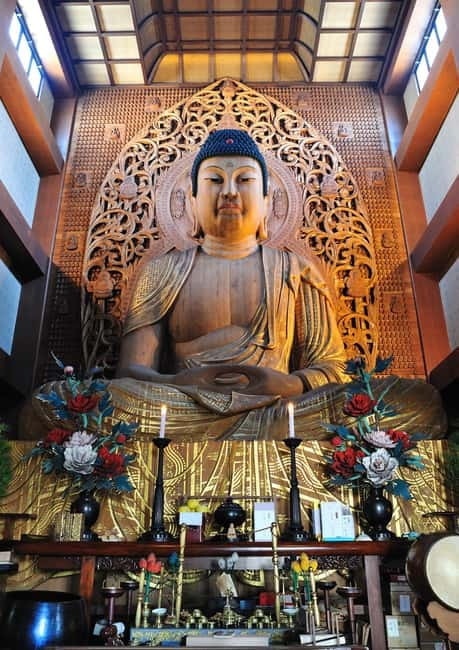
A five-minute walk brings you to Tōchōji Temple, where the guided visit lasts about 30 minutes. This is likely the tour’s most powerful visual stop: the temple contains Japan’s largest wooden Buddha, a Great Buddha measuring 10.8 meters.
That scale is hard to grasp from a description alone. The statue gives the visit a clear focal point, while the surrounding temple provides context about Buddhist practice in Fukuoka. Your guide can help you understand what you are seeing instead of leaving you to guess at the meaning of the figure, the hall, and the rituals.
Tōchōji also has an underground passage symbolizing a journey through the afterlife. This makes the stop more than a statue viewing. The passage offers a different kind of experience, one that is less about architecture and more about symbolism and personal reflection.
The 30-minute allocation is useful here. It allows time for the Great Buddha, the underground passage, and an explanation of the temple’s role without dragging the visit into a long formal lecture. Still, the passage may not suit everyone. If enclosed or dark spaces make you uncomfortable, ask your guide what to expect before entering.
This is one place where a guide adds clear value. A large Buddha is impressive on its own, but the meaning behind the underground route and the connection between Buddhist practice and local life are harder to pick up without explanation.
Kushida Shrine and Hakata’s festival spirit
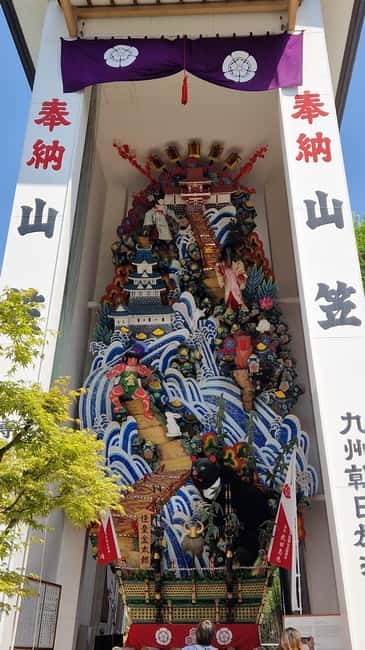
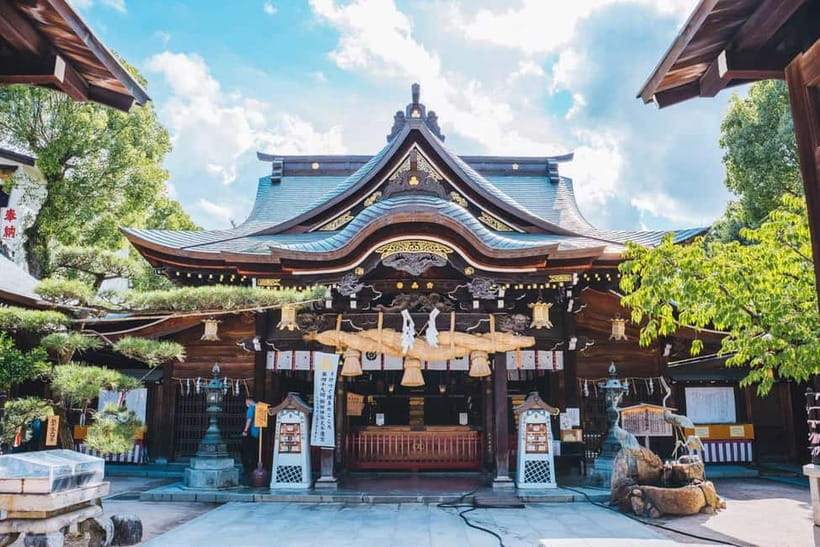
After another 15-minute walk, you reach Kushida Shrine. The planned visit lasts around 30 minutes, with time for a guided look and general sightseeing.
Kushida is closely tied to Fukuoka’s identity and is best known for the Hakata Gion Yamakasa festival, held each summer. The shrine displays a towering Yamakasa float, giving you a chance to see an object linked to one of the city’s major traditions even if your visit does not fall during the festival itself.
This stop shifts the focus from Buddhism to Shinto. You learn about shrine etiquette, local customs, and the way religious traditions remain part of everyday life. The tour is especially helpful here because many first-time visitors know the basic steps of shrine worship but are less sure about why they do them or how Shinto differs from Buddhist practice.
The visit also shows how faith and civic life overlap in Hakata. Kushida is not presented as an isolated monument. It connects to festivals, neighborhood identity, and the seasonal rhythm of the city.
A possible limitation is timing. Thirty minutes gives you a solid orientation, but it may not leave much room for a slow photographic study of every building or display. The value comes from the explanation and the link to the festival rather than from lingering in one corner.
More Historical Tours in Fukuoka:
- Fukuoka Essentials: History, Culture, & Charms
★ 4.8 · 39 reviews - Hakata Old Town Walking Tour Tracing the True History of Fukuoka
★ 5.0 · 17 reviews - World Heritage Shirakawa-go and Experience Tours from Kanazawa
★ 5.0 · 4,049 reviews - Tokyo: Imperial Palace and Shogun Historical Walking Tour
★ 5.0 · 2,251 reviews
Canal City adds a modern city break
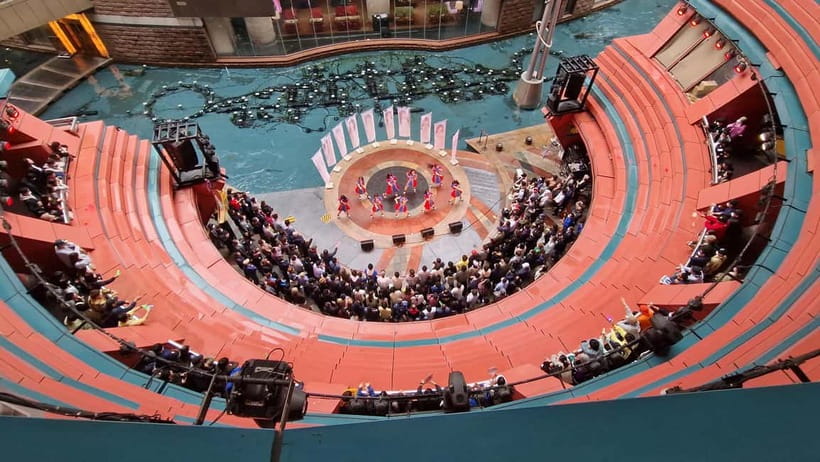
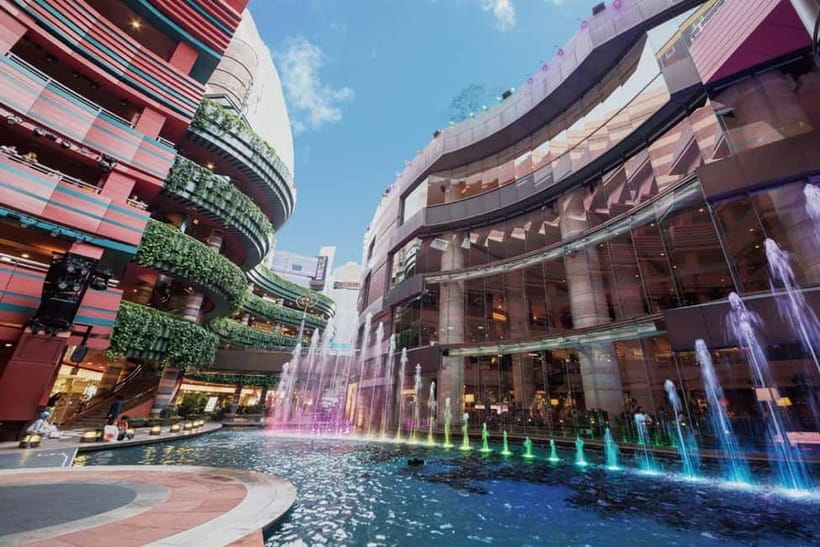
From Kushida, the route continues to Canal City Hakata for about 15 minutes of sightseeing. This is the tour’s clearest change of mood. After temples, wooden buildings, shrine customs, and festival history, you arrive at a large shopping and entertainment complex with a water show.
The fountain performance combines lights, music, and moving water. It gives you a bright, modern interlude and helps explain how Fukuoka has grown beyond its historic core. You are not spending a long time shopping, so the stop works best as a visual break rather than a full retail visit.
If you want to browse stores, eat, or return for more of the entertainment complex later, you will need to do that outside the three-hour tour. Fifteen minutes is enough to see the fountain show when the timing works, but not enough for serious shopping.
I like this part because it keeps the afternoon from feeling like a string of similar sacred sites. The contrast is useful. You see that Fukuoka’s old traditions do not exist apart from modern city life. They share the same streets, and this route makes that relationship easy to notice.
Sumiyoshi Shrine closes the route
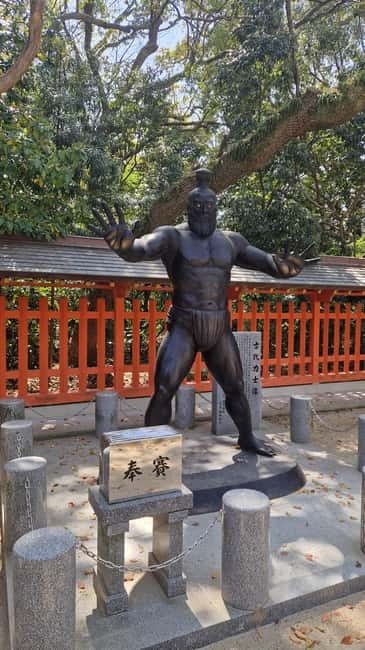
A five-minute walk from Canal City brings you to Sumiyoshi Shrine, the final main stop. The guided visit lasts about 25 minutes, followed by a 15-minute walk back to the starting point.
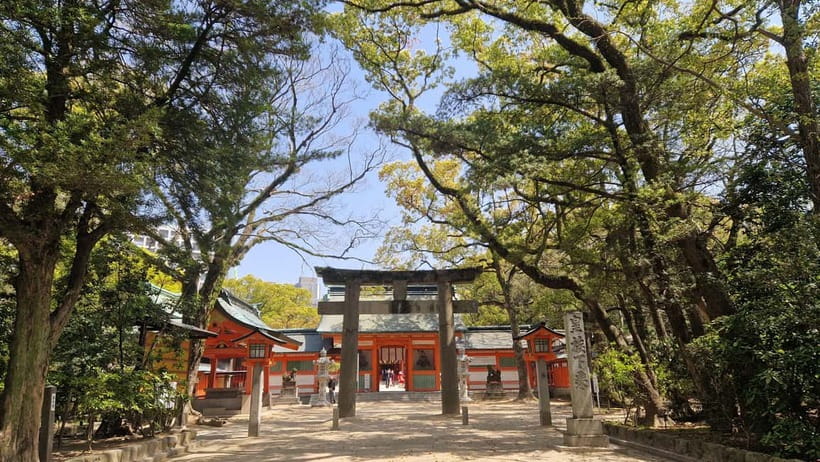
Sumiyoshi Shrine is dedicated to the gods of safe travel and protection. That role gives the ending a natural sense of purpose, especially for people continuing around Japan after Fukuoka. Its vermilion torii gates and calmer setting provide a suitable place to pause after the busier middle section of the walk.
The shrine is also one of Japan’s oldest Sumiyoshi shrines, adding weight to the final stop. Your guide explains its religious role and local importance, while the setting gives you time to think back over the differences between the temples and shrines visited earlier.
Ending here is more satisfying than finishing at a shopping complex. Canal City supplies the modern contrast, but Sumiyoshi brings the route back to protection, tradition, and travel. You then walk back to the Hakata Station area, completing a loop of about three hours.
What the guides add to the walk
This tour is offered in English and German. Conversational Japanese is also available according to the activity details. Guides connected with the experience include Andy, Paula, and Arianna, so the exact guide matters to the tone of your afternoon.
Andy has been singled out for his patience, conversation, and ability to explain local culture at a relaxed pace. He has also been praised for giving useful suggestions for food and markets after the tour. Paula has led visits focused on local shrines and temples, while Arianna has provided private tours around Hakata.
The strongest feature of this format is the chance to ask questions as they occur. You can ask about shrine etiquette, Buddhist and Shinto practice, festivals, or daily life in Fukuoka instead of saving every question for the end.
The tour is listed as a private group experience. That matters if you prefer a personal conversation to a large crowd, or if you want the guide to adjust the pace. It does not mean every stop will be lengthy. The route still follows a three-hour structure, with set walking sections and planned visits.
Is $77 good value?

At $77 per person, this is not the cheapest way to see these locations. Several sites are close enough to visit independently, and you could walk between them with a map. The question is what you want from the afternoon.
I think the price is reasonable if you value three things: a private guide, clear cultural explanations, and an organized route that joins religious sites with modern Fukuoka. The tour covers five distinct places and includes local context about festivals, Buddhism, Shinto, etiquette, and customs.
The value is weaker if you mainly want free time for photos, shopping, or long temple visits. The schedule moves at a steady pace, and Canal City receives only a short sightseeing stop. You also pay separately for any food, drinks, or souvenirs.
The personal guidance is the main reason to book rather than walk the route alone. A map can show you where Tōchōji and Kushida Shrine are. It will not explain the meaning of the underground passage, the role of the Yamakasa float, or how Buddhism and Shinto are practiced side by side in Japan.
Walking, timing, and what to bring
The route lasts three hours and includes walking between every main stop. The listed walking sections total about 50 minutes, before counting movement around temple and shrine grounds. That makes the description of a leisurely afternoon fair, but it is still a real walking tour.
Wear comfortable shoes. This is the most important practical tip. Check the weather before you go, since much of the experience takes place outdoors, and bring a camera for architecture, gates, statues, and the fountain show.
Bring money for souvenirs if you want to shop, and budget separately for meals and drinks. There is no transportation included, though the route begins and ends near Hakata Station.
Free cancellation is available up to 24 hours before the tour for a full refund. You can also reserve now and pay later, which helps if your Fukuoka plans are still changing. Starting times vary, so check availability when booking.
Who should book this Fukuoka walk?
I would recommend it to first-time visitors who want a clear introduction to Hakata without spending a full day on a single museum or temple. It also suits couples, families, and private groups who prefer to stop and ask questions rather than follow a large crowd.
History lovers will appreciate Shōfukuji and Tōchōji. Festival fans will get useful context at Kushida Shrine. People interested in modern city life will enjoy the contrast at Canal City, while anyone setting off on a wider Japanese journey may find Sumiyoshi Shrine’s connection with safe travel especially fitting.
You should think twice if you dislike walking, want a slow photography tour, or plan to spend most of the afternoon shopping. The tour packs five main sites into three hours, so its strength is range and explanation, not long stays at each location.
Should you book Fukuoka’s Sacred Path?
Book it if you want old Hakata, religious tradition, and modern Fukuoka in one guided route. The Great Buddha, Shōfukuji’s quiet grounds, Kushida’s festival connection, Canal City’s fountain, and Sumiyoshi Shrine each bring a different mood.
The private format and the relaxed pace make the $77 cost easier to justify, especially if you have Andy, Paula, or Arianna as your guide and want practical suggestions for food and markets afterward. Just arrive ready to walk, wear sensible shoes, and accept that each stop offers an introduction rather than a long, unhurried visit.
FAQ
How long is the Fukuoka’s Sacred Path tour?
The tour lasts three hours, including visits to the temples, shrines, Canal City, and the walks between stops.
Where does the tour start?
It starts outside the Casetify shop near Hakata Station’s West Exit, just outside the station entrance.
Where does the tour finish?
The route returns to the Casetify shop near Hakata Station’s West Exit.
Which languages are available?
The tour is offered in English and German. Conversational Japanese is also available according to the activity information.
Is the tour private?
Yes. It is offered as a private group experience.
Does the tour include transportation?
No. The experience is a walking tour, and transportation costs are not included.
Are food and drinks included?
No. Food and drinks are not included in the price.
What should I bring?
Bring comfortable walking shoes and a camera. You should also check the weather and bring money for souvenirs if desired.
Can I cancel the booking?
You can cancel up to 24 hours in advance for a full refund. Reserve now and pay later is also available.
Just added around Fukuoka
- Fukuoka Sumo Tournament November 2025 with a Sumo Expert Guide★ 5.0 · 21 reviews
- Dazaifu and Yanagawa Canal Cruise Private Guide Day Tour by Train★ 5.0 · 13 reviews
- Fukuoka Group/Private Tour by Local Professionals!★ 5.0 · 15 reviews
- Hakata Old Town Walking Tour Tracing the True History of Fukuoka★ 5.0 · 17 reviews
- Colors of Japan, Fukuoka Nokonoshima Island Park & Wagyu BBQ★ 5.0 · 15 reviews
- Bike Tour in Fukuoka City【Bike is Life】Fukuoka ” Hakata ” Ride★ 4.5 · 18 reviews
- Fukuoka Private Tour: Heart and Tradition of Hakata★ 5.0 · 19 reviews
- Fukuoka: Customized Private Tour★ 5.0 · 26 reviews
Temples & Shrines, compared.

Tea Ceremony in a Traditional Tea House in Kiyomizu
Our verdict →
Meiji Shrine, Asakusa, Skytree Bus Tour and Cruise
Our verdict →
Fushimi Inari Hidden Hiking Tour (Private Option Available)
Our verdict →
Osaka/Kyoto:Kinkakuji,Arashiyama,FushimiInariShrine,NaraPark
Our verdict →
Nikko: Kegon Falls, Lake Chuzenji & Toshogu Temple
Our verdict →
Kamakura & Enoshima Day Trip including Temple Tickets
Our verdict →Browse the lists this tour appears in