
Reviewed · KYUSHU TOURS
Kagoshima Full-Day Private Tour with Government-Licensed Guide
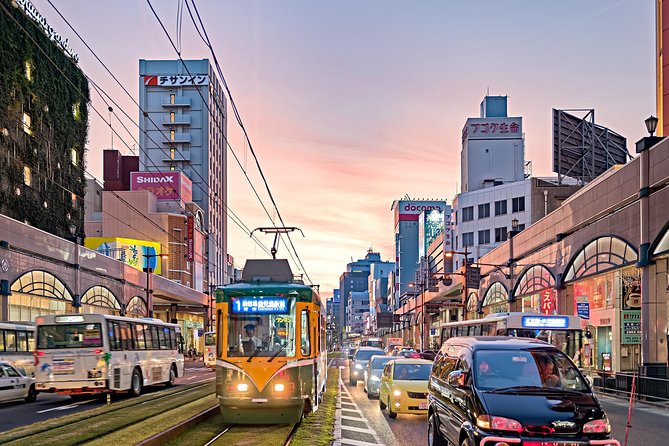
Kagoshima’s great surprise is that one private tour can connect a smoking volcano, a samurai garden, castle ruins, and the story of Japan’s leap into the modern age. I like the freedom to choose only three or four sights, and I like having a licensed local guide explain how the Shimazu clan, Christianity, and the Meiji Restoration shaped the city. The main catch is simple: transport and entrance fees are extra, and six hours is not enough to see every option.
You meet your guide on foot within the designated Kagoshima area, then shape the day around your interests. Guides such as Tachi and Kiyoko have adjusted plans to suit port schedules, while Jiejie and Seizo Kamiuto have led friendly, personalized visits. Just remember that this is a walking tour with no private vehicle included, so Sakurajima can add time and cost.
Key points at a glance
- Choose three or four sights: Build your day around a volcano, garden, museum, shrine, park, or historic site.
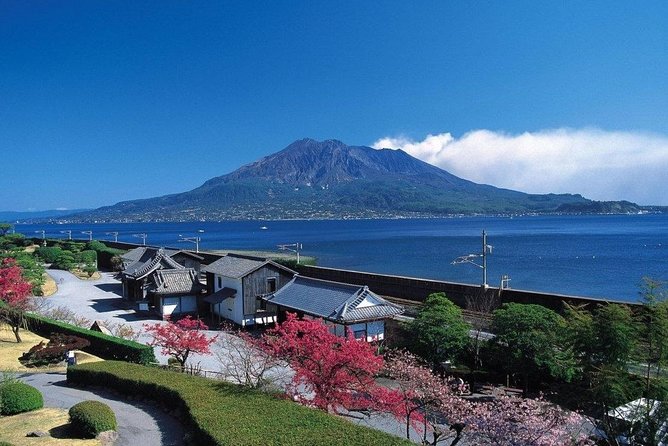
- Sakurajima is the big draw: The active volcano smokes constantly, with minor eruptions often occurring several times a day.
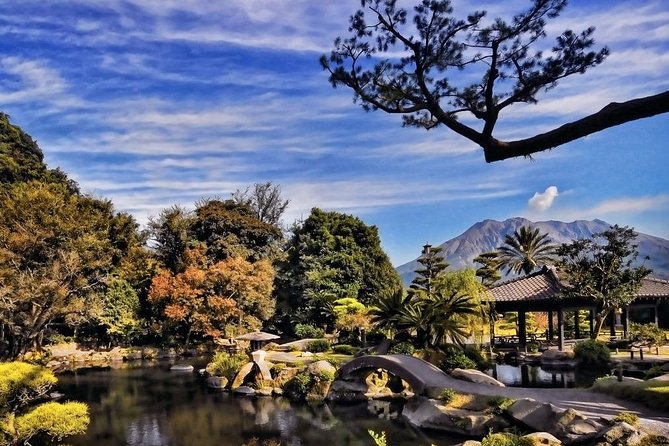
- Senganen Garden joins beauty and power: This coastal garden reveals the wealth and ambition of the Shimazu family.
- Your guide shapes the history: The private format lets you ask questions and spend more time where your interest is strongest.
- Budget beyond the tour price: Ferry, taxi, other transport, admissions, lunch, and personal costs are not included.
- Best for first-time visitors: You get a useful introduction without being locked into a large group itinerary.
Why a private Kagoshima day works so well
Kagoshima is not a city you should reduce to one postcard view. Sakurajima may be the symbol, but the city also tells the story of powerful local lords, foreign influence, samurai politics, and Japan’s rapid modernization.
That makes a private guide useful. You are not simply moving from one sight to the next. You can ask why a shrine matters, how the Shimazu clan gained influence, or what happened when the old castle disappeared. A guide can also help you decide when to spend more time at a garden and when to move on.
The tour lasts about six hours and includes a choice of three or four sites. That is a sensible limit. Trying to visit all ten suggested stops would leave you rushing, especially if you add the ferry to Sakurajima or paid transport across town.
The price is $154.37 per person. For a solo traveler, that is a serious outlay. For a couple, family, or small private group, the value improves because the guide’s attention is reserved for your party. Group discounts may be available, but the tour does not allow you to combine separate tour groups.
More Full-Day Tours in Kyushu:
- Kumamoto Full-Day Private Tour with Government-Licensed Guide
★ 5.0 · 20 reviews - From Tokyo: Mount Fuji Full-Day Sightseeing Trip
★ 4.5 · 4,970 reviews - Mount Fuji Full-Day Private Tour from Tokyo (Customizable)
★ 4.9 · 1,470 reviews
Sakurajima, Kagoshima’s smoking centerpiece
Sakurajima is one of Japan’s most active volcanoes and Kagoshima’s defining sight. It sits in the bay and regularly sends smoke into the sky. Minor eruptions can occur several times in a day, so the volcano gives the tour a sense of something still active and changing.
The important point is to set your expectations correctly. You are not booking a walk into the crater. The closest accessible point gives you an outlook toward the crater area, not a route inside it. That distinction matters, especially if you picture a close volcanic hike.
Reaching the island can also change the day’s budget. The tour price does not include transport, and one party found that hiring a car plus taking the ferry greatly increased the cost. A taxi on the island may also be difficult to secure at a busy moment, although guide Tachi helped one group find a taxi and gain extra time at the Yunohira Observatory.
I would discuss Sakurajima clearly before the itinerary is fixed. Ask how you will reach it, which transport costs you will pay, and how much time remains for the city sights. The volcano is worth considering, but it can consume a large part of a six-hour tour.
A stop at the foot bath is another possible pleasure on the island. One family-focused itinerary paired the volcano with a foot bath and a glassmaking shop. These details are not guaranteed, but they show how the private format can be adjusted around your interests.
Senganen Garden and the Shimazu world
Senganen Garden, also called Isoteien, sits along the coast north of central Kagoshima. It is a Japanese-style garden, but its setting and story make it more than a stroll among plants and ponds.
The garden uses views of Sakurajima and the bay as part of its design. It was connected to the Shimazu family, whose influence is central to Kagoshima’s past. Here you can see how a powerful family used gardens, coastal property, and architecture to display status and enjoy the area’s natural setting.
Several guides have made Senganen an important part of the day. Seizo Kamiuto led a visit that included the garden, while Kiyoko combined it with the volcano and city stops. If you want a gentler start than a busy museum, Senganen is a strong choice.
There is an entrance fee, and that fee is not included in the tour price. You should also leave room for the garden to work at its own pace. It is not a sight to race through simply to add another stop.
Museums that explain Kagoshima’s turning points
The Reimeikan Museum covers Kagoshima’s local history and culture across three floors. Its exhibits range from ancient times to the modern period, making it a useful choice if you want broad context rather than one narrow theme.
The Museum of the Meiji Restoration focuses on the political and social changes that ended more than 250 years of Tokugawa rule. In 1868, the shogunate fell and the Meiji Government took shape. Kagoshima played an important role in that shift, and the museum helps place local figures and events within the larger story of Japan’s modernization.
These museums are especially useful if you enjoy asking questions. A private guide can explain details that may otherwise seem disconnected, such as the role of the Shimazu family, the importance of samurai leaders, or why Kagoshima produced so many figures linked to the Meiji era.
Choose one museum rather than trying to force both into a short day. The Reimeikan gives you a wide view of the region. The Meiji Restoration Museum gives you a more focused account of political change. Your guide can help match the choice to your interests.
A few more Kyushu half-days worth comparing
- From Fukuoka: Miyazaki, Takachiho Gorge and Shrines Day Tour
★ 4.6 · 233 reviews - Mt. Aso & Takachiho Gorge Tour with Optional Boat Ride
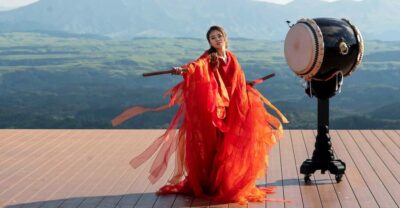
★ 4.7 · 222 reviews - Open-air theater “Tao- no-Oka” Drum TAO Live performance
★ 4.8 · 191 reviews - Fukuoka: Takachiho Gorge & Scenic Railway One Day Tour
★ 4.8 · 178 reviews
Shiroyama Park, castle ruins, and city views
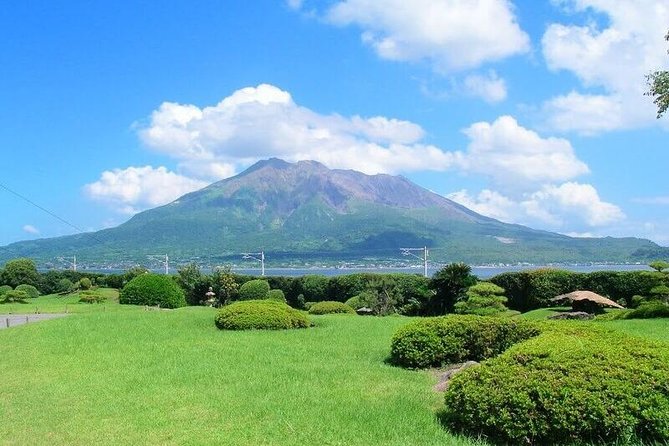
Shiroyama Park rises over Mount Shiroyama in central Kagoshima. The summit reaches 107 meters and once served as a castle fortification site. It gives your tour a useful bridge between the city’s scenery and its military past.
Nearby, Kagoshima Castle is known today as the Tsurumaru Castle Ruins. The original castle was built in 1602 and burned in 1873. Do not expect a complete castle structure. The appeal lies in understanding the site and seeing how Kagoshima’s political center changed over time.
The park and castle area make sense together, particularly if your guide is explaining the Shimazu clan and the Edo period. Kiyoko led one group through the former Shiroyama castle grounds while discussing the clan’s importance. If you like historical explanation, this is one of the better pairings.
The drawback is that the area may feel less dramatic if you are expecting preserved castle buildings. Pick it for the story and setting, not for a grand reconstructed keep.
Shrines, saints, and Kagoshima’s public memory
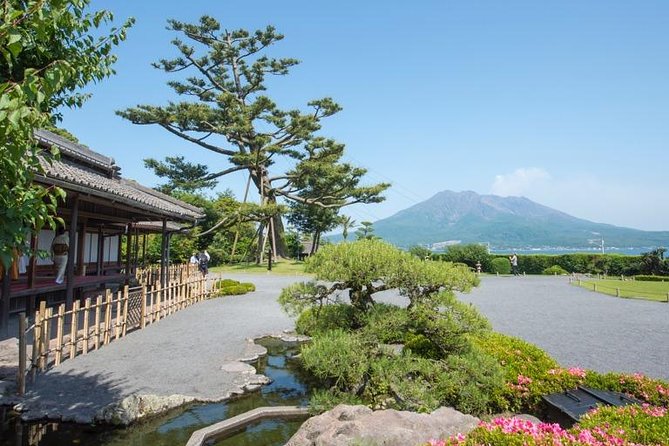
Terukuni Shrine sits at the foot of Shiroyama and honors Shimazu Nariakira, the 28th head of the Shimazu clan. Its scale makes an immediate impression, and its location allows you to combine it with Shiroyama Park.
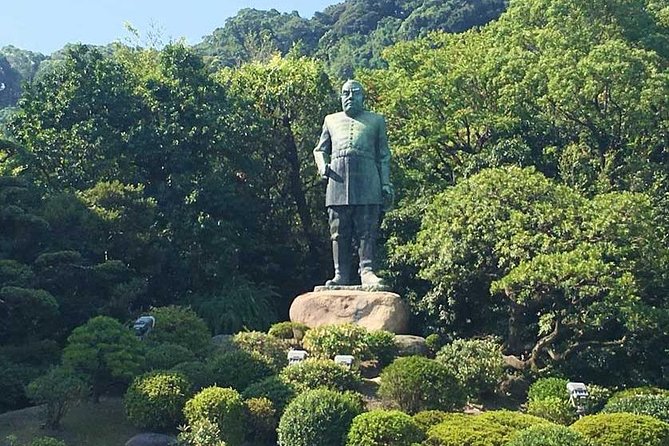
A short walk of about ten minutes brings you to the statue of Saigo Takamori. He was a samurai associated with Japan’s move into the modern age, and the statue was built in his hometown 50 years after his death. The stop gives your guide a chance to connect personal figures with the larger Meiji-era changes discussed at the museum.
Kagoshima also has a connection to Francisco Xavier, the Jesuit monk who came to Japan in 1549. He is associated with spreading Christianity and introducing foreign culture, and he is said to have spent nearly a year living in Kagoshima.
These stops are best for people who want more than scenic photographs. They show how the city remembers its leaders, religious encounters, and political changes. They also give you flexibility: if museums are not your thing, shrines, statues, and historic streets can carry the day.
Ishibashi Park and the city’s stone bridges
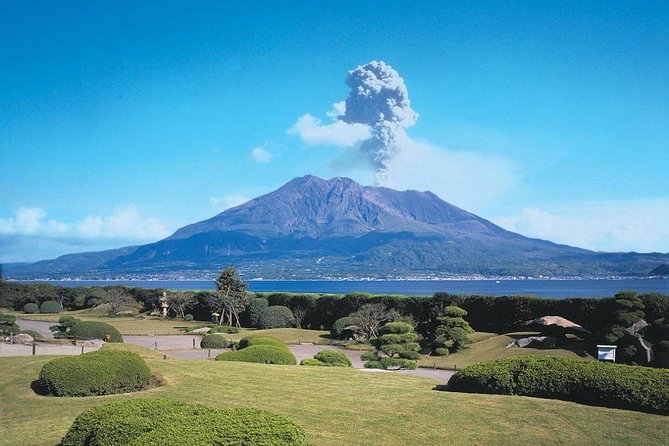
Ishibashi Park contains Ishibashi Memorial Hall, a museum devoted to the stone bridges built during the Edo period and the techniques used to construct them.
This is a more specialized stop than Senganen or Sakurajima. It suits you if you like engineering, local infrastructure, or the practical side of history. The bridges were not merely decoration. They helped shape how people moved through the city and show the skill involved in building before modern construction methods.
Because the tour offers only three or four sites, I would choose Ishibashi Park when you have a specific interest in architecture or local public works. It may be less satisfying if you want the broadest possible first look at Kagoshima.
What the guides add to the day
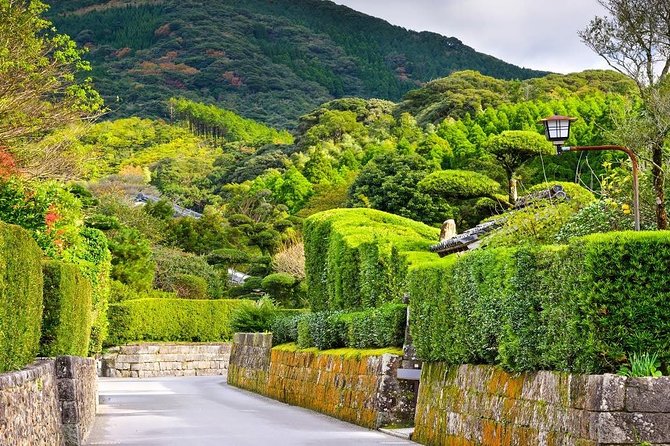
The strongest part of this experience is not a fixed route. It is the chance to adjust the route while keeping a local interpreter beside you.
Tachi has handled port-time schedules and helped make room for extra time at Sakurajima’s Yunohira Observatory. Kiyoko has guided visits to Senganen, the volcano, shrines, and Shiroyama, with particular attention to Kagoshima’s political past. Jiejie has led personalized tours, and Seizo Kamiuto has guided couples through places such as Senganen Garden.
English ability and guiding style can vary by individual, so it is sensible to state your priorities when booking. Tell the agency if you prefer gardens, volcano views, religious sites, or political history. Also say if you have a strict ship departure time.
A private guide can explain more than a printed sign, but this is not a lecture you must endure. Ask for shorter explanations if you want more time for photographs, or ask for additional context if the Shimazu clan and Meiji period interest you.
Costs, walking, and practical planning
The listed price covers a licensed local English-speaking guide and a private custom tour for your group. It does not cover transport, entrance fees, lunch, or personal expenses.
You also do not receive private transportation. Pickup means meeting the guide on foot within the designated Kagoshima area. Public transportation is nearby, and service animals are allowed. Most people can participate, but you should remember that the day involves walking between some sights.
A six-hour schedule is workable, but not limitless. Three central sites may allow a relaxed pace. Adding Sakurajima can mean ferry and taxi costs, longer travel, and less time downtown.
I would budget for admissions at the sights you select, then ask about the guide’s entry costs. Guide entry fees are covered only for sights listed in the expected stops. Confirmation arrives when you book, and free cancellation is available up to 24 hours before the start time. A later cancellation or late change is not refunded.
Who should book this Kagoshima tour?
I would choose this tour if you are visiting Kagoshima for the first time, have a short port call, or want local history explained in clear English. It is also a good fit for families and small groups that want to avoid a fixed large-group schedule.
You should think twice if you want a low-cost independent day or expect a private car to carry you everywhere. The tour price is only part of the expense, and Sakurajima can add a sizeable transport bill.
The best plan is to choose one major outdoor sight, one historical or cultural site, and perhaps one museum or shrine. For example, Senganen, Sakurajima, and Shiroyama create a balanced day. If you prefer history, choose Senganen, the Reimeikan Museum, and the Meiji Restoration Museum, assuming timing and fees suit you.
Should you book it?
Book this tour if you value a flexible route and want Kagoshima’s volcano, samurai past, and modern history tied together by a local English-speaking guide. The high rating and 95 percent recommendation fit the experience’s main strength: guides such as Tachi, Kiyoko, Jiejie, and Seizo Kamiuto have made the day personal and responsive.
Skip it if you need transport and admission included in one simple price. Before booking, confirm your three or four chosen sites, the plan for reaching Sakurajima, the expected extra costs, and your meeting point. Do that, and this can be a smart introduction to a city with far more going on than its volcano.
FAQ
How long does the Kagoshima private tour last?
The tour lasts approximately six hours.
How many attractions can I choose?
You can customize the tour around three or four sites from the listed options.
Is transportation included?
No. Transportation fees are extra, and private transportation is not included.
Does the tour include entrance fees?
No. Entrance fees are extra. Guide entry fees are covered only for sights listed under the expected stops.
Where do I meet the guide?
You meet the licensed guide on foot within the designated area of Kagoshima.
Is this a private tour?
Yes. Only your group participates, and separate tour groups cannot be combined.
Can I visit Sakurajima on this tour?
Sakurajima is one of the available stops, but transport to the island, including ferry or other transport, costs extra. The tour provides views toward the crater area rather than access inside the crater.
What is the cancellation policy?
You can cancel up to 24 hours before the experience start time for a full refund. Cancellations or changes made less than 24 hours in advance are not refunded or accepted.
Just added around Kyushu
- Kumamoto Full-Day Private Tour with Government-Licensed Guide★ 5.0 · 20 reviews
- Port Pick-Up: Kagoshima Private Tour Licensed Guide & Vehicle★ 4.5 · 22 reviews
- Kagoshima Private & Custom Tour with Licensed Guide and Vehicle★ 5.0 · 29 reviews
- Kagoshima Nature and Food Culture Private Tour★ 5.0 · 15 reviews
- Kagoshima Highlights Private Tour, Sakurajima Volcano and more★ 5.0 · 20 reviews
- Kayaking in Anbo River★ 5.0 · 19 reviews
- Kyushu: Aso Vocano, Grassland,Onsen and Aso shrine 1-Day Tour★ 4.5 · 23 reviews
- Fukuoka Takachiho Gorge, Amano Iwato and Scenic Train Tour★ 4.5 · 17 reviews
Kyushu Tours, compared.
Open-air theater “Tao- no-Oka” Drum TAO Live performance
Our verdict →
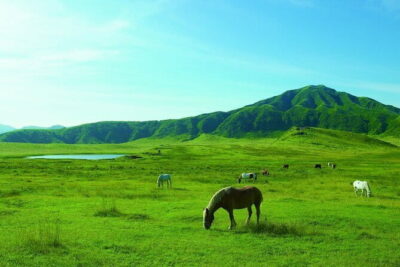
From Kumamoto : Mt.Aso and Takachiho All-inclusive Private Tour
Our verdict →
Become a local! A Walking Tour of Arts, Crafts & Onsen Culture
Our verdict →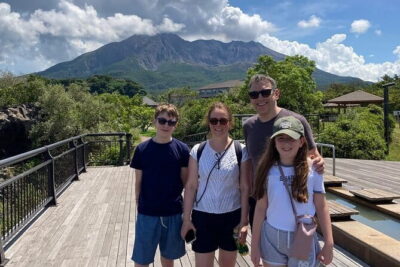
Discover the Wonders of Sakurajima Half Day Tour in Kagoshima
Our verdict →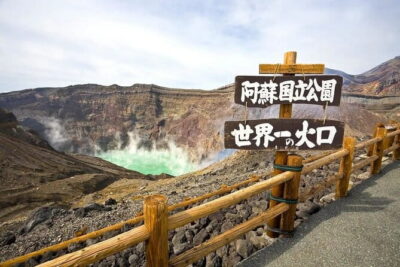
Mount Aso Volcano, Kumamoto Castle, Grasslands Day Tour
Our verdict →Browse the lists this tour appears in