
Reviewed · VOLCANO TOURS
Kagoshima Highlights Private Tour, Sakurajima Volcano and more
Sakurajima is the star here: a real, active volcano rising from Kagoshima Bay, with roughly 200 eruptions in an average year. You can walk across old lava fields, soak your feet in a long natural hot-spring bath, and climb to the highest viewpoint open to the public. This is not a distant mountain photo stop. You get close enough to see how people live beside an active volcano.
I like the tour’s private, flexible format and the way it joins nature with local life. You can spend your day on Sakurajima, stop for Wagyu beef or black pork in Tenmonkan, then visit a historic garden and former industrial sites. Guide Hitomi is especially useful for families and cruise passengers because she can adjust the pace and help fit a lot into a short visit.
The main caution is cost. The advertised price is $459.81 per group of up to eight, but the seven-hour taxi, ferry, lunch, and Sengan-en admission are extra. For a full group, that can still be fair. For one or two people, the total becomes much less attractive.
Five things to know before booking
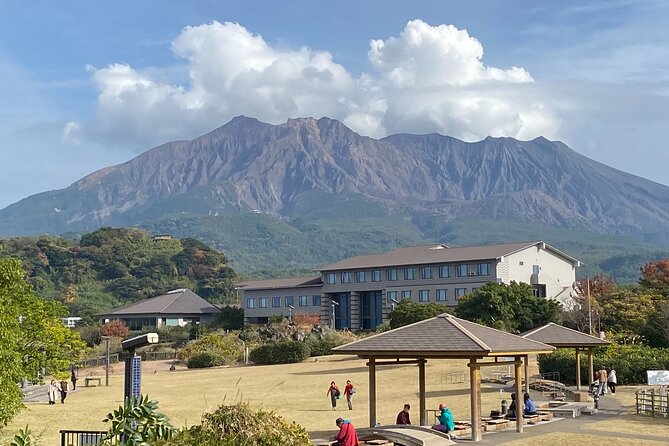
- Sakurajima is the main event: See lava fields, volcanic vegetation, the buried Kurokami Shrine gate, and two strong viewpoints.
- The 100-meter foot bath is free: Bring or buy a towel if you want to soak comfortably.
- Hitomi is the named English-speaking guide: She can tailor the day and has worked well with families, children, and cruise passengers.
- The price is for the guide service, not every tour expense: Add taxi, ferry, food, and Sengan-en admission to your budget.
- You can customize six, seven, or eight hours: The listed route favors Sakurajima, Tenmonkan, Sengan-en, and the Shuseikan area, but other Kagoshima sights may be substituted.
Why Sakurajima gives this tour its purpose
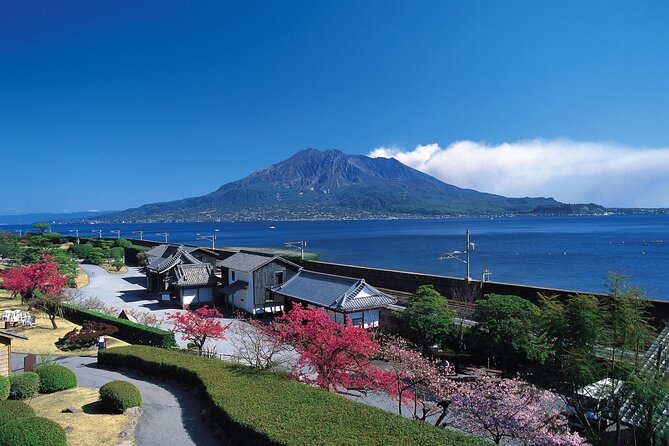
Kagoshima makes the most sense when you see the volcano that shapes the city. Sakurajima sits in Kagoshima Bay and remains active, so the experience has a little more force than a standard scenic lookout. The Visitor Center helps you understand what you are seeing before the rest of the route unfolds.
You spend about 20 minutes at the center. A 13-minute film with English subtitles explains the volcano’s eruptions, plant life after eruptions, and the practical realities of living nearby. Panels cover earlier explosive events and the way vegetation returns to the lava.
I like this opening because it gives you context without asking you to sit through a long museum visit. If the volcano is quiet during your tour, you still learn how it behaves. If ash or volcanic rock is visible, the displays help you read the scene.
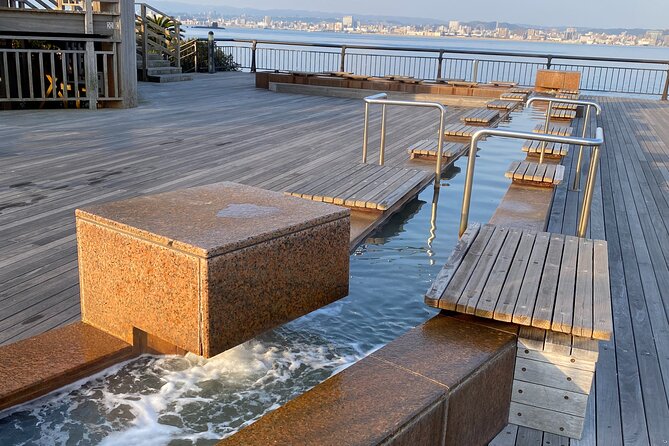
Next comes Nagisa Foot Bath Park, where the natural spring water emerges at about 42 degrees Celsius from roughly 1,000 meters underground. The foot bath stretches for 100 meters, making it one of the largest in Japan. You get around 20 minutes here.
This is a simple pleasure, but it works well in the middle of a driving tour. Sit, warm your feet, and look toward the bay and volcanic shore. The foot bath is free, though you should plan for wet feet and bring a small towel. The reviews show that the stop can still be enjoyable in heavy rain, but bad weather will naturally affect the view and comfort.
More Volcano Tours in Kyushu:
- Fukuoka: Mt. Aso Volcano & Kurokawa Onsen Scenic Day Tour
★ 3.8 · 37 reviews - Fukuoka: Mount Aso Volcano, Kumamoto Castle, Grasslands Day Tour
★ 4.5 · 33 reviews - Private guided tour: Mt. Aso volcano, grasslands, Aso Shrine
★ 5.0 · 19 reviews
Lava fields, a buried gate, and the volcano up close
The buried shrine gate at Kurokami Shrine is one of the most striking pieces of evidence left by Sakurajima’s eruptions. A torii gate about three meters high was buried, leaving only its top beam visible. The village elder chose not to dig it out, so the gate remains where the eruption left it.
You get about 10 minutes here. That is enough for a look and a few photographs, but not a long shrine visit. Its power comes from the scale of the event: an ordinary village entrance was covered so completely that only the upper beam remains.
At Shioyagamoto, you stop for about 10 minutes at a small, peaceful port. The point is the vegetation growing on lava from different periods, including flows about 1,300 years old and others from around 80 years ago. You can see how time changes volcanic ground.
The Arimura Lava Lookout gives you a more open walk. It sits on a low hill in the lava field from the great 1946 eruption and forms part of a one-kilometer lava promenade. The scheduled stop is about 20 minutes, so you can take in the volcanic rock and the broad view without turning the outing into a serious hike.
Finally, Yunohira Lookout takes you to 373 meters above sea level, the highest point on Sakurajima that people can reach. From here, you look across the volcanic rock face and Kagoshima Bay toward the peninsula. The stop lasts about 15 minutes.
The short times at these viewpoints are worth keeping in mind. This is a highlights tour, not a long walking tour around Sakurajima. You will see several different sides of the volcano, but you will not have hours at each site. That pace suits a cruise stop or a first visit. If you want longer walks, tell Hitomi before the day begins so the route can be adjusted.
Tenmonkan turns the volcano day into a food day
After Sakurajima, the tour heads into Tenmonkan, Kagoshima’s lively shopping and dining district. Lunch lasts about one hour, and you choose what to eat. Options include Wagyu beef, Kagoshima black pork, ramen, and other local dishes.
The most praised lunch experience is Wagyu beef yakiniku, where you cook the meat at your own table. That is more engaging than being handed a prepared plate, and it gives you a chance to try the food at your preferred level of doneness. The meal is not included, so you pay for your own food and the guide’s lunch.
I like having the meal here rather than at a fixed tourist restaurant. Tenmonkan gives you a taste of the city’s ordinary dining life, and you can choose based on appetite and budget. The tradeoff is that a one-hour lunch does not leave much time for browsing the shopping streets. If food matters more than another museum, this is a good place to use your customization option.
Sengan-en links gardens, power, and industry
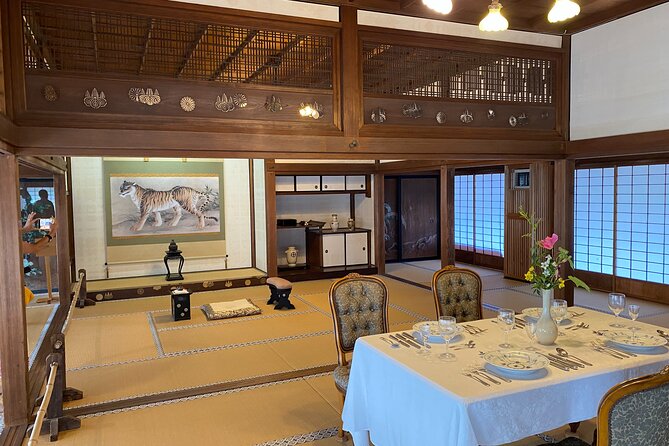
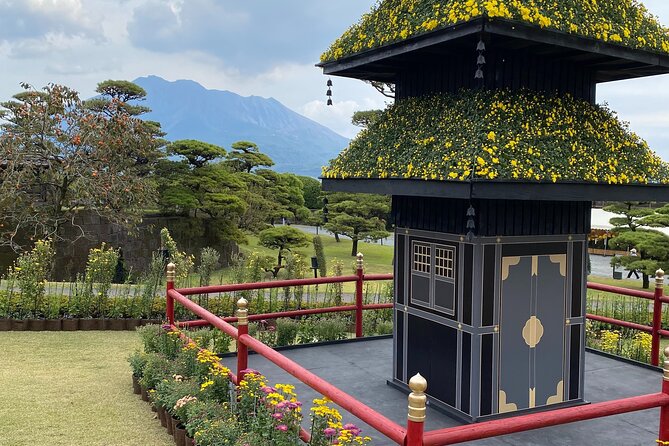
Sengan-en is a 12-acre traditional garden created in 1658 as a villa for the Shimazu clan. Its ponds, streams, bamboo grove, shrines, and mountain paths offer a calm change after the volcanic shore.
You get about one hour here. That is enough to enjoy the main garden, but it may feel short if you want to explore every path. The garden’s setting beside Kagoshima Bay and beneath the volcano gives it unusual character. This was not a garden built in isolation. The views and the surrounding scenery are part of the design.
Admission costs ¥1,600 per person and is not included. That extra fee is worth considering when comparing the tour’s total price. If you care about Japanese gardens, old estates, and the Shimazu family, Sengan-en is one of the strongest stops. If your priority is only Sakurajima, you may prefer to use the hour for another volcanic viewpoint.
Beside the garden, the Shoko Shuseikan Museum occupies the former Shuseikan Machine Factory. The main building dates from 1865, when the site was used for metal processing connected with ships and other industrial work. It is described as the oldest surviving stone-built Western-style factory in Japan.
The planned visit takes about 20 minutes, and admission is extra. That is a brisk visit, but it adds important context. Kagoshima was not only a feudal stronghold with gardens and samurai. The Shimazu leadership also pushed toward modern industry and Western technology.
At Iso Kogeikan, you can see Satsuma cut glass. The factory began in 1851 and was revived roughly a century after closing in 1877. Craftspeople cut through layers of colored glass to reveal clear glass beneath, producing gentle color changes.
This stop is free and takes about 20 minutes. It is a useful place to look for a small local craft item, though no purchase is required. The visit also breaks up the historical material with something hands-on and visual.
A few more Kyushu half-days worth comparing
- From Fukuoka: Miyazaki, Takachiho Gorge and Shrines Day Tour
★ 4.6 · 233 reviews - Mt. Aso & Takachiho Gorge Tour with Optional Boat Ride
★ 4.7 · 222 reviews - Open-air theater “Tao- no-Oka” Drum TAO Live performance
★ 4.8 · 191 reviews - Fukuoka: Takachiho Gorge & Scenic Railway One Day Tour
★ 4.8 · 178 reviews
Optional Kagoshima history beyond the main route
The route can be tailored, and the available city choices include several places tied to Kagoshima’s past. Francis Xavier landed at Gion-no-su in 1549 and spent about a year in Kagoshima, introducing Christianity and other foreign influences.
Terukuni Shrine honors Shimazu Nariakira, the 28th head of the Shimazu clan, and is described as Kagoshima City’s largest shrine. Saigo Takamori is another major local figure. He helped bring about the Meiji Restoration, including the peaceful surrender of Edo Castle, before leaving government work and returning to Kagoshima.
Kagoshima Castle was the Shimazu residence, with construction beginning around 1601 under Iehisa, the clan’s 18th head and first feudal lord. The former British engineers’ lodgings offer another view of the city’s push toward modernization. The building was connected with the Western-style spinning mill established with British help and blends Japanese and Western design.
These stops are not part of the numbered main route in the same way as Sakurajima and Sengan-en, so you should discuss priorities before the tour. You cannot expect to see every listed place in depth during seven hours. The private format is most useful when you decide what to leave out.
What the seven-hour schedule really means
The listed schedule includes roughly 20 minutes at the Visitor Center, 20 minutes at the foot bath, 10 minutes at the buried gate, 10 minutes at Shioyagamoto, 20 minutes at Arimura, 15 minutes at Yunohira, one hour for lunch, one hour at Sengan-en, 20 minutes at the museum, and 20 minutes at the glass factory.
That is nearly four hours of planned stops before driving time and any additional city visits. The day moves at a steady pace. You will not be left wondering what to do, but you should not treat this as a slow, leisurely garden tour either.
The private vehicle matters because Sakurajima’s sights are spread out. The tour price does not include a seven-hour chartered taxi. The stated average is ¥34,000 for up to three people or ¥46,000 for up to eight. The ferry costs ¥500 per person for a round trip, plus ¥4,700 for cars depending on vehicle size.
For a group of six to eight, the taxi cost divides into a reasonable per-person amount. For a couple, the same vehicle fee weighs much more heavily. A group of eight paying the listed $459.81 guide price can spread the cost across the party, while a solo visitor may find a public transport plan more economical if flexibility is less important.
The tour includes the guide fee. It does not include lunch, admission to Sengan-en, ferry costs, or the taxi. I would ask for a full estimated total before booking, especially if you are traveling with children or a large family and want lunch at the more expensive end of the menu.
Who will get the most from this private tour
I would choose this tour if you have limited time in Kagoshima and want the volcano, food, and major garden in one day. It fits cruise passengers especially well because the guide can make the most of a short port visit. The flexible format also helps families, since Hitomi has guided groups with young children, grandparents, and adult children.
You should also consider it if you want an English-speaking guide who can explain both volcanic activity and Kagoshima history. Hitomi has been praised for clear communication, good English, a friendly manner, and preparation before the tour. Those details matter when you are deciding between a fixed group excursion and a private day.
The tour is less suitable if you want a deep visit to every historical site, a long volcano hike, or a low-cost day. Six, seven, or eight hours can cover a lot, but only if you accept short stops. The weather requirement is another practical concern. Poor conditions can lead to a different date or a full refund, but the experience itself depends on safe, usable weather.
The booking terms are strict: the experience is non-refundable and cannot be changed for personal reasons. Confirmation is sent within 48 hours, subject to availability. Most people can take part, but you should still explain any mobility concerns when arranging the route.
Should you book the Kagoshima Highlights Private Tour?
Book it if you want a well-shaped first look at Kagoshima rather than a single attraction. Sakurajima, the foot bath, Tenmonkan lunch, and Sengan-en make a strong combination, and the private guide gives you room to adjust the day.
I would be especially comfortable recommending it to a family, a group of friends, or cruise passengers who can share the taxi cost. Before paying, confirm the total for transport, ferry, lunch, and admission. If that combined figure fits your budget, this is an efficient and personal way to meet Kagoshima’s volcano, food, gardens, and modernizing past in one day.
FAQ
How long does the Kagoshima private tour last?
The standard tour lasts about seven hours. Six-hour and eight-hour customized versions are also available.
How many people can join the private tour?
The listed price covers a private group of up to eight people. Only your group participates.
Is hotel or port pickup available?
Pickup is offered, but the specific pickup location should be confirmed when booking.
Is transportation included in the price?
No. The seven-hour chartered taxi is an extra cost. The stated average is ¥34,000 for up to three people or ¥46,000 for up to eight people.
How much does the Sakurajima ferry cost?
The round-trip ferry fare is ¥500 per person. Transporting a car costs ¥4,700, depending on the vehicle size.
Is lunch included?
No. You choose and pay for lunch in Tenmonkan. Choices include Wagyu beef, black pork, ramen, and other local food.
Is admission to Sengan-en included?
No. Admission costs ¥1,600 per person. Other listed stops, including the Sakurajima Visitor Center and Nagisa Foot Bath Park, do not charge admission.
Just added around Kyushu
- Kumamoto Full-Day Private Tour with Government-Licensed Guide★ 5.0 · 20 reviews
- Port Pick-Up: Kagoshima Private Tour Licensed Guide & Vehicle★ 4.5 · 22 reviews
- Kagoshima Private & Custom Tour with Licensed Guide and Vehicle★ 5.0 · 29 reviews
- Kagoshima Nature and Food Culture Private Tour★ 5.0 · 15 reviews
- Kagoshima Full-Day Private Tour with Government-Licensed Guide★ 5.0 · 21 reviews
- Kayaking in Anbo River★ 5.0 · 19 reviews
- Kyushu: Aso Vocano, Grassland,Onsen and Aso shrine 1-Day Tour★ 4.5 · 23 reviews
- Fukuoka Takachiho Gorge, Amano Iwato and Scenic Train Tour★ 4.5 · 17 reviews
Volcano Tours, compared.
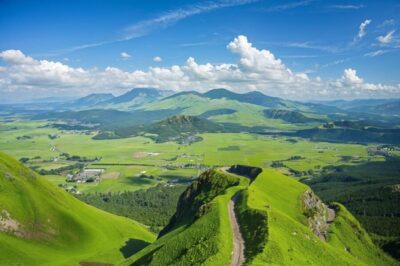
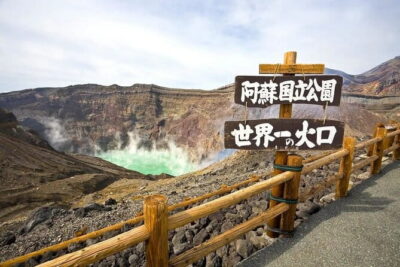
Mount Aso Volcano, Kumamoto Castle, Grasslands Day Tour
Our verdict →Browse the lists this tour appears in