
Reviewed · KYUSHU TOURS
Discover the Wonders of Sakurajima Half Day Tour in Kagoshima
Sakurajima is not just a volcano you admire from a distance. It is an inhabited island that erupts often, sheds ash over daily life, and gives you a close look at how people live beside raw geological power. This four-and-a-half-hour tour combines the island’s big views with small, human details, including a shrine, a hot spring footbath, and a pottery studio.
I especially like the ash-art activity, which turns volcanic material into a personal souvenir, and the ferry ride across Kagoshima Bay. Guides such as Yuki, Yukiko, Naomi, and Kuni have been praised for friendly, clear explanations and help with the crowded island buses. The main drawback is that you are using public transport and doing some walking, so the day may feel less polished if buses are packed or your guide’s English is limited.
Key points to know before booking
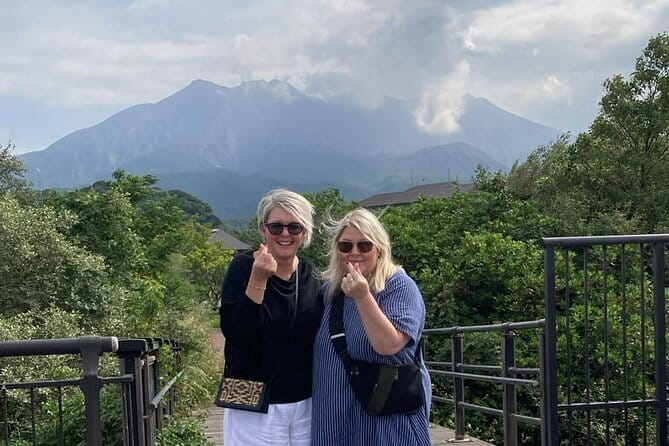
- Sakurajima by ferry: The crossing from Kagoshima takes about 20 minutes and gives you an easy first view of the volcano.
- A practical island introduction: The Visitor Center explains eruptions, geology, vegetation, tourism, and disaster planning before you head higher.
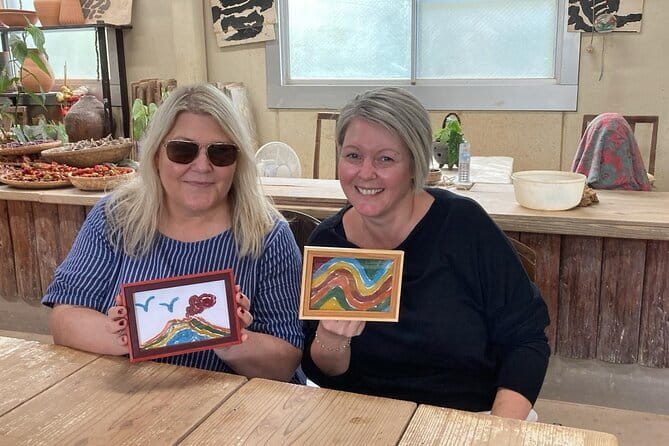
- Volcanic ash art: At Ougaku Togei, you make a picture with colorful ash and take home a framed keepsake.
- A very long footbath: Nagisa Foot Bath Park has a roughly 100-meter natural hot spring footbath, with iron-colored water from deep underground.
- The highest public viewpoint: Yunohira Lookout sits 373 meters above sea level on Sakurajima’s North Peak.
- Public transport matters: The tour uses the Sakurajima Island View Bus, with some walking and possible crowding.
Why this tour makes Sakurajima easy to understand
Sakurajima can be visited independently, but the island’s sights are spread out. You can take the ferry, buy a bus ticket, and follow the main route yourself. The value of this tour is that a guide handles the timing, explains what you are seeing, and helps you move through the bus system without guessing.
That matters most on a short stop in Kagoshima. The tour begins and ends at the Sakurajima Ferry Kagoshima Terminal, so you do not need to arrange separate transportation back from the island. It is also useful for a cruise stop, provided you leave enough time to reach the meeting point from your ship.
The group can be as large as 30 people, though some bookings have been much smaller. One group described having only four people, which made the experience feel personal. You should not count on such a small group every time, but the guide-led format still removes much of the planning work.
A few more Kyushu half-days worth comparing
- From Fukuoka: Miyazaki, Takachiho Gorge and Shrines Day Tour
★ 4.6 · 233 reviews - Mt. Aso & Takachiho Gorge Tour with Optional Boat Ride
★ 4.7 · 222 reviews - Open-air theater “Tao- no-Oka” Drum TAO Live performance
★ 4.8 · 191 reviews
Crossing Kagoshima Bay by ferry
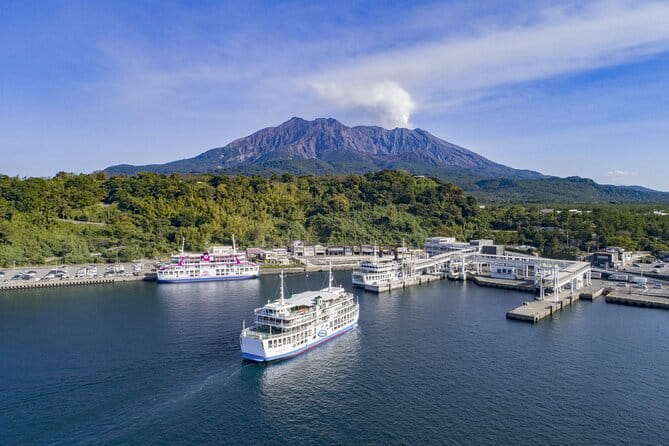
The ferry ride is a calm opening to the day. It lasts about 20 minutes and is included in the price. As the boat moves toward Sakurajima, you get a useful sense of the island’s position in Kagoshima Bay, rather than simply arriving by road and suddenly finding yourself there.
The ferry is also an authentic part of local transport, not a private sightseeing boat. That is a strength if you want to see how the island connects with Kagoshima in ordinary life. On the other hand, you should not expect a long narrated cruise or a special viewing deck arranged only for the tour.
Arrive at least 10 minutes before the stated meeting time. The terminal can take longer to reach than expected, especially if you are coming from a cruise port. One useful detail from past bookings is that some cruise passengers used a taxi to reach the ferry terminal, while others took a shuttle and walked across the parking area.
Tsukuyomi Shrine and the island’s older story
After reaching Sakurajima, the group visits Tsukuyomi Shrine, located close to the port. The shrine has a history of about 1,300 years and offers a quiet pause before the more active parts of the day.
This is a good early stop because it gives Sakurajima a cultural setting. The island is not only about eruptions and lookout points. The shrine’s wooded grounds help you see the place as a lived-in community with traditions that reach back long before modern volcano monitoring.
You spend about 30 minutes here. That is enough time to walk around and listen to an explanation, but not enough for a long, unhurried temple visit. If you prefer to spend most of your time at the volcano viewpoints, this short stop keeps the schedule moving. If you want a detailed religious history, the visit may feel brief.
Sakurajima Visitor Center puts the volcano in context
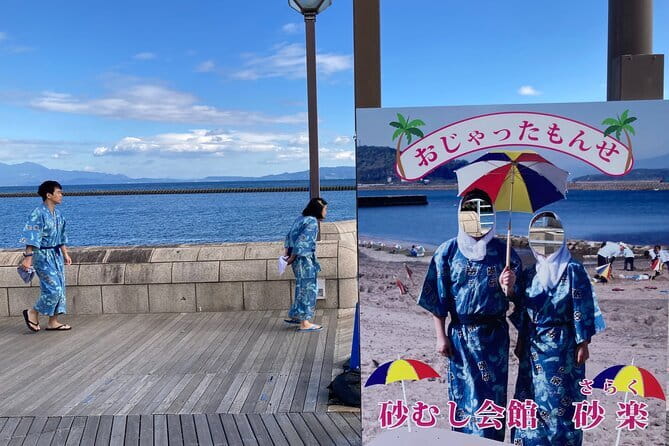
The Sakurajima Visitor Center is one of the most useful stops on the tour. Its displays cover past eruptions, how the volcano formed, local plant life, tourism, and disaster prevention. You spend about 45 minutes here.
I like this stop because it changes the way you see everything that follows. Without context, a plume or layer of ash can seem like a dramatic photo opportunity. At the center, you learn that eruptions affect roads, homes, farming, school routines, and emergency planning. The volcano becomes part of daily life, not just a scenic backdrop.
The center also helps on a cloudy day. Several past participants had rain or fog that hid the summit, but the exhibits still provided a useful way to understand Sakurajima. Weather can take away the grand view, but it cannot erase the island’s story.
Same trip, a completely different kind of day:
- Fukuoka: Takachiho Gorge & Scenic Railway One Day Tour
★ 4.8 · 178 reviews - From Fukuoka: Mount Aso, Kurokawa Onsen, and Shrine Tour
★ 4.6 · 72 reviews - Day Tour to Miyazaki Takachiho Gorge & Shrine depart from Fukuoka
★ 4.5 · 61 reviews - Sakurajima Century Lava Climb Journey with E-bike
★ 5.0 · 54 reviews
Relaxing at Nagisa Foot Bath Park
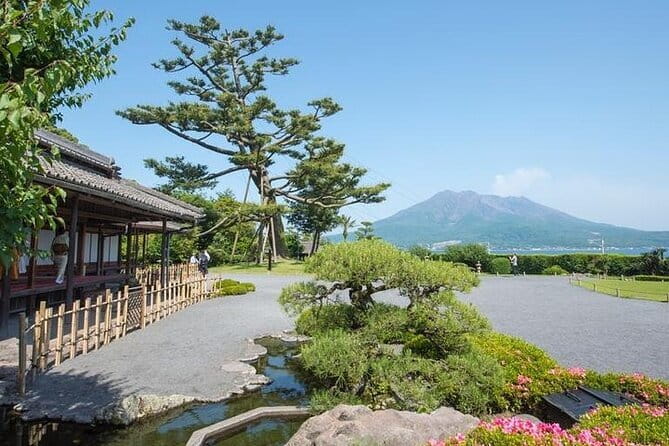
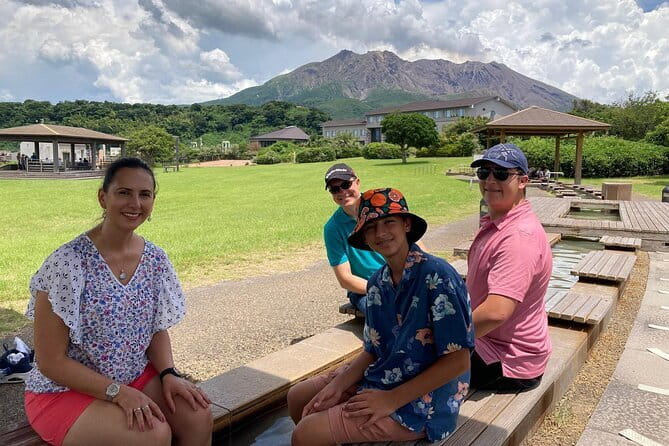
The footbath is one of the most pleasant stops. Nagisa Foot Bath Park has a roughly 100-meter-long footbath, described as one of Japan’s longest. The water comes from a natural hot spring about 1,000 meters underground and has a terra-cotta color because of its iron content.
You have about 30 minutes here, which gives you time to sit, soak, and enjoy the bay-side setting. This is a welcome break after walking around the shrine and visitor center. It also adds a physical experience to the tour. You are not only looking at volcanic activity, you are feeling one of its underground results in warm water.
Bring your own towel. This small detail matters. Footbaths are casual, but wet feet and no towel can make the next bus ride less comfortable. Wear shoes that are easy to remove and put back on.
The footbath is not a full hot spring bathing experience. You soak your feet only, and the tour does not include lunch. Keep both points in mind when comparing it with a longer spa visit.
Making a souvenir from Sakurajima ash
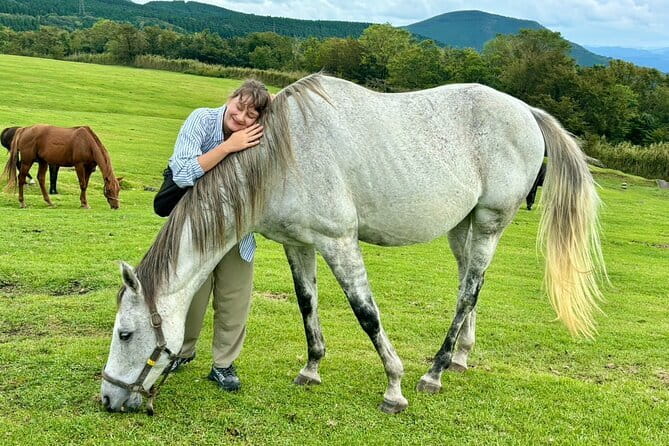
At Ougaku Togei, you learn about Sakurajima-yaki pottery, which uses natural volcanic ash. The activity included with the tour is an ash-art project rather than a long pottery class. You create a picture using colorful stained ash, and the activity takes at least about 20 minutes within a scheduled stop of roughly 1 hour and 15 minutes.
This is the most distinctive part of the day. A standard volcano tour may give you photographs and a few facts. Here, you make something connected to the island’s eruptions and take it home. Several people found the activity enjoyable even if they did not consider themselves artistic, because there are different ways to approach the design.
The pottery studio also gives you a chance to buy finished pieces. The ash artwork fee is included, while the description does not say that purchased pottery is included, so budget separately if you see something you like.
I would allow yourself to enjoy the activity rather than rush through it. The studio visit is especially well suited to families, couples, and anyone who wants a souvenir with a clear sense of place. It is also a smart rainy-day feature, since much of the activity takes place indoors.
Yunohira Lookout and the best volcano view
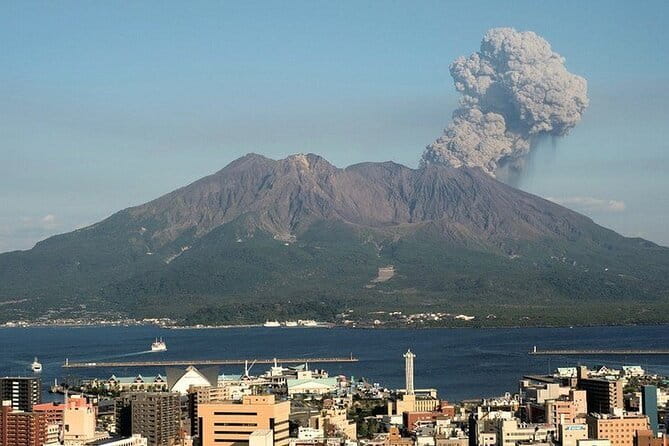
Yunohira Lookout is the scenic high point of the tour. It sits at the fourth station, 373 meters above sea level, on Sakurajima’s North Peak. It is the highest point on the island open to the public.
From here, you can look across toward the active volcano and Kagoshima Bay. When the weather is clear, this is the moment that ties the whole morning together. You have already learned about eruptions, felt warm spring water, and handled volcanic ash. Now you see the scale of the mountain and the bay around it.
The tour allows about 50 minutes at the lookout. That is a sensible amount of time for photographs and an explanation without turning the stop into a long wait. Still, weather controls what you get. Rain and fog have hidden the summit for some groups, while clear conditions have revealed the top and even allowed a view of an eruption.
Do not book this tour expecting a guaranteed dramatic plume. Sakurajima is active, but nature does not follow a sightseeing schedule. The Visitor Center and ash-art activity help protect the day from becoming a disappointment if the view closes in.
What the guide adds, and where the experience can vary
The best reason to book the guided version is the explanation of life beside an active volcano. A local guide can connect the ash, evacuation planning, eruptions, roads, and island customs in a way that a quick self-guided bus ride may not.
Yuki and Yukiko are often praised for strong English, patience, and friendly help. Naomi is noted for clear explanations and careful answers, while Kuni and Kunihiro are praised for thoughtful guidance and prepared materials. Aya has also been described as doing a good job with the island’s sights.
You should also know about an important variation. One booking involved a guide whose English was difficult to follow, and another described a guide change that caused some communication problems. The experience provider uses English-speaking guides, but fluency may not be identical from one departure to the next.
The guide also helps with the Sakurajima Island View Bus. Public buses can be crowded, and one person found that aspect disappointing. If you want a private vehicle, quiet transfers, and complete control over the pace, this is not the right style of tour. If you are happy using local transport and want help making sense of it, the bus adds a genuine local touch.
Is $95.54 a fair price?
At $95.54 per person, the tour costs more than doing the basic route independently. The ferry is inexpensive on its own, and you can use the island bus without paying for a guide. So the price is not mainly buying transport.
You are paying for coordination, English explanations, the ash-art fee, ferry tickets, and a compact route that fits the major sights into about four and a half hours. For a first visit or a cruise stop, that convenience can be worth it. The tour also reduces the risk of missing the return ferry or spending too much time figuring out bus connections.
The value is strongest when you want interpretation. If you already know Sakurajima, speak Japanese, and enjoy planning public transport, self-guided travel may save money. If you have limited time and want a local person to lead you from the terminal through the island’s main stops, the price is reasonable.
Remember to budget for lunch, which is not included, and for any pottery you choose to buy. The ash-art experience and ferry are included.
Who will enjoy this half-day outing?
I would recommend this tour if you want a broad introduction rather than one long activity. In less than five hours, you get nature, local history, transport, a hot spring footbath, craft work, and a high viewpoint.
It suits cruise passengers especially well because the route returns to the same ferry terminal. It also works for families and couples who want a hands-on souvenir instead of another museum stop. Teenagers have enjoyed the ash painting and the volcano setting, while older visitors may appreciate the frequent chances to sit at the ferry, visitor center, footbath, and lookout.
You should be comfortable with some walking, boarding public buses, and keeping to a group schedule. The minimum booking is two people, and the maximum group size is 30. If you need a fully private tour, select the private option correctly and follow the booking instruction to select one person.
The experience requires good weather. If poor weather cancels it, you are offered another date or a full refund. You can cancel for a full refund up to 24 hours before the start time, but late cancellations and changes are not accepted. Missing the meeting point on time does not qualify for a refund.
Should you book the Sakurajima tour?
Book it if you want an organized first look at Sakurajima and value a guide who can explain what it means to live beside an active volcano. The combination of Yunohira Lookout, the footbath, and ash art gives the tour more variety than a simple sightseeing bus ride.
Skip it if you prefer to travel alone, want a private vehicle, or would rather spend several hours at one viewpoint. Also think twice if crowded public transport or some walking would frustrate you.
For most first-time visitors with a half-day available, I think the tour earns its price through convenience and context. Just bring a towel, arrive early at the ferry terminal, keep your weather expectations flexible, and treat the ash painting as part of the main experience rather than a small extra.
FAQ
How long does the Sakurajima tour last?
The tour lasts approximately 4 hours and 30 minutes.
Where does the tour begin and end?
It begins at the Sakurajima Ferry Kagoshima Terminal in Honkoshinmachi, Kagoshima, and ends back at the same meeting point.
Is the ferry ride included?
Yes. The ferry ticket to Sakurajima is included, with the crossing taking about 20 minutes each way in the stated schedule.
Does the tour include lunch?
No. Lunch is not included, so you should plan for it separately.
What should I bring for the footbath?
Bring your own towel. The tour information specifically encourages participants to do so.
Is the volcanic ash art included?
Yes. The volcanic ash art experience fee is included. The activity involves creating a picture with colorful stained ash at Ougaku Togei.
How many people are required to run the tour?
The minimum number of participants is two. The maximum group size is 30 people.
What happens if bad weather cancels the tour?
If poor weather causes the tour to be canceled, you are offered a different date or a full refund.
Just added around Kyushu
- Kumamoto Full-Day Private Tour with Government-Licensed Guide★ 5.0 · 20 reviews
- Port Pick-Up: Kagoshima Private Tour Licensed Guide & Vehicle★ 4.5 · 22 reviews
- Kagoshima Private & Custom Tour with Licensed Guide and Vehicle★ 5.0 · 29 reviews
- Kagoshima Nature and Food Culture Private Tour★ 5.0 · 15 reviews
- Kagoshima Full-Day Private Tour with Government-Licensed Guide★ 5.0 · 21 reviews
- Kagoshima Highlights Private Tour, Sakurajima Volcano and more★ 5.0 · 20 reviews
- Kayaking in Anbo River★ 5.0 · 19 reviews
- Kyushu: Aso Vocano, Grassland,Onsen and Aso shrine 1-Day Tour★ 4.5 · 23 reviews
Kyushu Tours, compared.
Open-air theater “Tao- no-Oka” Drum TAO Live performance
Our verdict →
From Kumamoto : Mt.Aso and Takachiho All-inclusive Private Tour
Our verdict →
Become a local! A Walking Tour of Arts, Crafts & Onsen Culture
Our verdict →
Mount Aso Volcano, Kumamoto Castle, Grasslands Day Tour
Our verdict →
Browse the lists this tour appears in