
Reviewed · HIKING & TREKKING
Hike Japan Heritage Hakone Hachiri with certified mountain guide
The best part of this Hakone Hachiri hike is that it turns a famous mountain crossing into a story you can walk through. You follow the old Tokaido route used by Edo-period samurai, merchants, and other travelers, moving from Hakone Yumoto toward Mishima with a guide who connects the cobbled road, checkpoint, shrines, and castle ruins.
I like the mix of quiet forest walking and practical local transport, which lets you cover more of the historic route without making the day a punishing marathon. I also like the small-group size, capped at six people, and Aki’s habit of taking family photos along the way. The main drawback is that this is a serious seven-hour outing with about 8 kilometers of walking, uneven surfaces, buses, and extra costs for lunch and transport.
Key points to know before booking
- Walk the old Tokaido route: Follow the Hakone Hachiri heritage path, including cobblestones and the famous cedar avenue.
- Start in Hakone, finish in Mishima: The route is one-way, ending at Mishima Station rather than returning to Hakone.
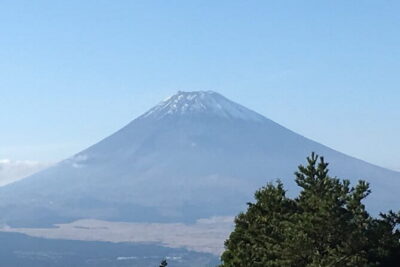
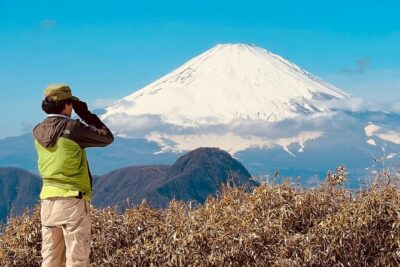
- See Lake Ashi and the Heiwa no Torii: Weather permitting, you can also see Mt Fuji from more than one angle.
- Small group, personal guiding: The maximum group size is six, with a national certified guide who holds wilderness first aid certification.
- Budget for extras: Lunch costs about 2,000 yen, local transport about 2,000 yen, and the optional Shinkansen from Mishima to Odawara about 2,500 yen.
- Good fitness is needed: This is a hike, not a gentle sightseeing stroll, and the weather can affect the route.
Walking through Japan’s old mountain crossing
Hakone Hachiri was part of the Old Tokaido Highway, the major road linking Edo, today’s Tokyo, with Kyoto during the 17th century. Crossing the Hakone mountains was one of the route’s harder sections. You get a feel for that effort here, especially on the stone-paved sections and forest paths.
What makes this outing worthwhile is the connection between places. Lake Ashi is not just a scenic stop. The cedar-lined road is not just a nice walk. The Hakone Checkpoint was a control point on the old highway, much like an immigration office in modern terms. Yamanaka Castle Ruins show another side of the same mountain corridor.
I like this kind of touring because the walking gives the scenery meaning. Instead of moving from one photo stop to another by coach, you cover part of the ground under your own power, then use local transport where it makes sense.
The route begins at Hakone Yumoto Station at 9:00 a.m. and ends at Mishima Station. That one-way design is useful if you are continuing toward Shizuoka, Izu, Odawara, or Tokyo, but it also means you need to plan your evening around the finish.
More Hiking Tours in Hakone:
- Hike Hakone Hachiri
★ 5.0 · 48 reviews - Traverse Outer Rim of Hakone Caldera and Enjoy Onsen Hiking Tour
★ 5.0 · 30 reviews - Hakone Hachiri: Old Tokaido Highway Hiking Tour
★ 4.9 · 22 reviews
From Hakone Yumoto to Amazake Tea House
You meet the guide at Hakone Yumoto Station, then take a shared taxi to the trailhead. The taxi fare is not included and is estimated at about 2,000 yen for transportation between the trail sections.
From the trailhead, you walk for about an hour toward Hakone Amazake Tea House. This early section introduces the rhythm of the day: forest, old road, local craft, and stories from the guide rather than a string of major attractions.
The route passes a woodcraft village where you can see artisans making use of local wood. That detail gives the morning a useful link between the mountain forest and traditional work. You are not simply walking through trees. You are seeing how the area’s natural materials have shaped local craft.
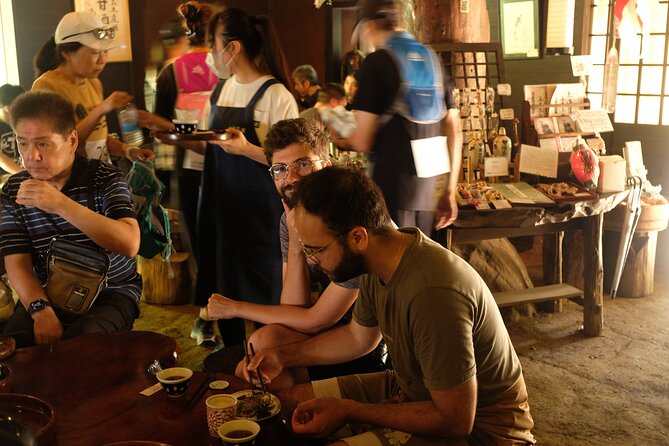
Aki, also referred to as Akihiro, is the guide to look for if you value a calm, personal style. The strongest praise centers on his background in local history and nature, his kind manner, and his ability to handle the bus and trail connections. He also takes photos for families, a small touch that can be useful on a day when everyone is carrying a pack and watching their footing.
The Amazake Tea House section takes about two hours in total, including the approach and time in the area. Amazake and snacks are not included, so bring money if you want refreshments along the way.
Lake Ashi, the torii gate, and the cedar avenue
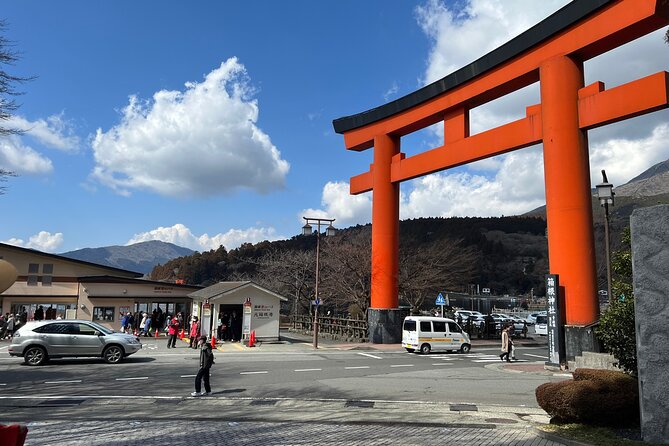
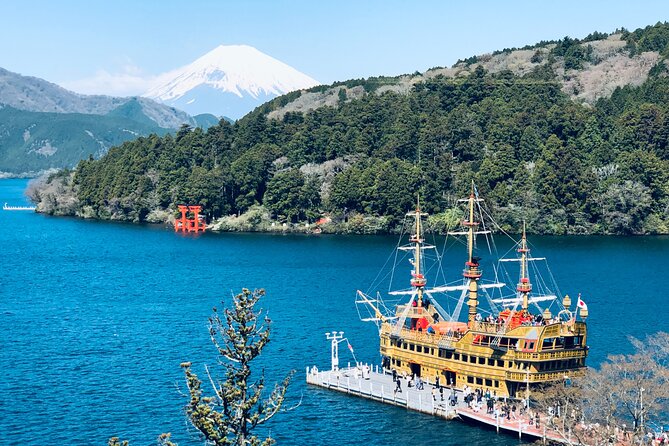
After reaching Lake Ashi, you walk along the shoreline toward the famous Heiwa no Torii, the red gate associated with Hakone Shrine. With clear weather, Mt Fuji appears behind or beyond the lake, giving you one of the day’s best photo settings.
Do not book this walk solely for Fuji. The mountain is weather dependent, and clouds or rain can hide it. The scenery still has value when the summit disappears, as one can see from the route’s forest setting and lakeside walk, but anyone focused on a Fuji photograph should keep expectations flexible.
The Lake Ashi section lasts about 90 minutes. You get time for the shoreline, torii gate, and the cedar avenue of the old Hakone road. The huge cedar trees are one of the route’s most memorable features. Their scale and shade help you picture the road as a working route rather than a modern walking path.
This is also where comfortable footwear matters most. The old cobblestones can be uneven, and the day combines paved station areas, woodland trails, stone paths, and bus rides. The tour asks for moderate physical fitness, but I would treat that as a real requirement. You do not need to be a technical hiker, yet you should be ready to walk for hours and handle changes in surface.
Hakone Checkpoint and lunch near Hakone-machi
After the cedar avenue, you reach Hakone Checkpoint. The guide explains how it controlled movement along the Tokaido road. This stop works well because the building’s purpose becomes clear in its setting. It was not an isolated government site. It sat directly on the difficult route between eastern and western Japan.
You spend about 30 minutes at the checkpoint before continuing to Hakone-machi for lunch. Lunch is not included, and the expected cost is about 2,000 yen per person at a local Japanese restaurant.
The lunch break is a practical pause in a long day. It is also the point where you should check your energy, water, footwear, and weather gear. The morning has already included a shared taxi, walking, the lakeside, and the cedar road. The second half continues on the Shizuoka side, so this is not the place for a long, leisurely restaurant stop.
The schedule gives this portion about an hour, including lunch. That makes the day efficient, though not especially flexible. If you prefer long meals or lots of independent shopping, this is not that kind of tour.
More Historical Tours in Hakone:
- Hike Japan Heritage Hakone Hachiri (Half Day)
★ 5.0 · 18 reviews - World Heritage Shirakawa-go and Experience Tours from Kanazawa
★ 5.0 · 4,049 reviews - Tokyo: Imperial Palace and Shogun Historical Walking Tour
★ 5.0 · 2,251 reviews - World Heritage Kyoto & Nara Uji Authentic Matcha Experience
★ 5.0 · 1,573 reviews
Skipping a closed section by local bus
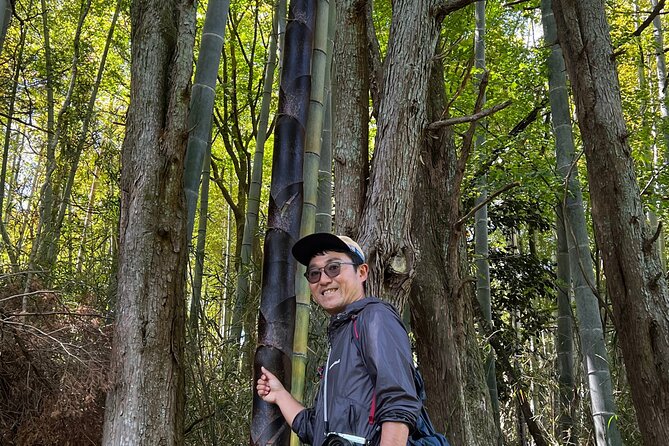
After lunch, you take a local bus to bypass a temporarily closed part of the route, then resume walking toward Mishima. This is an important practical detail. The full old road is not currently covered on foot from end to end, but the bus keeps the trip moving and avoids the closed section.
Local buses also make the outing feel more connected to present-day Hakone. You are not walking through a preserved museum. You are using the same regional transport network that links the modern communities along the route.
Transportation between sites is not included. The estimated cost is about 2,000 yen by shared taxi or bus, though the exact amount can depend on the day’s connections. Carry some yen for these rides, lunch, and snacks.
The bus transfer is one reason the tour is better suited to people who enjoy a guided route than those seeking a continuous wilderness hike. You get a mixture of walking and transport, and the guide handles the route choices. That saves time, but it also means you are following a fixed plan rather than choosing your own pace at every stage.
Yamanaka Castle Ruins on the Hachiri path
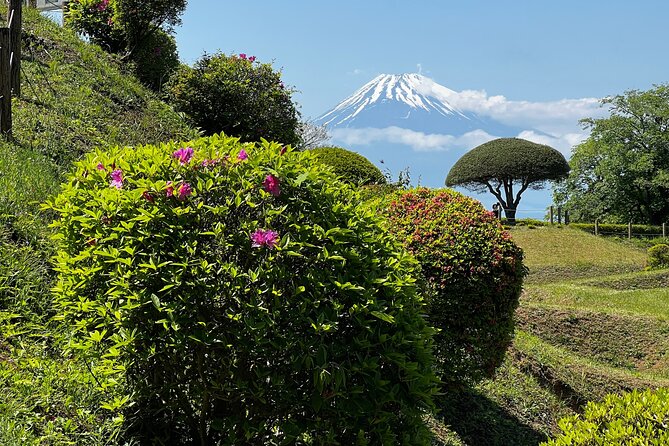
The next major stop is Yamanaka Castle Ruins, reached along the Hachiri heritage path. The visit lasts about an hour. The ruins give the afternoon a different feel from the cedar avenue and Lake Ashi. Here, the focus shifts from road travel to defense and terrain.
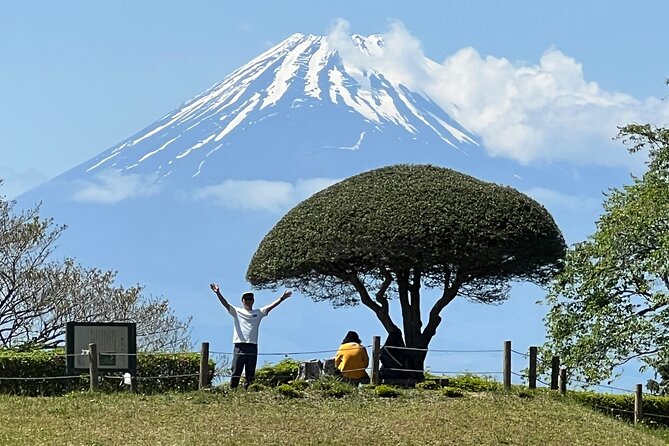
With suitable weather, Mt Fuji may be visible from the castle area. This gives you another possible Fuji viewpoint, different from the Lake Ashi setting. Again, the view depends on conditions, but the route provides more than one chance rather than relying on a single lookout.
The ruins also reward a guide who can explain why the site matters and how it fits the surrounding route. Without context, castle earthworks can look like grassy mounds and uneven ground. With an explanation of the site’s role, the stop becomes easier to read.
This section is another reason to wear sturdy walking shoes. The tour description does not promise a smooth, paved route, and the overall day includes historic cobblestones, forest trails, and ruins. If you have knee trouble or rarely walk for several hours, ask yourself honestly if the full route sounds comfortable before booking.
Finishing at Mishima Taisha and Genbe River
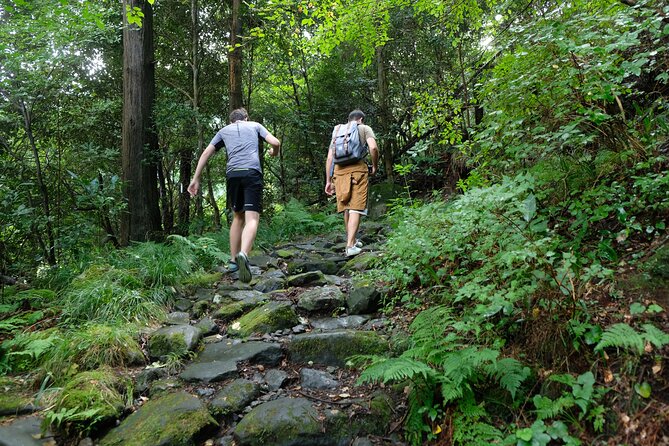
The day ends in Mishima after about seven hours. Before reaching Mishima Station, the route includes Mishima Taisha, the city’s largest shrine, and Genbe River.
This final section gives the tour a satisfying change of pace. You begin at a mountain station, walk through the old highway corridor, cross the Hakone region, and finish in a city with its own shrine and river setting. The end is not simply a station pickup. You get one last look at the culture and scenery around Mishima before the guide says goodbye.
Mishima Station is a useful endpoint. From there, the Shinkansen reaches Odawara in about 15 minutes for around 2,500 yen, or Tokyo in about 45 minutes for about 4,400 yen. Buses also run to Hakone and other places in Izu.
The Shinkansen is not included, and you do not have to use it. Still, you should include the onward fare in your budget if you are returning to the Odawara or Tokyo area. The one-way route works best when you already have a plan for Mishima after the tour.
What the 158.52 dollar price really covers
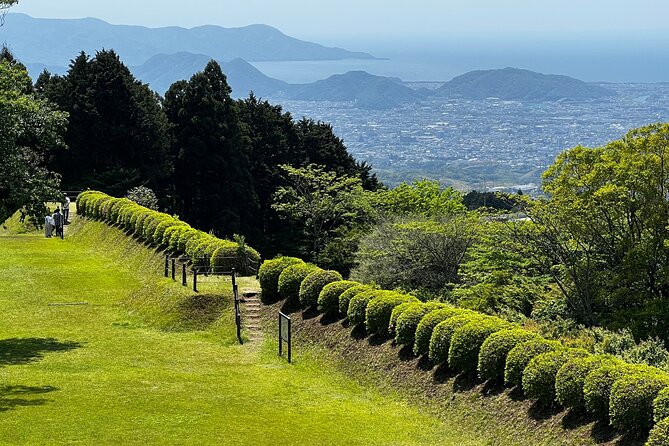
At $158.52 per person, this is not a low-cost self-guided walk. The price pays mainly for the guide, route planning, interpretation, and small-group format. Your guide is a national certified professional with a wilderness first aid certificate, which is a meaningful benefit on a full-day mountain route.
The maximum group size is six. That is small enough for questions, personal attention, and easier movement on trails and buses. It also gives Aki a better chance to adjust explanations and help with photos than a large coach group would allow.
You still need to add several expenses:
- Lunch, about 2,000 yen
- Shared taxi and local buses, about 2,000 yen
- Amazake and snacks, if wanted
- Shinkansen from Mishima to Odawara, about 2,500 yen, if you use it
That makes the overall cost higher than the advertised tour price, but the comparison should be against arranging the route yourself. You would need to work out the trail sections, temporary closure, buses, timing, historic stops, and the one-way finish. If you value a guide and want the route explained as you walk, the price is easier to justify.
Who should book this hike?
I would choose this outing if you want history tied to place, rather than a quick visit to Lake Ashi alone. It suits people who like walking, old roads, local shrines, mountain forests, and a guide who can explain what they are seeing.
It is also a good fit for families and small groups. Aki’s calm manner and willingness to take photos can make the day easier for a family, especially when everyone wants a record of the route. The service allows animals, including service animals, and the meeting point is near public transport.
I would not choose it if you want a relaxed sightseeing day with long stops and little exertion. Seven hours is a full commitment. You should also avoid booking around a tight evening reservation, since weather, bus timing, walking pace, and trail conditions can affect the day.
The activity requires good weather. If poor weather causes cancellation, you are offered another date or a full refund. However, the booking itself is non-refundable and cannot be changed for personal reasons, so check your schedule carefully before paying.
Should you book the Hakone Hachiri tour?
Book it if you want to understand Hakone by walking through its old routes, not just looking at the lake from a bus window. The strongest reasons are the small group, Aki’s personal guiding, the Edo-period road, and the range of stops from Amazake Tea House to Yamanaka Castle Ruins.
Skip it if you need a short, easy outing, a guaranteed Mt Fuji view, or a round trip from Hakone. You will walk about 8 kilometers, pay for several items separately, and finish in Mishima.
For the right person, this is a strong day of mountain scenery, local history, and useful route planning. Bring suitable shoes, allow extra yen for lunch and transport, and treat Fuji as a welcome bonus rather than a promise.
FAQ
Where does the tour start?
The tour starts at Hakone-Yumoto Station at 9:00 a.m.
Where does the tour end?
The tour ends at Mishima Station after visiting Mishima Taisha and Genbe River.
How much walking is involved?
The tour covers about 8 kilometers on foot and lasts approximately seven hours.
Is lunch included?
No. Lunch is purchased at a local Japanese restaurant near Hakone-machi and costs around 2,000 yen.
Are transportation costs included?
No. Shared taxi and local bus transport between sites costs about 2,000 yen. The Shinkansen from Mishima to Odawara is also separate and costs around 2,500 yen.
How many people can join the tour?
The tour has a maximum of six participants.
Just added around Hakone
- Hike Japan Heritage Hakone Hachiri (Half Day)★ 5.0 · 18 reviews
- Easygoing Nature Walk in Hakone Tour★ 5.0 · 15 reviews
- Hakone Adventure: Explore Nature’s Beauty and Tranquility★ 4.2 · 14 reviews
- From Tokyo: Hakone Full Day Customizable Private Tour★ 5.0 · 15 reviews
- Hakone Full-Day Private Tour(Tokyo DEP.) with Government-Licensed Guide★ 4.5 · 19 reviews
- Hakone Hachiri: Old Tokaido Highway Hiking Tour★ 4.9 · 22 reviews
- Kowakien Yunessun Hot Springs Entry Ticket★ 4.2 · 23 reviews
- Odawara: Guided Ninja & Samurai Tour of Odawara Castle★ 5.0 · 25 reviews
Hiking & Trekking, compared.

Fushimi Inari Hidden Hiking Tour (Private Option Available)
Our verdict →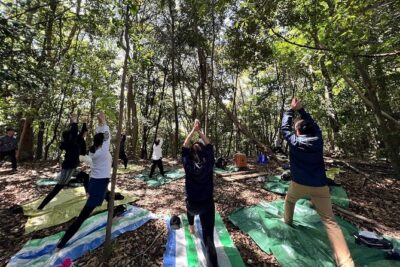
Hiroshima Local guided Hiking Tour&Open-air Tea Ceremony
Our verdict →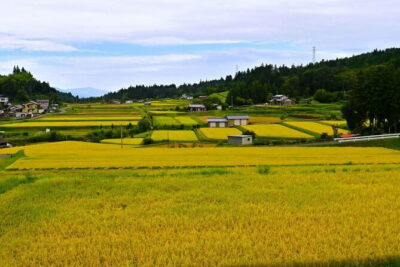
Hiking the Historic Nakasendo Trail [1 Day Tour from Nagoya]
Our verdict →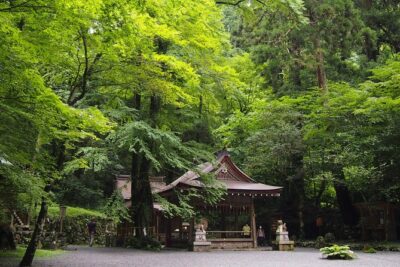
Kyoto Hiking Tour: The Nature and Legends of Kurama and Kibune
Our verdict →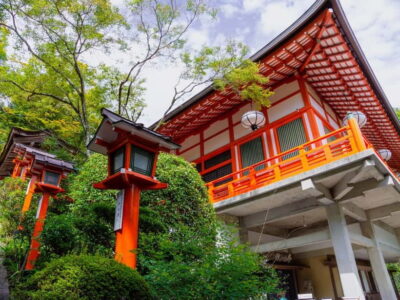
Traverse Outer Rim of Hakone Caldera and Enjoy Onsen Hiking Tour
Our verdict →
Browse the lists this tour appears in