
Reviewed · SPA & HOT SPRINGS
Osaka: Nara and Uji Day Trip with Deer Park and Hot Spring
Nara’s deer are the headline act, but the best part of this day trip is the range: deer crackers and ancient temples in Nara, matcha shops and a hot spring in Uji. You get a quick taste of several very different sides of Japan without sorting out regional trains or local buses.
I like the simple round-trip transport from Osaka and the way the day ends at Genji no Yu, when tired feet appreciate a hot bath. I also like the free time built into Nara and Uji, with guides such as Etta, Lucia, Karin, and Watson praised for clear directions and lively help. The drawback is time: you cover a lot in 10 hours, so neither town gets the leisurely treatment it deserves.
Key points at a glance
- Feed deer in Nara’s maple forest: A complimentary pack of deer crackers gets you started, but the animals can be eager.
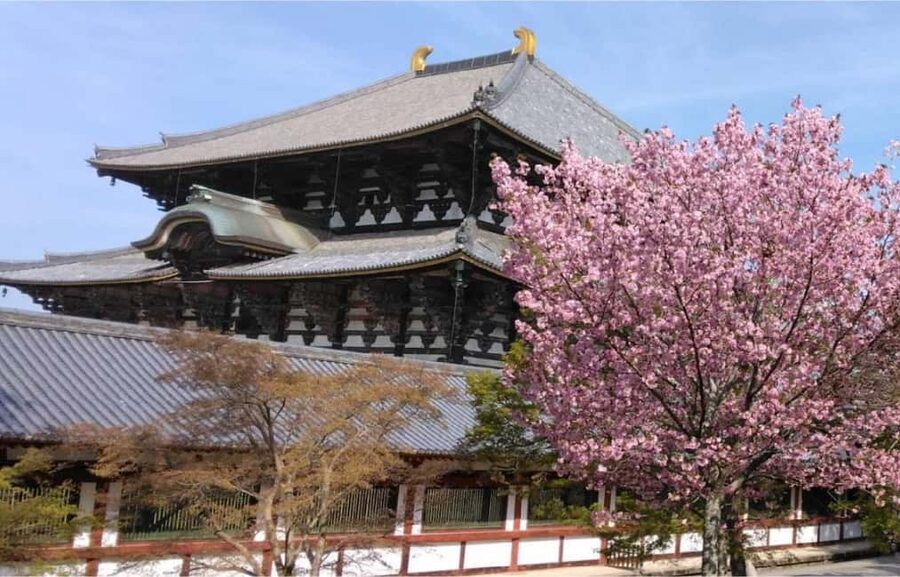
- See Todai-ji and the Great Buddha: Admission is extra, yet this is the day’s major historic sight.
- Walk through Kasuga Taisha: Stone and bronze lanterns give this shrine its special character.
- Taste Uji’s matcha culture: Matcha ice cream, cakes, souvenirs, and even green tea soba line the streets.
- Finish with Genji no Yu: Three indoor baths and one outdoor bath offer a calm end to a long walking day.
- Plan for a full group day: Compact vehicle seats, multilingual explanations, traffic, and walking all shape the pace.
Why this Nara and Uji combination works
For $57 per person, this is a good-value way to connect three things that can be awkward to arrange in one day: Nara’s major sights, Uji’s tea culture, and a Japanese bathing experience. The price includes the guide, driver service, air-conditioned transport, parking, taxes, and round-trip travel from the meeting point.
You still pay separately for meals, drinks, Todai-ji, Byodo-in, and the hot spring. That matters because the advertised price is not the final spending total. Still, transport alone can make a multi-stop day easier, especially if you do not want to change trains or work out the route between Nara and Uji.
I see this as a sampler rather than a slow cultural tour. You will get the main idea of each place, plenty of useful orientation, and some time to wander alone. If you want an entire afternoon inside one temple complex or a long soak at the bathhouse, plan a separate visit.
The group may include people from several countries, and explanations can be given in English, Japanese, and Traditional Chinese. When fewer than 13 people join, the guide may also drive, so the commentary may be more basic. Larger groups can bring more structure, while smaller groups may feel more direct but have less room for long explanations.
More Day Trips in Nara
- Nara Half Day Trip Walking Tour (Private Option Available)
★ 5.0 · 937 reviews - Kyoto and Nara Day Trip from Kyoto
★ 4.5 · 445 reviews - From Kyoto / Osaka: Kyoto Must-see Spots & Nara Park One Day Tour
★ 5.0 · 169 reviews
Starting in Osaka and riding south
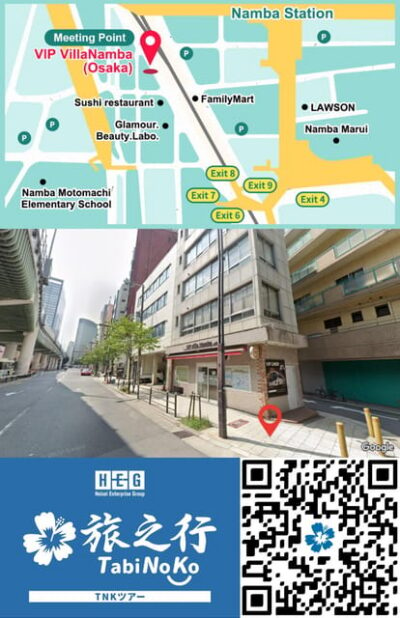
The meeting point is Harimaya Bld., at 1-chōme-3-11 Nipponbashi, Chuo Ward, in the Namba and Shinsaibashi area. Departure is scheduled for 8:40 a.m., and you should arrive at least 15 minutes early. Look for the guide holding a yellow flag.
The drive to Nara takes about 70 minutes. That is useful time for the guide to explain the day and for you to settle in, but the vehicle seats may feel compact. Japan’s tour vehicles often have limited personal space, so pack lightly and keep anything you need close at hand.
The return drive is planned at about 80 minutes. Traffic and weather can change the schedule, so I would not book a train, dinner reservation, or another timed activity immediately after the tour. A little buffer will save you stress.
Nara Park and the deer crackers
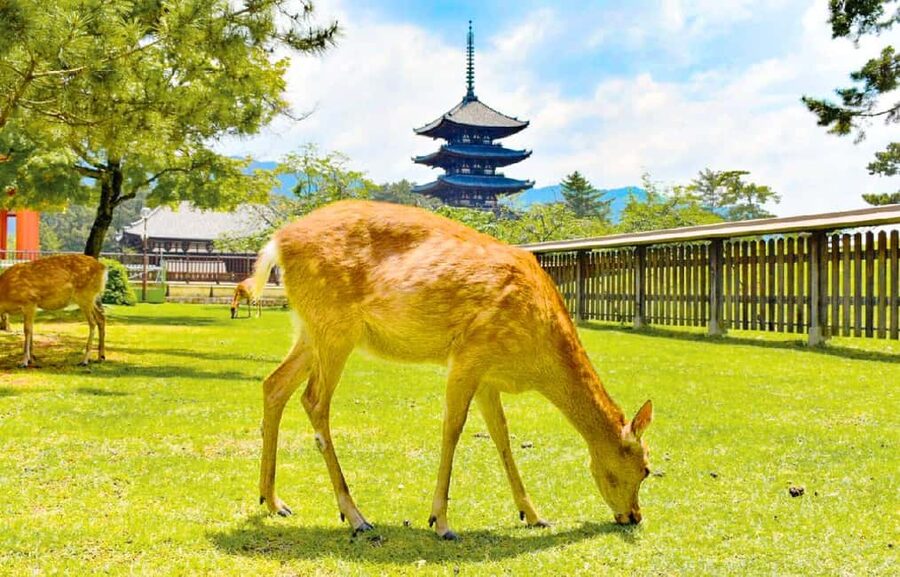
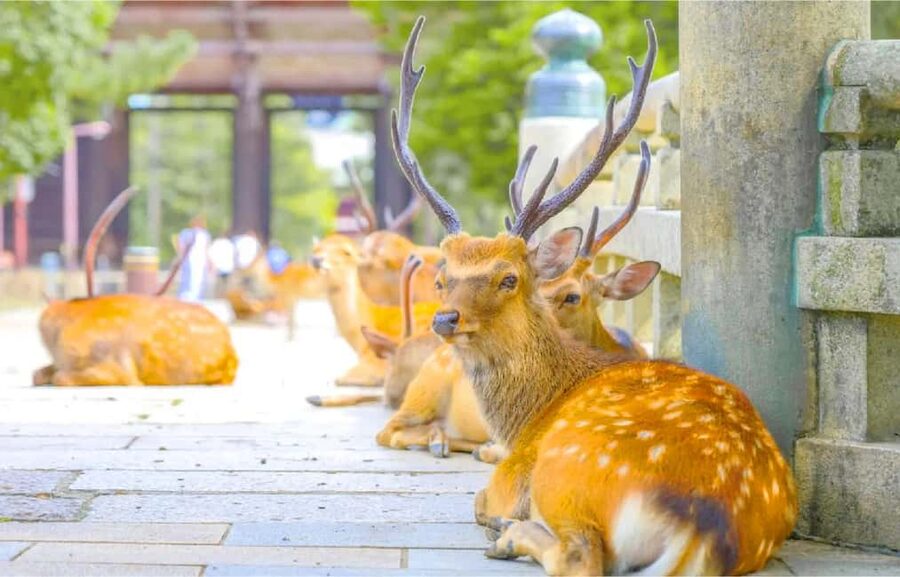
Nara Park sits at the base of Wakakusa Mountain and spreads across a large area with temples, shrines, wooded paths, and open parkland. The deer are the most famous residents. Your guide gives you a complimentary pack of deer crackers, called shika senbei, so you can take part right away.
The deer are accustomed to people and may walk toward you when they spot the crackers. That makes for a memorable encounter, but do not treat them like slow-moving lawn ornaments. Hold the food carefully, feed one piece at a time, and keep your hands visible afterward. Excited groups can crowd around anyone with snacks.
The deer section is one of the strongest parts of the day because it feels active rather than purely observational. You are not just looking at an old building. You are walking through a maple forest with animals approaching from several directions, then trying to keep your crackers and your balance at the same time.
Allow extra energy for walking. Parking is not right beside every scenic point, and the route through Nara includes paths between the deer area, Todai-ji, and Kasuga Taisha. Comfortable shoes are essential. In autumn, maple color adds another reason to linger, though the tour schedule still keeps you moving.
Todai-ji and the Great Buddha
Todai-ji is Nara’s major temple stop and home to the Great Buddha of Nara. The temple is world-famous for good reason: the scale of the main religious building and the huge bronze Buddha make this more than a quick photo stop.
Admission is not included, so bring money for the entrance fee. Since the tour gives you a fixed amount of time in Nara, decide before arrival how much attention you want to give the temple. I would prioritize the main hall and Great Buddha over trying to see every corner of the wider grounds.
Your guide can provide context and help you reach the important sections without wasting time. Several guides who have led this tour, including Etta, Ethan, Jack, and Liao, were praised for combining historical explanation with practical directions. Guide quality can vary by departure, but the multilingual format is useful for an international group.
The main limitation is pace. If you want to study the architecture, sit quietly inside the temple, or photograph every detail, two hours for the wider Nara visit may feel short. The tour is better for a first look than for an expert-level temple visit.
More Onsen & Hot Springs in Nara:
- From Osaka: Himeji Castle, Arima Onsen & Mt. Rokko Day Tour
★ 4.6 · 339 reviews - From Tokyo: Private Tour to Fuji/Hakone – Onsen, Art, Nature
★ 5.0 · 116 reviews - Mt. Fuji, Hakone Private Tour from Tokyo – Onsen, Arts and Nature
★ 5.0 · 79 reviews - Tokyo: Mount Fuji 5th Station & Onsen Day Trip
★ 4.3 · 75 reviews
Kasuga Taisha and its lanterns
Kasuga Taisha is a Shinto shrine known for its thousands of bronze and stone lanterns. Its wooded setting gives it a different mood from the open spaces around the deer and the massive structure at Todai-ji.
The lanterns are the visual key. Look for the way they line paths and gather around the shrine buildings. Even if you do not know much about Shinto practice, the repeated shapes and forest setting make the walk easy to appreciate.
This stop also shows why the tour works better than a simple deer park excursion. Nara is not only an animal encounter. It is a place where sacred buildings, old paths, and protected deer share the same public space.
You may need to choose where to spend your attention. Nara Park, Todai-ji, and Kasuga Taisha can fill a day on their own, yet this trip then continues to Uji. Keep moving when your guide sets a meeting time, or you may lose the chance to enjoy the final hot spring stop.
Uji’s matcha streets and riverside mood
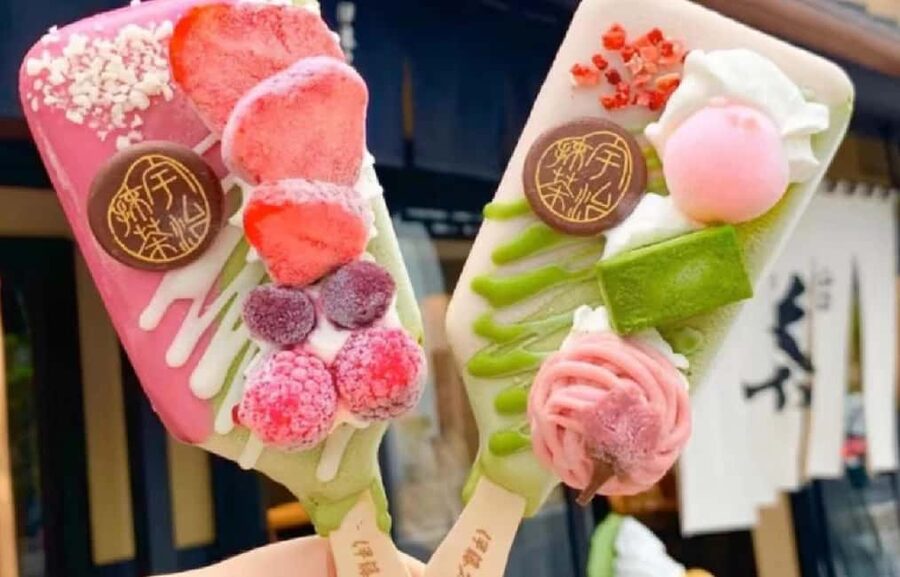
After Nara, the tour heads to Uji for about 1.5 hours of sightseeing. Uji is closely linked with Japanese green tea, and its main streets are packed with matcha-flavored treats. You might find matcha ice cream, cakes, sweets, tea products, and even soba noodles colored with matcha.
This is the best place to spend some of your own money on food. Meals and drinks are not included, so you can choose a snack rather than commit to a full restaurant meal. Vegetarian soba and matcha ice cream were singled out as good choices by one guide’s recommendations, but the tour does not promise a particular shop.
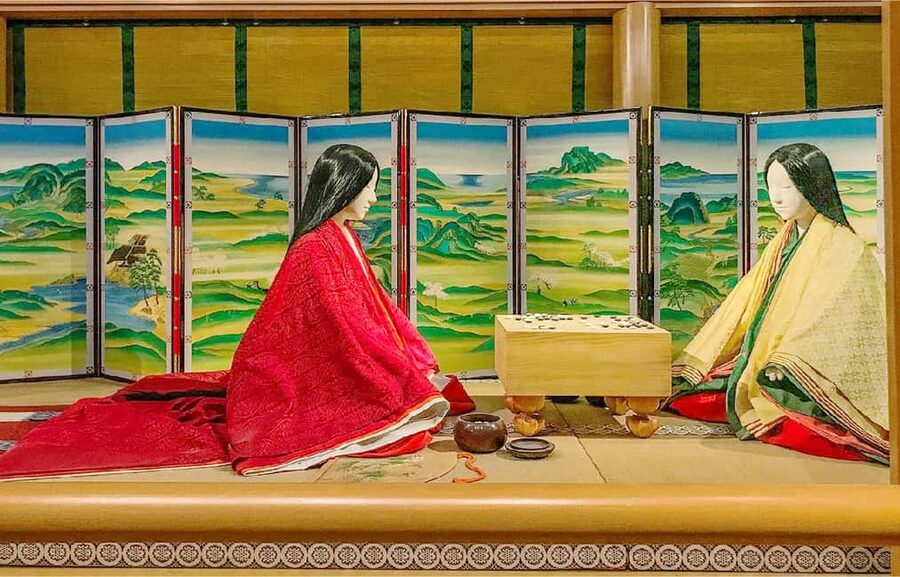
Uji also has a literary connection. The final ten chapters of The Tale of Genji are set in the area, giving the town an extra layer for readers interested in Japanese literature. You do not need to know the novel to enjoy Uji, but the connection helps explain why this is more than a tea-shopping stop.
The short time here is both useful and limiting. You can sample the main street, look for tea souvenirs, and walk toward the temple area. You probably cannot browse every shop, eat a full meal, visit both cultural attractions at length, and take a relaxed riverside walk.
Byodo-in or the Tale of Genji Museum
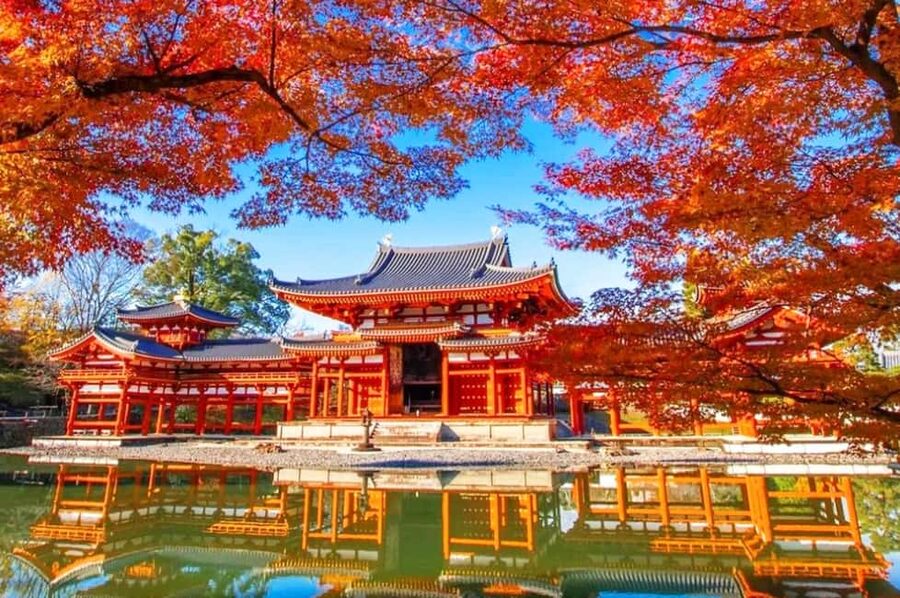
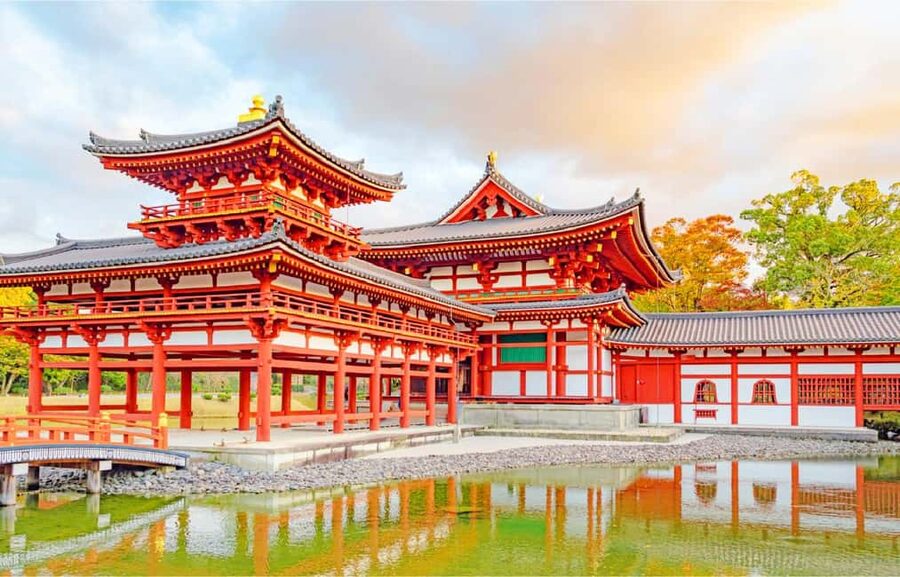
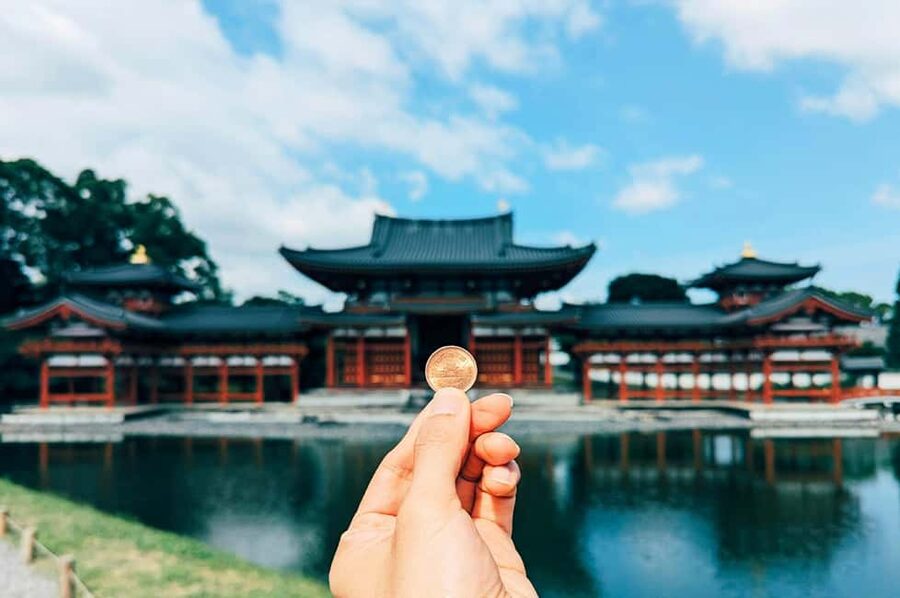
The Uji portion can include a choice between Byodo-in Temple and the Tale of Genji Museum, so check the guide’s instructions and the day’s timing. Byodo-in is known for its Heian-era pond garden architecture and is one of Uji’s defining sights.
Entrance to Byodo-in is extra. If you choose it, allow time for the admission process and for walking through the grounds. The temple is especially suited to visitors who want architecture, garden views, and a strong visual connection to classical Japan.
The Tale of Genji Museum takes a different approach. Multimedia displays and high-definition visuals introduce the novel and its characters. This makes it a sensible choice if you already care about Japanese literature or prefer an indoor cultural visit.
Do not assume you can explore both options slowly. The schedule is designed to give you a taste of Uji, not to cover every museum and temple in detail. Ask the guide what is practical on your departure before paying an entrance fee.
Genji no Yu, a quiet finish to a busy day
The final major stop is Genji no Yu, described as Uji’s only natural hot spring. Its water comes from 1,111 meters underground, and the facility uses traditional Japanese design to create a calm setting.
The bathing area includes three indoor baths and one outdoor bath. For many people, this will be the most unusual part of the trip. You move from crowded sightseeing and long walks to a quiet bathing routine that is central to everyday Japanese culture.
You must bathe without clothing. If you have tattoos, you may not be admitted, so this is not a minor detail. The information for this tour gives a clear warning, and you should treat it as a deciding factor before booking.
The planned bathing time is about one hour. That is enough for a first experience and a chance to recover, but not enough for every added service the facility may offer. One person who joined the trip did not get to use the hot spring, which shows why you should confirm the day’s timing with your guide and avoid assuming the bath is guaranteed if traffic or weather causes changes.
I like the placement of the onsen at the end. After Nara’s paths and Uji’s streets, warm water feels well earned. If you are uncomfortable with communal bathing, you may prefer to skip it, but you should know that it is a major part of what gives this day its shape.
How the guides affect the day

A good guide matters here because the itinerary has several moving parts. You need clear meeting instructions, realistic stop times, temple directions, food suggestions, and reminders about the deer and onsen rules.
Several names appear repeatedly among the strongest guide experiences, including Etta, Ethan, Lucia, Karin, Watson, Jack, Liao, Nick Lee, and Jessica. Etta was especially praised for energetic explanations, humor, multilingual communication, and sending useful location information through WhatsApp. Karin was noted for keeping the group on time and offering food suggestions, while Watson helped people navigate the Uji matcha street.
You cannot request that a particular guide will lead your departure unless the operator confirms it. Still, these examples tell you what to value: clear English, firm time management, patience with a mixed-language group, and practical help at each stop.
When fewer than 13 people join, the guide may drive as well as lead. Expect shorter explanations in that situation. The tour is still useful for transport and orientation, but do not book it expecting a private guide’s level of commentary.
Who will get the most from this tour
This day suits you if you are visiting Osaka for the first time and want to see Nara and Uji without arranging several separate train journeys. It is also a good fit if feeding the deer, seeing one major temple, tasting matcha, and trying an onsen all sound better than spending a full day in one place.
Families and mixed-age groups may appreciate the simple transport, though everyone should be ready for walking and excited deer. Food lovers will enjoy the Uji stop, especially if matcha sweets and tea souvenirs are high on your list.
You may want a different plan if you dislike fixed schedules, communal bathing, compact bus seats, or extra admission charges. Serious temple photographers, literature specialists, and visitors who want a slow Nara day will probably prefer choosing one destination and giving it more time.
Bring comfortable shoes, water money, and a small towel only if the facility’s rules allow or provide one. Most important, arrive by 8:25 a.m. and keep the full day open.
Should you book this Nara and Uji day trip?
Book it if you want breadth, convenience, and a first taste of several Japanese traditions for $57 plus entrance fees and food. The deer encounter, Todai-ji, Uji’s matcha streets, and Genji no Yu make a varied day, and a strong guide can turn the tight schedule into an easy one.
Skip it if your ideal day means lingering at one shrine, eating slowly, or spending hours in the hot spring. This is a well-packed introduction, not a private or deeply relaxed tour. For most first-time visitors based in Osaka, the mix is worthwhile, provided you accept the walking, compact transport, extra costs, and firm timetable.
FAQ
Where does the tour depart from?
It departs from Harimaya Bld. at 1-chōme-3-11 Nipponbashi, Chuo Ward, Osaka, in the Namba and Shinsaibashi area.
What time should I arrive?
The scheduled departure is 8:40 a.m. You should arrive at least 15 minutes early, by about 8:25 a.m. The guide will be holding a yellow flag.
How long does the tour last?
The full experience lasts about 10 hours, including the journeys from Osaka to the sightseeing stops and back.
Which languages are available?
Live guiding is available in English, Japanese, and Traditional Chinese. Explanations may be given in several languages during the shared group tour.
Is transportation included?
Yes. The tour includes round-trip transportation from the meeting point in an air-conditioned vehicle, along with driver and guide service, parking fees, and taxes.
Are meals and entrance fees included?
No. Meals and drinks are not included. Admission to Todai-ji, Byodo-in Temple, and the Uji hot spring is also separate.
Can I feed the deer at Nara Park?
Yes. You receive a complimentary pack of deer crackers. The deer may approach quickly when they see food, so follow the guide’s instructions and be careful around excited groups.
Can I enter the hot spring if I have a tattoo?
The tour information warns that people with tattoos may not be admitted. You should confirm the current rule before booking.
What should I wear for the hot spring?
Hot spring bathing is done without clothing. Comfortable shoes are also important for the walking portions, since parking can be some distance from the scenic areas.
Just added around Nara
- Private Kyoto Tour by Car with Optional Nara or Osaka Add-Ons★ 5.0 · 36 reviews
- Kyoto, Osaka, Nara Private Tour by Car English Driver Guide★ 4.0 · 63 reviews
- Nara Todaiji Kasuga Taisha Private Full Day Tour From Kyoto★ 5.0 · 13 reviews
- From Kyoto: Nara History Guided Half Day Bus Tour with lunch★ 5.0 · 23 reviews
- Nara 8hr Private Tour – Kyoto DEP. with Licensed Guide★ 5.0 · 115 reviews
- Arashiyama & Nara Highlights: One-Day Private Tour Adventure★ 5.0 · 16 reviews
- Kyoto Private Car Tour – Full Day with Local Guide & Nara Option★ 5.0 · 169 reviews
- Kyoto & Nara Private Tour from Osaka Kyoto Hotel Pick-up★ 4.5 · 32 reviews
Spa & Hot Springs, compared.
Private Nagano 1-Day Tour:Snow Monkeys,Zenko-ji,Obuse,Sake,Onsen
Our verdict →
Tokyo: Mt Takao Tour with Ramen and Tattoo-Okay Hot Spring
Our verdict →
[Seasonal Limited] Mt. Fuji 5th Station &Hot Spring Day Tour
Our verdict →
Browse the lists this tour appears in