
Reviewed · SAKE TASTING
Osaka: Cooking Class & Sake Tasting with Local Market Visit
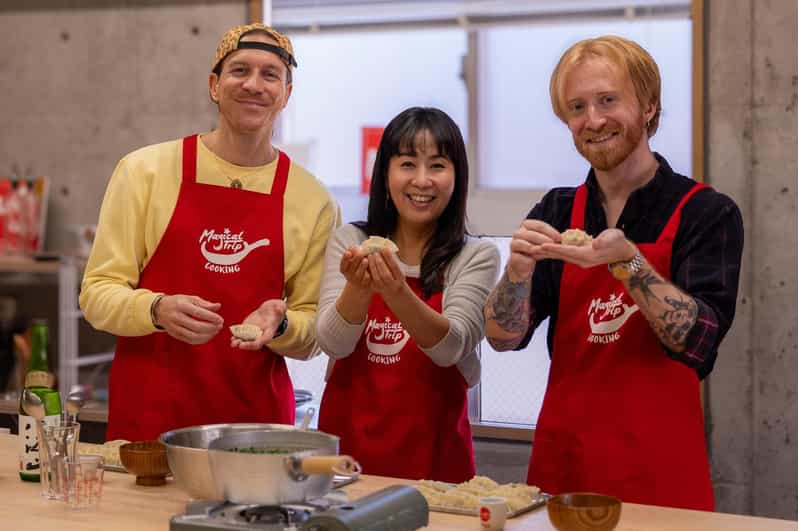
Osaka’s food culture makes the most sense when you cook it yourself. This four-hour class takes you first to a neighborhood supermarket, then into a small studio to prepare niku-sui beef soup, okonomiyaki, and gyoza with an English-speaking local guide.
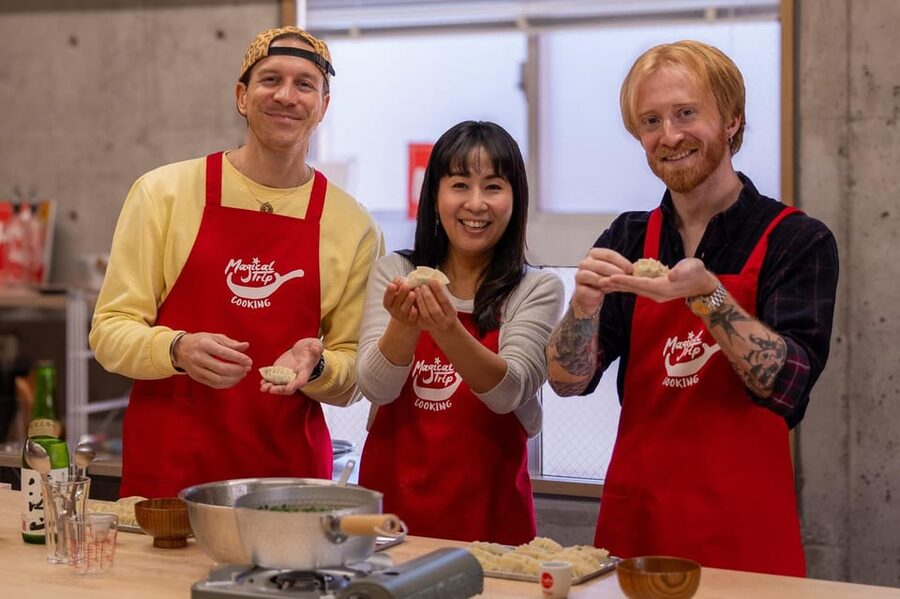
I like the supermarket stop because it shows you the everyday ingredients behind Osaka cooking, not just the finished restaurant dish. I also like the friendly, small-group setup, where guides such as Chie, Eri, Emi, and Akko explain each step, answer questions about Japan, and keep the drinks flowing.
The main drawback is dietary flexibility. Vegans and vegetarians can join with advance notice, but gluten-free meals are not available, and the operator cannot promise an allergy-free kitchen. The meeting point is easy to reach, but late arrivals cannot join.
Key points at a glance
- Shop like a local before cooking: Visit a supermarket near Minami Morimachi Station and see the ingredients used in ordinary Osaka kitchens.
- Make three Osaka favorites: Prepare niku-sui, okonomiyaki, and gyoza, then sit down to eat what you have made.
- A relaxed small group: The class is limited to seven people, which gives you room to ask questions and get help with cutting, folding, and cooking.
- Drinks are part of the meal: Three canned drinks are included, with alcoholic and non-alcoholic choices, plus tea during the class.
- Recipes go home with you: Download the recipes afterward so you can repeat the meal in your own kitchen.
- Expect warm, personal guiding: Chie, Eri, Emi, Akko, and other local hosts bring stories about Japanese food, regional culture, and Osaka life into the lesson.
Why this Osaka cooking class works
At $90 per person, this is not the cheapest way to eat lunch in Osaka. It is also more than a cooking lesson. Your fee covers four hours with a local guide, a supermarket visit, all ingredients, lunch, tea, three canned drinks, photos, and recipe access afterward.
That package makes the price easier to understand. You are paying for food, but also for time with a local host who can explain what you are buying and why the dishes matter. A restaurant gives you the meal. This class gives you the meal, the method, and a way to recreate it at home.
The group limit of seven matters. Cooking in a large class can turn into a demonstration where you watch someone else chop and stir. Here, you should have a better chance to fold gyoza, shape your okonomiyaki, and ask for help when a recipe step is unclear.
The tone is casual rather than formal. You can chat while cooking, choose background music with the group, and enjoy a drink as the meal comes together. That makes the class a good fit for couples, families with older children, friends, and solo visitors who want an easy social activity.
More Cooking Classes in Osaka
- Osaka: Ramen and Gyoza Cooking Class in Dotonbori
★ 5.0 · 378 reviews - Osaka Cooking Class: Okonomiyaki &Japanese cuisines experience
★ 5.0 · 261 reviews - Ramen and Gyoza Cooking Class in Osaka
★ 5.0 · 202 reviews
Meeting at Minami Morimachi
The class begins in front of FamilyMart, about a one-minute walk from Exit 4 of Minami Morimachi Station. This is a practical meeting point, but pay attention to the exact exit and arrive early.
The class starts on time. If you arrive late, you cannot join, reschedule, or receive a refund, so allow extra time for finding the station exit and the convenience store. This is especially important if you are coming from another part of Osaka.
The starting point puts you in a regular neighborhood rather than at a famous food street. That suits the theme. You are not being led through a display built for sightseeing. You are starting with the sort of shopping trip a local cook might make before preparing lunch.
The supermarket stop shows the everyday side of Osaka food
The first part of the experience is a visit to a local supermarket to buy the ingredients. Your guide handles the shopping while explaining the products and the role they play in the recipes.
This stop is useful because Japanese supermarkets can be confusing at first. Packages often use Japanese labeling, cuts of meat may look different from what you know at home, and sauces or seasonings can come in many similar bottles. A local guide gives the products context instead of leaving you to guess.
You also get a clearer sense of how these dishes begin. Okonomiyaki is not simply a restaurant pancake appearing under a squeeze bottle of sauce. Gyoza are not only frozen dumplings from a convenience store. Niku-sui starts with familiar ingredients and careful seasoning.
The supermarket visit is not a full food tour, so do not expect a long market walk or a series of tastings. Its value is practical. It connects the finished dishes to the shopping habits and ingredients of Osaka households.
Niku-sui offers a taste of Osaka beyond the usual menu
Niku-sui is a beef soup popular with local diners but less familiar to many international visitors. It is a smart choice for a cooking class because it shows a quieter side of Osaka food.
The dish is built around beef and broth, with flavor coming from simple ingredients rather than an elaborate restaurant presentation. Your guide walks you through the method, and the recipe is designed to be manageable in a home kitchen.
I like this part of the menu because it gives you something you may not order automatically in Osaka. Okonomiyaki and gyoza are famous outside Japan. Niku-sui gives the class a more local point of view.
It is also a useful dish to learn at home. A soup can be adapted for different meals, and the basic technique does not require specialist equipment. The operator welcomes vegetarian and vegan participants with advance notice, but you should discuss your needs at least one day ahead. Same-day changes may not be possible.
More Drinking Tours in Osaka
- Osaka Bar Hopping Night Walking Tour in Namba (3 bars, 6 tastes)
★ 5.0 · 958 reviews - Osaka: Namba Pub Bar Crawl with a Local Guide
★ 4.9 · 424 reviews - Osaka: Izakaya Bars Guided Walking Tour
★ 4.9 · 385 reviews - Osaka: Guided Pub Crawl
★ 4.4 · 331 reviews
Okonomiyaki puts Osaka’s signature dish in your hands
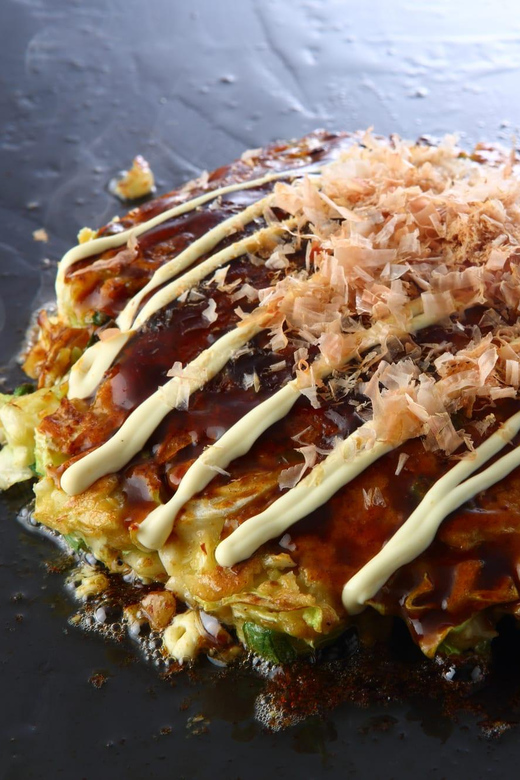
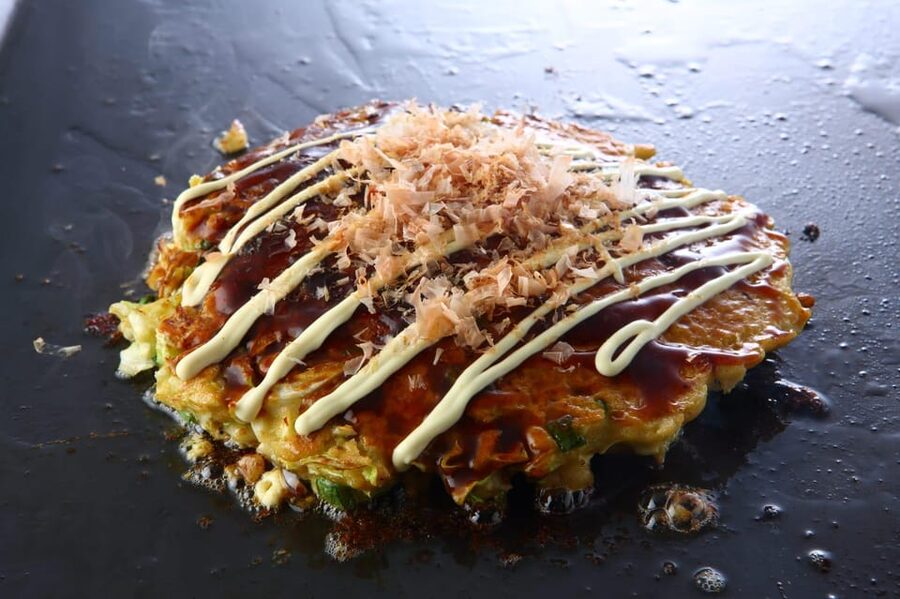
Okonomiyaki is the class centerpiece for many people. Osaka is closely associated with this savory pancake, and the dish invites personal choices in both ingredients and toppings.
Your guide explains the steps, from combining the ingredients to cooking the pancake and finishing it in the familiar Osaka style. The exact process is guided and hands-on, so you are not simply watching a cook prepare it for you.
This is where the class connects food with local character. Okonomiyaki is often described as flexible, and that flexibility is part of its appeal. The dish can feel informal and social, making it a natural choice for a group that is cooking together and talking over drinks.
The class uses simple ingredients and provides recipes afterward. That is important if you want to make the dish at home. You will have a clear reference instead of relying on memory after a busy day in Osaka.
Folding gyoza adds the most playful part
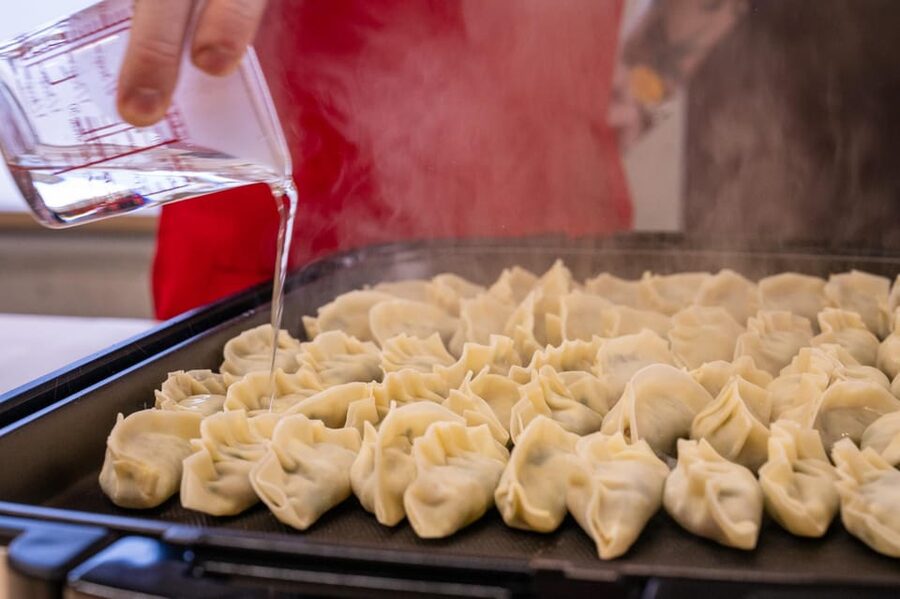
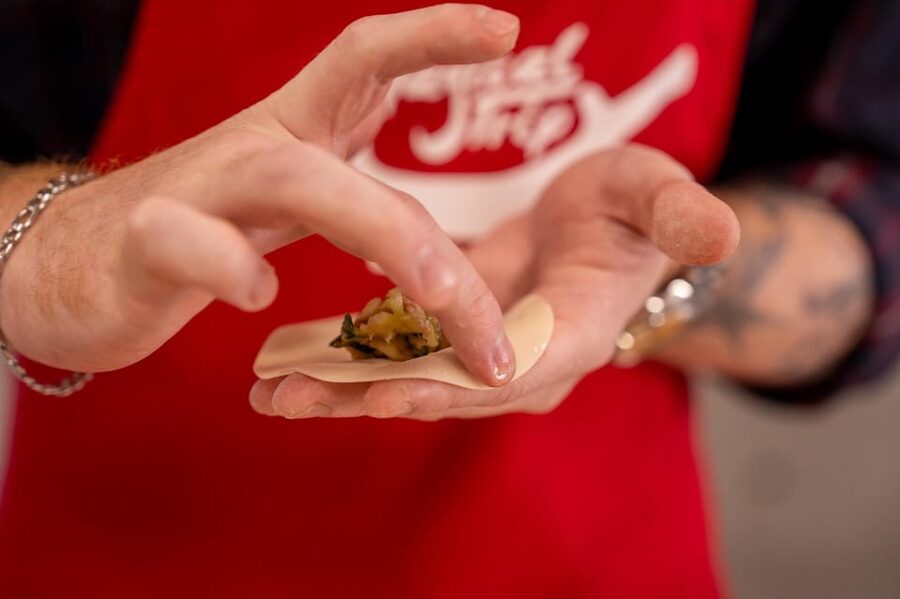
Gyoza preparation brings a different skill to the class. You fill and fold the dumplings before cooking them, so this part can be a little messy and a lot of fun.
The folding is simple enough for beginners, but it gives you something to practice. Your first dumpling may not look like the guide’s. That is fine. The point is to learn the basic method, work alongside the other people in the room, and see how the dumplings change when they are cooked.
This activity suits families with participants over 12, couples, and groups of friends. The age limit exists because the class involves knives and heat. Children under 12 cannot join.
Gyoza also makes the class feel collaborative. One person may work quickly, while another needs help with the wrapper or filling. A small group allows the guide to correct mistakes without making anyone feel rushed.
The drinks make lunch feel social
Three canned drinks are included, and you can choose alcoholic or non-alcoholic options. Local sake and beer are available, along with soft drinks, while tea is served during the experience.
The drinks are not an optional extra that appears only at the end. They are part of the relaxed rhythm of the class, giving you something to sip while chopping, folding, and talking. If you do not drink alcohol, you can still take part fully with the non-alcoholic choices.
The sake adds a useful cultural note, since your guide can connect the drink to the meal and to Japanese food customs. Do not expect a formal sake seminar, though. The focus remains cooking and conversation rather than a technical tasting.
One especially useful point is that the class can help you ask questions you might not think to raise on a standard sightseeing tour. Guides such as Chie and Eri have discussed Japanese regional food, Osaka and Kobe, and general customs during the meal. The exact guide varies, but the English-language format gives you a good chance to ask about what you are eating.
Your guide shapes the whole experience
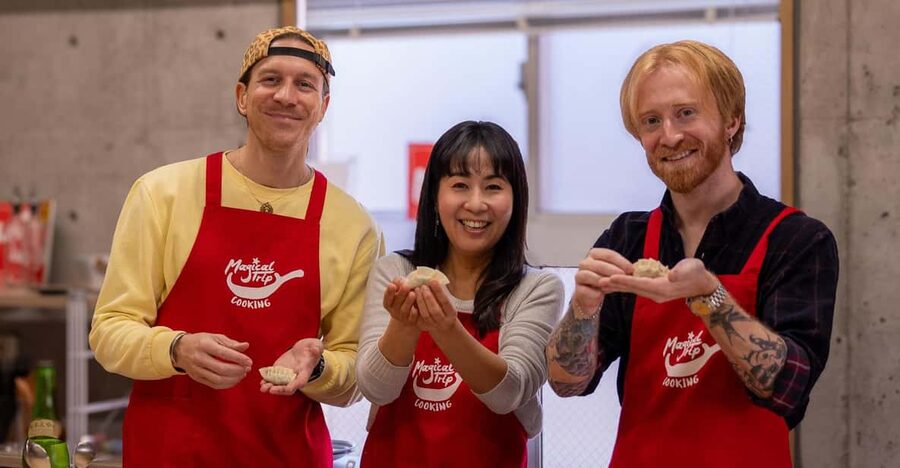
The recipes are straightforward, but the guide makes the difference between a useful lesson and a rushed cooking demonstration. Hosts named in the experience include Chie, Eri, Emi, Akko, and Linda.
Chie is described as bringing food knowledge and stories about different parts of Japan into the lesson. Eri’s style is calm and helpful, with room for questions about the city and culture. Emi has been praised for explaining the correct method for all three dishes while keeping the mood light. Akko focuses on friendly conversation and clear help as the meal comes together.
You should not assume you will receive a particular guide unless that is confirmed when you book. Still, the repeated strength of the experience is the personal attention. The class is built around a local host, not a scripted lecture.
The guide also takes photos during the class and sends them by email afterward. That is a nice extra, since your hands may be busy with food and you may not want to stop for pictures. Make sure your booking contact details are correct so the photos can reach you.
What the four hours feel like
The class has a natural sequence:
- Meet near Minami Morimachi Station and walk to the supermarket.
- Shop for the ingredients while your guide introduces the products.
- Return to the cooking studio.
- Prepare niku-sui, okonomiyaki, and gyoza step by step.
- Enjoy three canned drinks, tea, and the lunch you have made.
- Receive recipe access and photos after the experience.
Four hours gives the class enough breathing room. You can cook, eat, and talk without treating every step like a race. It also means you should not book it immediately before a train or another timed activity.
The exact start time varies, so check availability when choosing a date. The weather matters too. Osaka can be very hot in summer, with reported highs near 40°C, and cold in winter, with lows near -5°C. Dress for the walk to the supermarket and the season, even though much of the class takes place indoors.
Who should book this class
I would choose this for anyone who wants more than a restaurant meal but does not want a full-day food tour. It is particularly good for first-time visitors who want an approachable introduction to Osaka cooking.
It also works well on the final day of a trip. You can learn dishes you have already tasted in Japan, then take the recipes home and keep the trip going from your own kitchen.
Solo participants should find the small group helpful. Cooking gives you an easy way to talk with other people without the awkwardness of a formal group introduction. Couples and friends can also share the work without having to organize ingredients or clean up a kitchen.
Families should note the age rule. Everyone must be over 12 because the class uses knives and heat. People with mobility limitations should ask before booking, since some locations may not be accessible by wheelchair or stroller. A private class is suggested for anyone with walking difficulties.
Dietary needs and practical limits
Vegans and vegetarians are welcome, but you must provide your dietary information or allergies at least one day in advance. The kitchen cannot offer gluten-free options.
The operator also cannot guarantee an allergy-free meal because food is prepared in external kitchens. Substitutions may not always be possible, though the guide will try to make adjustments elsewhere in the meal. If you have a serious allergy, read this limitation carefully before paying.
This is also not the right activity if you want complete control over ingredients or a specialized diet. It is a better match for someone who can work within a standard Japanese menu and wants to learn how local dishes are normally prepared.
Is $90 a fair price?
For four hours, a full lunch, ingredients, three drinks, tea, photos, recipes, and a local English-speaking guide, $90 is reasonable for a small-group experience in Osaka.
The value is strongest if you will actually use the recipes. The dishes are chosen for home cooking, and you are not left with a one-time demonstration that is hard to repeat. You leave with practical methods for making soup, okonomiyaki, and gyoza.
The value is weaker if you mainly want to eat. Osaka has many less expensive meals, and this class takes a substantial part of your day. Book it for the instruction, conversation, and connection to local shopping, not simply for lunch.
Free cancellation is available up to 24 hours before the start time, and you can reserve now and pay later. Those terms help if your Osaka plans are still changing, but the strict late-arrival rule remains important.
Should you book it?
Book this class if you want a friendly, hands-on introduction to Osaka food and like the idea of carrying the experience home. The supermarket visit, three-dish menu, small group, and included drinks give it more substance than a basic cooking demonstration.
Skip it if you need gluten-free food, have serious allergies, dislike group cooking, or want a formal sake tasting. For most food-minded visitors over 12, though, this is a practical way to spend half a day: you shop, cook, eat, learn a few local stories, and leave with recipes you can use again.
FAQ
How long does the Osaka cooking class last?
The experience lasts four hours, including the supermarket visit, cooking lesson, meal, and time with the guide.
Where is the meeting point?
Meet in front of FamilyMart, about a one-minute walk from Exit 4 of Minami Morimachi Station.
What dishes will I cook?
You will prepare niku-sui beef soup, okonomiyaki, and gyoza.
Are drinks included?
Yes. The experience includes three canned drinks, which can be alcoholic or non-alcoholic, plus tea during the class.
Is lunch included?
Yes. Lunch consists of the dishes you prepare during the cooking experience.
Can vegetarians and vegans join?
Yes, vegans and vegetarians are welcome if you provide your dietary information at least one day in advance.
Are gluten-free options available?
No. Gluten-free options are not available.
Can children join the class?
Only participants over 12 can join because the class involves cutting and heating.
What happens if I arrive late?
The class starts on time. Late arrivals cannot join, reschedule, or receive a refund.
More Sake Tastings in Osaka
- Osaka Sake Tasting with Takoyaki Cooking
★ 5.0 · 156 reviews - 3.5h Osaka Night guided Local Bar Hopping, Sake & Karaoke
★ 5.0 · 27 reviews - Kyoto Night Foodie Tour in Gion (9+ dishes + 6 Sake tastings)
★ 5.0 · 1,762 reviews - 1-Day Snow Monkeys, Zenko-ji Temple & Sake in Nagano
★ 5.0 · 1,020 reviews
More Market Tours in Osaka
- Kuromon Market Food Walking Tour in Osaka (6 stops, 6 tastes)
★ 5.0 · 550 reviews - Osaka: Kuromon Market Food Walking Tour (6 stops, 6 tastes)
★ 4.6 · 272 reviews - Kuromon Market Tour: All inclusive 6~8 Dishes & 3~4 samplings
★ 5.0 · 103 reviews - Osaka: Wakayama Cat Train, Seafood market, Hot Springs Tour
★ 4.6 · 24 reviews
Just added around Osaka
- Exclusive Sushi Making Experience with a Master Chef – Osaka Area★ 5.0 · 25 reviews
- Private Home-Style Cooking Class in Osaka with Local Mom Yoshiko★ 5.0 · 46 reviews
- Hidden Osaka – Yukaku Red Light Tour & Culinary Adventure★ 4.8 · 96 reviews
- Osaka: Walking Tour and Top Highlights★ 4.8 · 104 reviews
- Osaka: Private Ceramic Painting Workshop★ 5.0 · 13 reviews
- Pickleball in Osaka, Kobe & Kyoto with Locals!★ 4.7 · 80 reviews
- Eat Like a Local in Osaka – Private Custom Street Food Tour★ 4.3 · 33 reviews
- Osaka:SUMO BEATS SHOWCASE: Taiko Drum and Wagyu burger!★ 4.2 · 37 reviews
Sake Tasting, compared.
Kyoto Night Foodie Tour in Gion (9+ dishes + 6 Sake tastings)
Our verdict →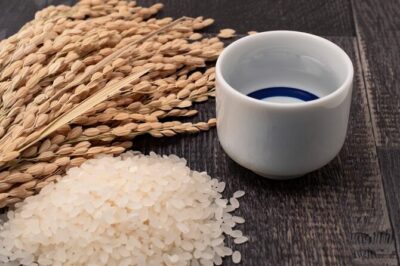
1-Day Snow Monkeys, Zenko-ji Temple & Sake in Nagano
Our verdict →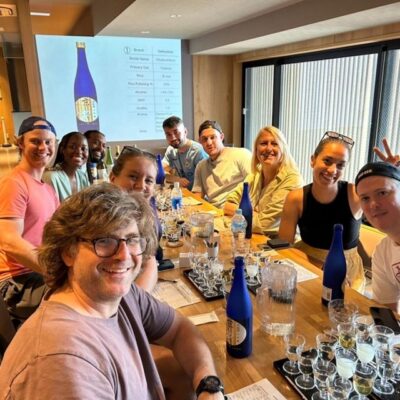
Insider Sake Brewery Tour with Sake and Food Pairing
Our verdict →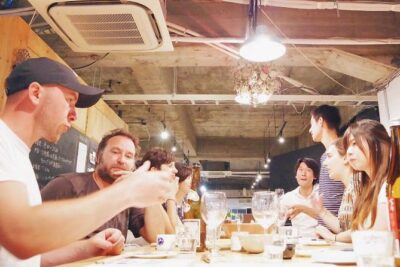
Sake Tasting Masterclass in Shinjuku (8+ Varieties with a Pro)
Our verdict →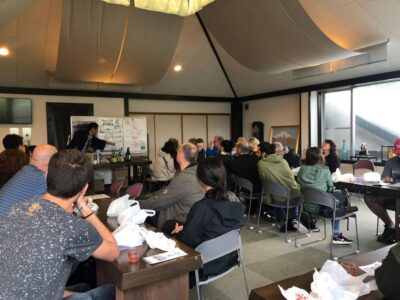
Browse the lists this tour appears in