
Reviewed · DESSERT TOURS
Nagoya: Traditional Japanese Sweets-Making Workshop
Nagoya’s nerikiri workshop turns Japanese sweets into a small piece of edible art. You shape two seasonal designs with white and red bean paste from long-established Kyoto shops, then eat what you make. It is a hands-on way to meet a traditional craft without giving up half a day.
I like the modest price, just $11 per person, and the clear, gentle instruction. I also like the strong English support reported by several participants, despite Japanese being the main language. The main thing to consider is the third-floor venue, which has no elevator, and the class cannot wait for late arrivals.
- Two seasonal nerikiri sweets: Make designs that reflect the time of year.
- Kyoto-made bean paste: Use white and red bean paste from established Kyoto shops.
- 65-minute class: A compact activity that fits neatly into a Nagoya sightseeing day.
- Central meeting point: One minute from Kokusai Center Station, or 13 minutes from Nagoya Station.
- Eat your work: Taste both sweets at the venue, or buy a 100-yen take-out box.
- Japanese-led instruction: English translation is provided as much as possible.
What Nerikiri Lets You Make in One Hour
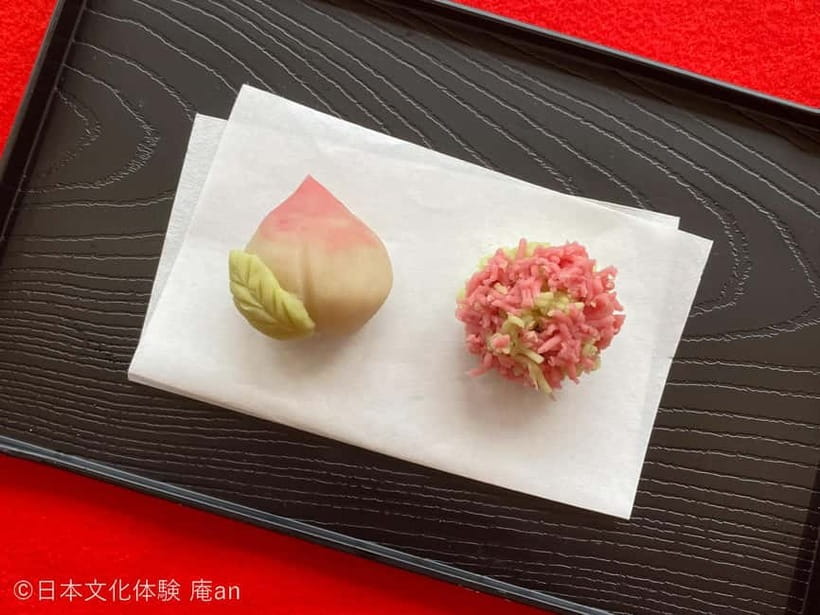
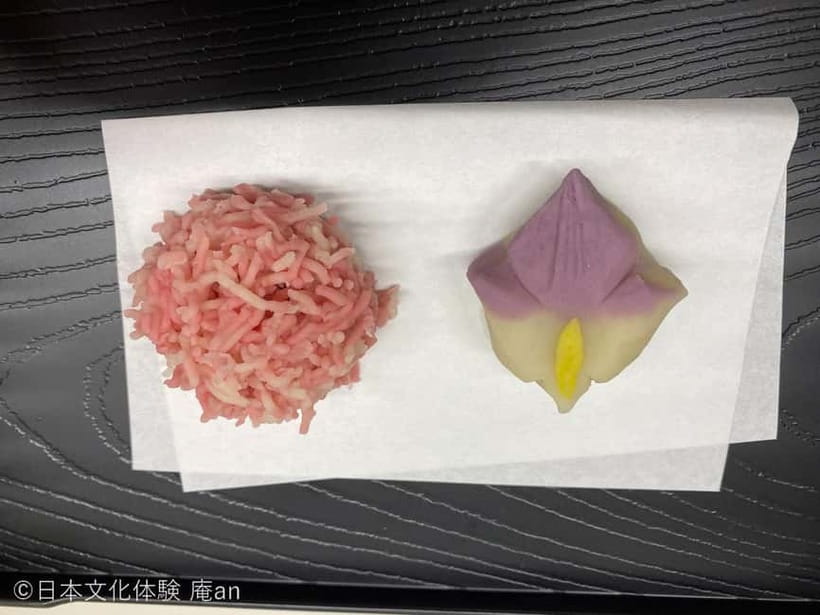
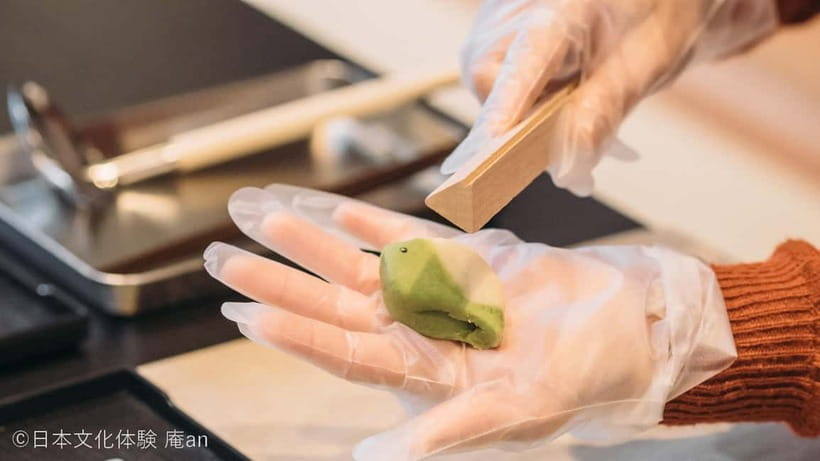
Nerikiri is the star of this class. You make two traditional Japanese sweets, with the exact shapes matched to the season. The appeal is visual as much as culinary. Once the sweets are placed on a plate, they look like tiny works of art rather than ordinary snacks.
The work begins with real bean paste. The class uses white and red bean paste produced by long-established shops in Kyoto, a useful detail for anyone who wants more than a generic cooking activity. You are not simply assembling a prepackaged souvenir. You are handling the central ingredient used in the sweets themselves.
The activity is practical and approachable. You do not need to arrive with specialist cooking skills. The instructor demonstrates the process, then gives you the chance to shape the paste yourself. One participant described the class as easy to understand, while another praised the gentle demonstrations and clear guidance.
That makes this a good choice if you want a cultural activity with a visible result. You leave with two sweets you made yourself, and you can taste them immediately.
A 65-Minute Class Near Nagoya Station
The workshop lasts about 65 minutes. That is long enough to learn the basic technique without taking over your day. You can fit it between sightseeing in central Nagoya, shopping near the station, or a train connection, provided you allow plenty of time to arrive.
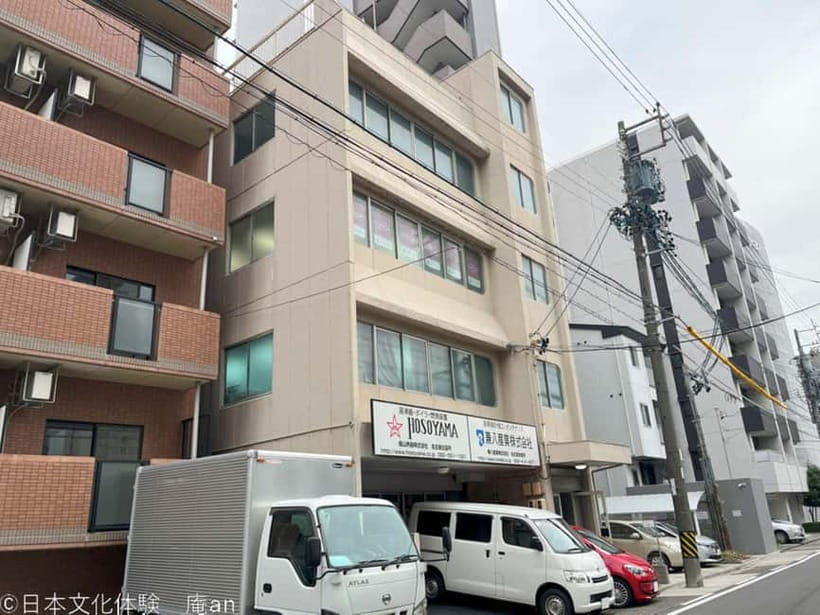
The meeting point is one minute on foot from Exit 3 of Kokusai Center Station on the Subway Sakura-dori Line. From the Sakura-dori side of Nagoya Station, the walk takes about 13 minutes. The listed coordinates are 35.1715323, 136.891893, useful if you prefer to check the exact location before setting out.
You will find the venue on the third floor. There is no elevator, so you need to be comfortable using stairs. This is an easy detail to miss when booking a short activity, especially if someone in your party has limited mobility.
The operating hours are 10:00 to 17:00. Arrive early, not just on time. The class will not be held for delayed arrivals, and the provider does not compensate transportation costs if you miss the activity.
More Sweets & Dessert Tours in Nagoya:
- Nagoya: Japanese Traditional Sweets making and Tea Ceremony
★ 4.9 · 76 reviews - Matcha Making Class in Tokyo with Authentic Japanese Sweets Set
★ 5.0 · 744 reviews - Matcha Making Class in Osaka with Authentic Japanese Sweets Set
★ 5.0 · 509 reviews
What Happens When You Arrive
The format is a classroom workshop, with space for around 20 people. That size gives the activity a social feel, although it is not a private lesson. You can book alone or with a group.
The instructor leads the session in Japanese. English translation is provided as much as possible, and several English-speaking participants found the directions clear. The quality of the demonstration matters here, since much of the work is visual. You watch the technique, copy it, and then adjust your sweet as you go.
If you need extra English help, contact the provider in advance. The listed language is Japanese, so English assistance should be understood as support rather than a guaranteed fully English class. This is not a problem for many people because the steps are shown, but it is worth knowing before you book.
A short introduction to matcha making may also be included. It is not the main focus of the workshop, but it can add useful context to the sweets and the way they are enjoyed.
Shaping the First Seasonal Sweet
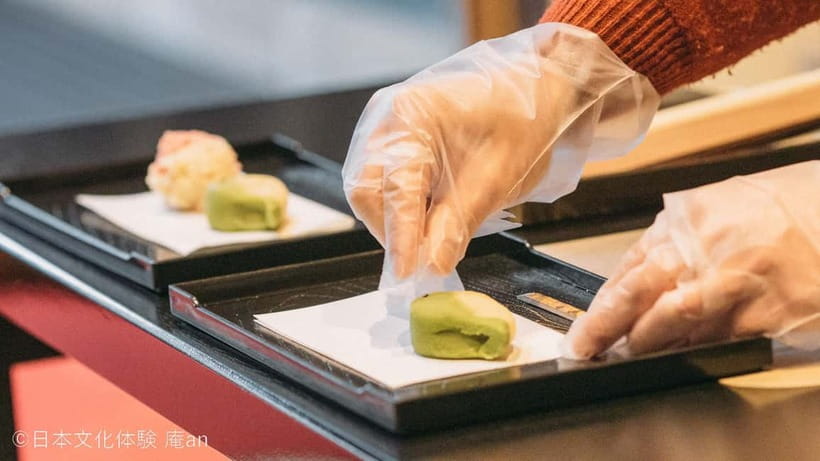
The central part of the class is making two nerikiri. You work with the provided bean paste and shape it according to the seasonal design demonstrated by the instructor.
This is where the activity becomes more than a tasting. You must handle the paste carefully and pay attention to proportion, surface, and form. The finished result may not look exactly like the instructor’s example, and that is part of the fun. The process gives you a feel for the patience and hand control behind Japanese confectionery.
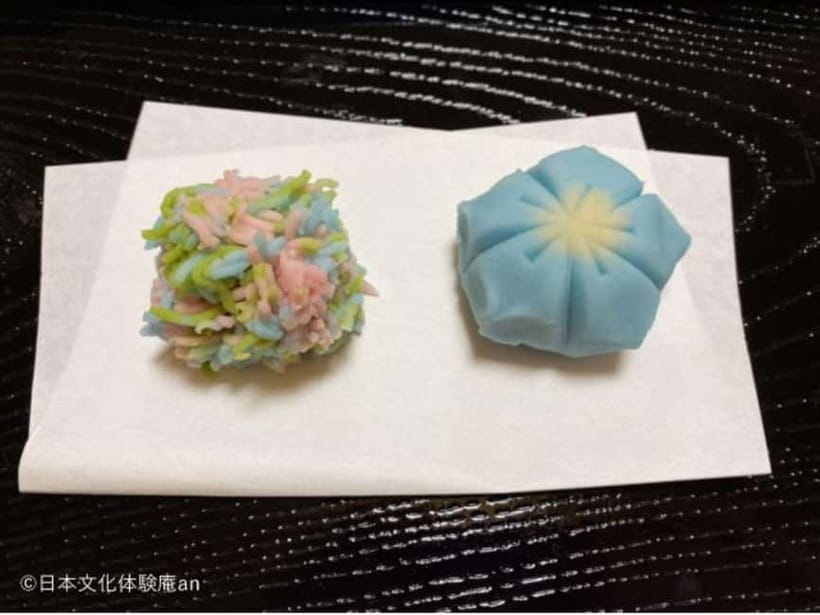
The designs change with the season. That means the experience is not completely fixed year-round. You may see flowers, leaves, or other seasonal ideas, but the exact designs are not specified in advance, so you should treat the seasonal element as a pleasant surprise rather than book it for one particular motif.
The first sweet helps you understand the basic method. By the time you begin the second, you have a better sense of how the paste responds and how much pressure to use. The workshop gives you two chances to practice, rather than asking you to make one perfect piece on your first attempt.
Making a Second Sweet and Plating Both
The second sweet gives you another chance to work with the same ingredients and seasonal theme. You may find that your hand becomes more confident, or you may discover that small decorative details take more care than expected.
When both sweets are finished, you place them on a plate. This final step matters because presentation is part of the craft. A handmade sweet can look quite different once it is arranged carefully, and the plate gives you a clear endpoint to the class.
You can eat the sweets at the venue. That makes the activity simple for people with limited luggage space, and it lets you taste the finished work while the experience is still fresh. If you want to carry them away, a take-out box costs 100 yen.
A completion certificate is also available for 300 yen. For a named certificate, provide the names in advance. Otherwise, the name section will be left blank. I would treat this as an optional keepsake, not a necessary part of the experience.
A few more Nagoya half-days worth comparing
- Ghibli Park 1-Day Bus Tour from Nagoya
★ 4.5 · 277 reviews - Hiking the Historic Nakasendo Trail [1 Day Tour from Nagoya]
★ 5.0 · 104 reviews - Nagoya Highlight Tour guided by a friendly local
★ 5.0 · 86 reviews - Magome-juku, Tsumago-juku & Ena-kyo 1d Bus Tour from Nagoya
★ 4.6 · 75 reviews
Why the Kyoto Bean Paste Matters
The use of Kyoto-produced white and red bean paste gives the class a useful connection to established Japanese confectionery traditions. You are working with ingredients sourced from long-running Kyoto shops, rather than being handed an unspecified sweet-making mixture.
That does not turn the class into a full lesson in Kyoto confectionery. The session is short, and the main goal is to make two sweets. Still, the ingredient choice adds value because you can focus on the texture and taste of proper bean paste while learning how it is shaped.
The final taste is also a strength of the format. Some craft workshops leave you with something attractive but not very useful. Here, the result is designed to be eaten, and the class gives you time to enjoy it on the spot.
How Much Value Do You Get for $11?
At $11 per person, this is one of the easier cultural activities to fit into a Japan itinerary. You receive a 65-minute guided session, the ingredients, the chance to make two sweets, and the option to eat them immediately. The price is especially reasonable if you are already staying or sightseeing near Nagoya Station.
You should still keep the small extras in mind. A take-out box costs 100 yen, and a completion certificate costs 300 yen. Neither is required, so the advertised price remains a fair estimate for the core experience.
The value is strongest for people who want participation rather than a simple food sample. If you only want to taste Japanese sweets, a shop or café will be faster. If you want to understand how the sweets are shaped and leave with a story to tell, this workshop gives you more for the same modest outlay.
The class can also work well for a group. You have a shared task, a clear time limit, and something edible at the end. Solo participants should also feel comfortable booking, since the format is designed for individual and group participation.
English Support and Class Style
The instructor speaks Japanese, but English translation is provided as much as possible. The available feedback points to clear demonstrations, gentle delivery, and good English communication in several sessions. One English-speaking participant described the class as easy to follow, while participants from Germany also found the instruction friendly and understandable.
I would still prepare for a class where watching matters as much as listening. Keep your eyes on the demonstration, and do not hesitate to ask for clarification before moving to the next step. Contact the provider before booking if you need a specific level of English support.
The classroom format may suit you if you like structure. You are not wandering through a market or casually sampling food. You sit down, watch the process, make the sweets, and finish within a defined period. The trade-off is that a group of around 20 people will not provide the same personal attention as a private workshop.
Who Should Book This Workshop?
I would recommend it to first-time visitors who want a gentle introduction to Japanese food culture. It also suits families with older children, couples, solo visitors, and anyone looking for a short activity near Nagoya Station.
It is a good match for you if:
- You enjoy making things with your hands.
- You want a cultural activity that lasts about an hour.
- You like seasonal design and careful presentation.
- You want to taste what you make rather than carry it home.
- You are comfortable with Japanese-led instruction and visual demonstrations.
- You can manage stairs to a third-floor venue.
Children under two who sit on a parent’s lap can participate free of charge. Anyone who is not taking part in the experience cannot enter the venue, so accompanying adults should book a place if they plan to stay inside.
I would choose a different activity if you need step-free access, a fully English-speaking instructor, or a private class. The lack of an elevator and the Japanese-first format are the two details most likely to affect your decision.
Timing, Cancellations, and Useful Planning Tips
You can cancel up to 24 hours in advance for a full refund. After the cancellation fee applies, changing the date or time may also bring an additional specified charge. The provider treats requests received after 17:00 as arriving the next day, so do not leave a cancellation or change request until late evening.
Book with enough time to reach the venue from Nagoya Station. The walk is listed as 13 minutes, but you should allow extra time for finding Exit 3, locating the building, and climbing to the third floor.
The class cannot wait for delays, and transportation expenses are not covered if you miss it. I would avoid scheduling the workshop immediately before a train departure or another fixed appointment. A little spare time will make the experience much more relaxing.
The booking system allows you to reserve now and pay later, which can help while arranging a changing Japan itinerary. Check the available start times before choosing your day, since the activity runs between 10:00 and 17:00.
Should You Book the Nagoya Nerikiri Workshop?
Book this workshop if you want a low-cost, hands-on taste of Japanese culture close to Nagoya Station. The combination of seasonal designs, Kyoto bean paste, two sweets, and on-the-spot tasting gives the 65 minutes a clear purpose.
I especially like it for a first visit to Nagoya because it is short, central, and easy to add around other plans. The friendly instruction and useful English support make it approachable, while the modest price keeps the risk low.
Skip it if stairs are a problem, if you need guaranteed full English instruction, or if you prefer a private and quiet lesson. For everyone else, this is a practical little workshop with enough craft, food, and seasonal character to make a memorable break in your sightseeing day.
FAQ
Where is the Japanese sweets workshop located?
The venue is one minute from Exit 3 of Kokusai Center Station on Nagoya’s Subway Sakura-dori Line. It is about a 13-minute walk from the Sakura-dori side of Nagoya Station.
How long does the workshop last?
The experience lasts 65 minutes. Available starting times can be checked when you book.
What will I make?
You will make two seasonal Japanese traditional sweets called nerikiri. The exact designs match the season.
Can I eat the sweets after making them?
Yes. You can eat your handmade sweets at the venue. A take-out box is available for 100 yen if you want to carry them away.
Is the workshop available in English?
The instructor’s language is Japanese, and English translation is provided as much as possible. Contact the provider in advance if you would like to request English support.
Is the venue accessible by elevator?
No. The venue is on the third floor, and there is no elevator.
Just added around Nagoya
- Kimono Rental and Tea Ceremony Experience in Inuyama★ 5.0 · 15 reviews
- Gifu Samurai Sword Town;Japanese Damascus Knife Making Experience★ 5.0 · 27 reviews
- Magome & Tsumago Nakasendo Full-Day Private Trip with Government-Licensed Guide★ 5.0 · 20 reviews
- Knife Making Experience in Samurai Sword Town★ 5.0 · 29 reviews
- Nagoya: Toyota Commemorative Museum Guided Tour★ 4.7 · 22 reviews
- Nagoya Private Custom Tour with Local Guide★ 5.0 · 15 reviews
- Nagoya: Customized Private Tour★ 4.6 · 15 reviews
- From Nagoya: Inuyama Castle, Ena Gorge, Magome, Tsumago Tour★ 4.4 · 18 reviews
Dessert Tours, compared.

Matcha Making Class in Tokyo with Authentic Japanese Sweets Set
Our verdict →

Browse the lists this tour appears in