
Reviewed · DAY TRIPS IN TAKAYAMA
Hida Takayama, Shirakawa-go+Observatory|Day Trip from Nagoya
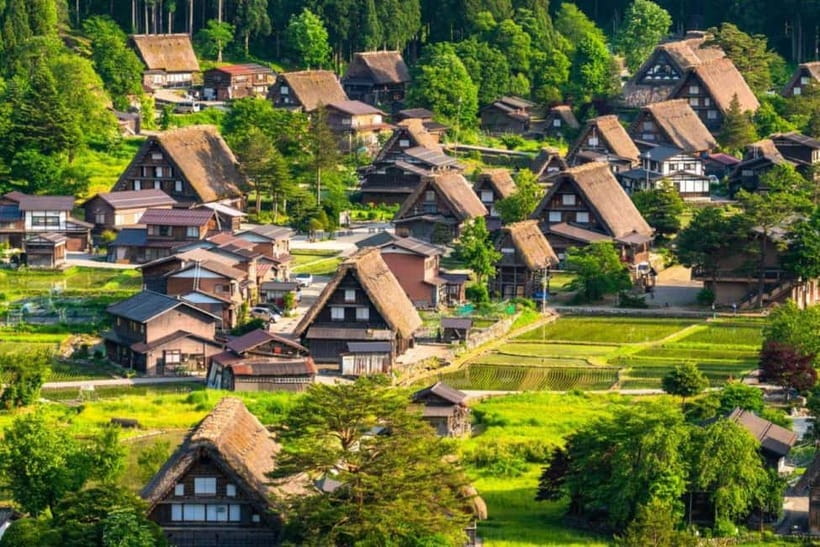
Shirakawa-go is the star here: from the Shirakawa-go Observatory, you can look down across the famous thatched roofs with Gifu’s mountains behind them. The view gives you the whole village at once, rather than just a walk through its lanes. I also like that the day pairs this rural setting with Takayama’s old town, where sake breweries, wooden townhouses, irrigation channels, and old shopfronts give you a close look at Hida’s traditional streets.
The main trade-off is the long bus day. You spend about five hours in transit, with roughly two and a half hours in Takayama and one and a half hours in Shirakawa-go. That makes this a practical introduction from Nagoya, but not a leisurely stay in either place.
Key points at a glance
- The observatory is guaranteed: You get the classic high view over Shirakawa-go and its thatched houses.
- Takayama adds a second style of Japan: Walk beneath wooden eaves, past sake breweries and narrow old-town streets.
- The bus ride saves planning time: Transfers from Nagoya are arranged, which is useful when rail and local connections feel complicated.
- The $50 price is strong for transport and guiding: Meals, tickets, and personal spending still come out of your pocket.
- Meeting-point details matter: Several yellow-flag staff may be present, so use the previous day’s email for the guide’s name and bus number.
- This is a walking-heavy day: Comfortable shoes are essential, and the tour is not suitable for wheelchair users or people with mobility limitations.
Why this day trip works from Nagoya
Takayama and Shirakawa-go are far enough from Nagoya that visiting both independently takes careful planning. This 10-hour outing handles the long transfers by bus and gives you a guide in English, Japanese, Chinese, or Traditional Chinese.
For $50 per person, the value comes mainly from the transport and the chance to see two difficult-to-combine destinations in one day. The price includes the driver, bus cost, guided touring in Takayama’s old town, the visit to the Gassho-zukuri village, and a 10 percent service charge.
You should budget extra for lunch, drinks, snacks, entry fees, and anything you buy along the way. Meals are listed as excluded, even though the general description refers to buffet breakfast and dinner at Toyama Royal Tonami Hot Spring Resort. Since those meals do not appear in the stated inclusions or the day’s timed schedule, confirm the exact meal arrangement before booking. Do not assume food is covered by the $50 price.
The day begins and ends at a Nagoya meeting point. Ministop Meieki Tsubakicho is listed, but the exact meeting point can depend on the option you book. Check the final booking email carefully rather than relying only on the QR code.
More Day Trips in Takayama
- 1 Day Private Charter Tour to Shirakawa-go & Takayama
★ 4.5 · 253 reviews - 1-Day Takayama Tour: Explore Scenic Takayama and Shirakawago
★ 5.0 · 113 reviews - From Takayama: Guided Day Trip to Takayama and Shirakawa-go
★ 4.9 · 113 reviews
The long ride into Hida
The first transfer takes about two and a half hours. That is a serious stretch of road time, but it is also what makes this trip possible as a day outing. You can use the ride to rest, watch the scenery change, or prepare for a busy walking schedule.
The timing leaves limited room for delays. You have about two and a half hours in Takayama, followed by a one-hour transfer to Shirakawa-go, then about an hour and a half there before another two-and-a-half-hour return ride. If you want slow meals, long shopping stops, or a quiet visit inside several houses, this schedule will feel tight.
The bus format is particularly useful in seasons when mountain roads or local connections make independent planning less simple. Still, you should check the forecast before leaving Nagoya and dress for the conditions at both stops. The mountain villages can feel quite different from the city.
Takayama’s old town in 2.5 hours
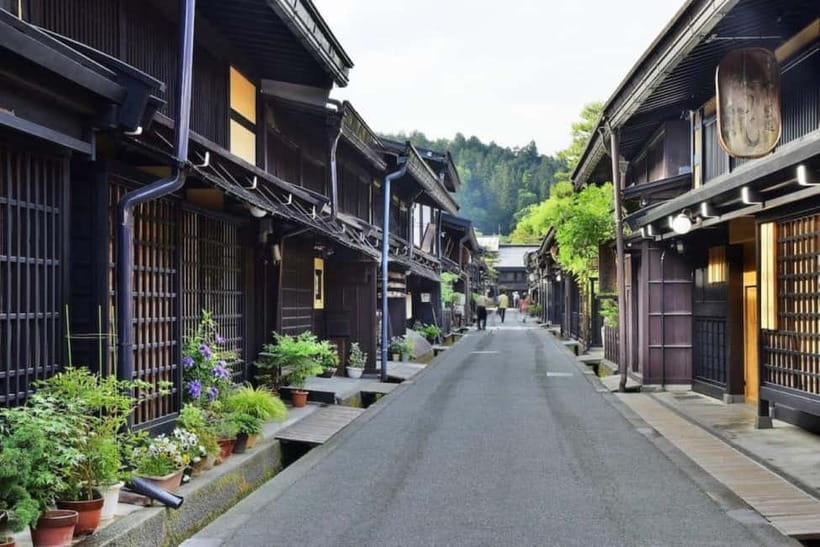
Takayama is the first major stop, with time for a guided walk, sightseeing, and lunch. The old town is known for its preserved wooden buildings and the careful details along the street.
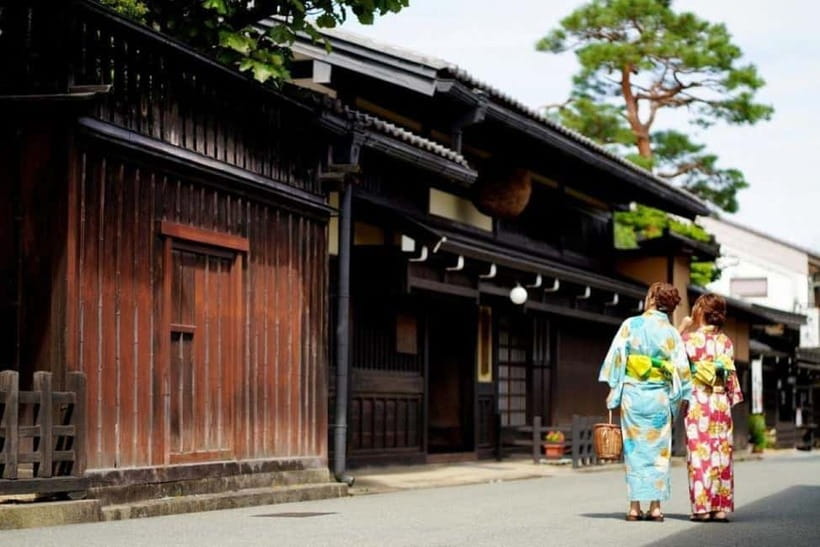
Look under the eaves for narrow irrigation canals. Sake breweries are marked by cedar-leaf balls called sakebayashi, which hang above entrances like traditional signs. Large townhouse doors, latticework, and noren curtains give the streets a distinct Hida character.
I like this stop because it offers more than a quick photo opportunity. You get to see how the town’s daily life was arranged around wooden homes, small storefronts, water channels, and brewing traditions. Even if you have visited historic districts elsewhere in Japan, Takayama has its own look and a strong local identity.
You have lunch time here, but the cost is not included. Since the stop lasts about two and a half hours, plan your meal with the departure time in mind. A slow restaurant meal could reduce your walking time, while a quicker meal leaves more room for the old streets.
The guide’s role is useful in Takayama because small details can be easy to miss. A sakebayashi may look like decoration until you learn what it signals. The same is true of the latticework and traditional shop curtains. The tour is available in several languages, but the specific guide can vary by departure.
One Japanese-language booking note singled out Tani-san for clear and careful guiding. The name appears in Japanese as 谷さん, so the English spelling may differ. You should not assume Tani-san will lead every departure, but the feedback suggests that guide assignments can make a real difference to the experience.
Shirakawa-go and the Gassho-zukuri village
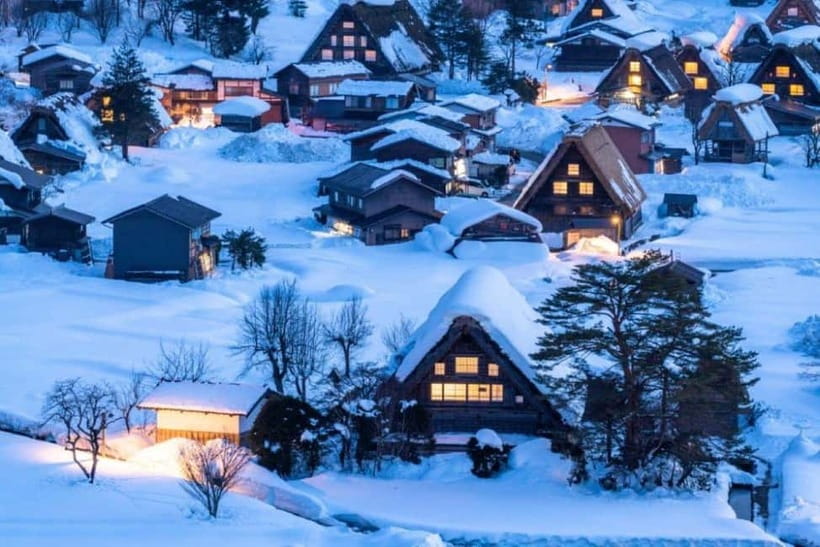
After Takayama, the bus continues for about an hour to Shirakawa-go. You have around an hour and a half for the visit, including guided sightseeing and walking.
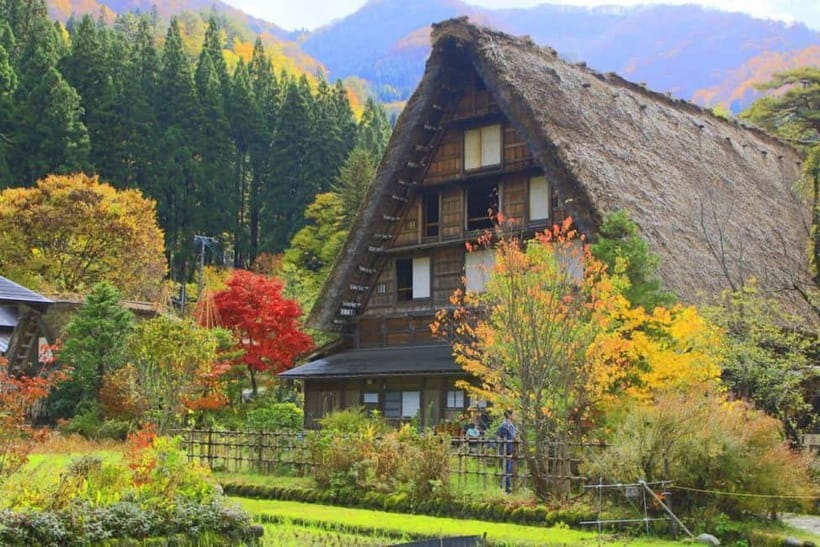
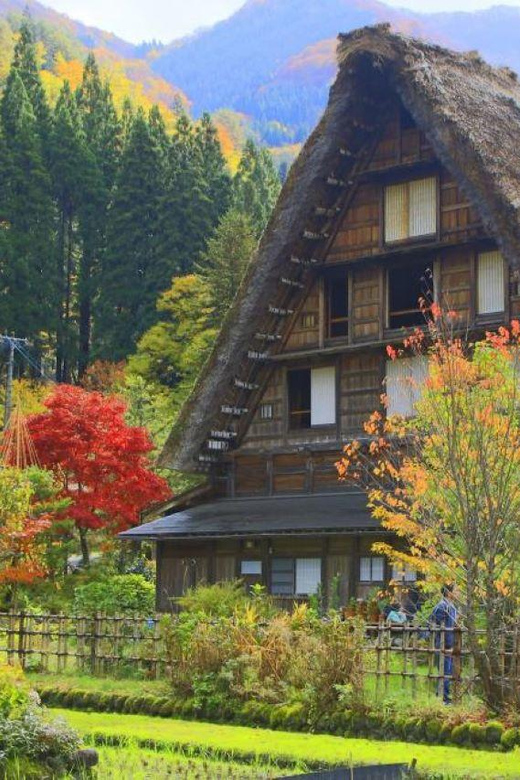
The village is famous for its Gassho-zukuri houses. These steep, triangular roofs were built to handle heavy snow, and more than 100 traditional buildings remain in the area. People still live in some of them, which gives the village a sense of being lived in rather than preserved only for display.
The design reflects local problem-solving. The roof shape, timber construction, and use of the upper levels show how residents adapted to a snowy mountain setting. You can appreciate the houses as beautiful buildings, but the practical side is just as interesting.
The short visit means you should choose your priorities. If the observatory is your main goal, go there first or follow the guide’s timing closely. If you prefer house details and village lanes, keep an eye on the clock so you do not miss the bus.
Shirakawa-go is also sensitive to visitor behavior. Smoking, littering, touching plants, and flash photography are not allowed. Follow the marked paths and treat the village as a residential community, not just an outdoor museum.
Same trip, a completely different kind of day:
- World Heritage Shirakawa-go and Experience Tours from Kanazawa
★ 5.0 · 4,049 reviews - Kanazawa: World Heritage Shirakawa-go Morning Guided Tour
★ 4.9 · 988 reviews - From Nagoya: Gujo, Hida Takayama, and Shirakawa-go Day Tour
★ 4.4 · 398 reviews - Kanazawa: World Heritage Shirakawa-go & Two Local Experience
★ 4.9 · 274 reviews
The guaranteed observatory view
The most important feature of this tour is the guaranteed visit to the Shirakawa-go Observation Deck, also called the Ogimachi Castle Observation Deck. From above, you can see the spread of the village, its pointed roofs, and the mountains of Gifu Prefecture beyond.
This view explains Shirakawa-go better than a walk at ground level alone. Down among the houses, you see individual roofs and lanes. From the observatory, you understand the village’s setting and the repeated pattern of the Gassho-zukuri buildings.
Weather will shape the view. On a clear day, the mountains form a strong backdrop. Cloud, rain, or snow can soften the scene, but the high viewpoint remains worthwhile because it gives you a different angle from the village streets. Bring a camera, but do not let photography turn the stop into a race. You have limited time.
The viewpoint also adds value because some outings to Shirakawa-go focus only on the village itself. Here, the observatory is a stated part of the plan, so you are less likely to leave without seeing the familiar panorama that draws many people to the area.
What the schedule feels like on the ground
The full day runs for about 10 hours, but only four hours are allocated to the two main destinations. The rest is transport. That rhythm suits you if your goal is to sample both places in one day and return to Nagoya without arranging several train and bus connections.
It is less suitable if you dislike long rides or need a flexible pace. You will have little control over how long you stay at each stop. Delays can also reduce free time, so arrive at every departure point early.
The walking is not described as technically difficult, but there is a lot of it. You may encounter uneven streets, outdoor paths, stairs, or changing weather conditions. Wear comfortable shoes with good support. Carrying a water bottle and snacks is sensible because meals and drinks are not included.
Children under five, pregnant people, wheelchair users, and people with mobility impairments or heart problems are specifically advised against joining. That is important here because of the long day, mountain setting, and amount of walking.
Meeting the bus without confusion
The meeting point can be the most stressful part of an otherwise simple day. A Japanese-language note gives a useful warning: several staff members may hold yellow flags, making it unclear who handles each departure.
Your best check is the email sent the day before. It includes the guide’s name and the bus number. Show that email to a yellow-flag staff member, rather than relying only on the QR code. The QR code may not be enough for staff to identify your assigned bus.
If several buses are waiting, compare the vehicle number with the one in your email. Staff should be able to connect you with the correct guide. This small step can save time and prevent you from joining the wrong group.
Since the meeting point may vary with the option you select, confirm the exact location before setting out. Transport to and from the meeting point is not included, so you need to reach it independently.
Languages, guiding, and group comfort

The tour offers live guiding in English, Japanese, Chinese, and Traditional Chinese. The quality of your experience will partly depend on the guide assigned to your departure, especially during the short sightseeing windows.
The strongest feedback focuses on careful explanations and safe driving. One Japanese-language note praised a guide for explaining the visit politely and described the driving as safe. That matters on a day with long road sections, especially when mountain scenery and winter conditions may affect the route.
The available information does not specify group size or whether each language has a separate guide. If you need detailed interpretation in a particular language, confirm how language support works when booking.
You should also expect a structured group experience rather than a private tour. The bus must leave on time, and the guide will set the pace. That structure is the reason the tour can cover both destinations in one day, but it limits independence.
Is $50 good value?
At $50, this is a low-cost way to reach two of central Japan’s best-known rural sights from Nagoya. The bus alone covers a large amount of ground, and the guided portions add context to the architecture and local customs.
The value is strongest if you would otherwise need to book several transport legs or spend a night outside Nagoya. You also get the observatory visit, which is one of the tour’s most useful features.
The price is less all-inclusive than it may first appear. Lunch, drinks, snacks, attraction tickets, transport to the starting point, and other personal costs are excluded. Set aside extra money for food and any optional admission fees.
The mention of buffet breakfast and dinner at Toyama Royal Tonami Hot Spring Resort needs special attention. Those meals are not included in the formal list of what you receive, and the stated schedule does not show a resort stop. Ask for clarification before paying if those meals are important to your decision.
Who should book this day trip?
I would recommend it to you if you are based in Nagoya and want a quick first look at Takayama and Shirakawa-go without changing hotels. It is also a good fit if the Shirakawa-go panorama is high on your list and you want the observatory included.
You will probably enjoy it most if you can handle a long bus ride, a fixed schedule, and several hours of walking. The multilingual guide service is helpful if you want basic explanations rather than exploring every street alone.
I would choose a slower independent visit if you want to spend a full morning in Takayama, linger over lunch, enter several traditional houses, or photograph Shirakawa-go at an unhurried pace. The day trip gives you breadth, not depth.
Should you book it?
Book this tour if your priority is seeing both Takayama and Shirakawa-go from Nagoya in one efficient day. The guaranteed observatory stop, low price, and arranged transport make it a practical choice, especially for a first visit.
Skip it if long transfers make you miserable or if you need step-free access and a relaxed pace. Before booking, confirm the meeting point, language arrangement, and the confusing breakfast and dinner information. Bring the previous day’s email, match the bus number, wear sturdy shoes, and you will be better prepared for a rewarding but tightly packed day.
FAQ
How long does the tour last?
The tour lasts about 10 hours, including transfers between Nagoya, Takayama, Shirakawa-go, and the return point.
Where does the tour meet?
The listed meeting point is Ministop Meieki Tsubakicho, but the meeting point can vary according to the option booked. Check your booking details before departure.
How much time is spent in Takayama?
The scheduled visit to Takayama lasts about two and a half hours, including lunch, guided touring, sightseeing, and walking.
How much time is spent in Shirakawa-go?
The scheduled visit to Shirakawa-go lasts about one and a half hours, including guided sightseeing and walking.
Is the observatory included?
Yes. The tour guarantees a visit to the Shirakawa-go Observation Deck, also known as the Ogimachi Castle Observation Deck.
Are meals included?
Meals and beverages are listed as not included. The activity description refers to buffet breakfast and dinner at Toyama Royal Tonami Hot Spring Resort, so confirm this detail before booking.
What languages are available?
Live guiding is available in English, Traditional Chinese, Japanese, and Chinese.
Just added around Takayama
- Shirakawago & Kanazawa from Kanazawa★ 5.0 · 51 reviews
- Takayama and Shirakawago/Photoshoot by professional photographer★ 5.0 · 67 reviews
- Private Tour of Shirakawago and Gokayama from Kanazawa★ 5.0 · 50 reviews
- Private Tour of Shirakawago from Kanazawa (Half Day)★ 5.0 · 24 reviews
- Private Tour Kanazawa, Shirakawago, Hida Furukawa,Takayama★ 5.0 · 108 reviews
- Private transfer Kanazawa to Takayama Including Shirakawago★ 5.0 · 15 reviews
- Gokayama and Shirakawago/Photoshoot by professional photographer★ 5.0 · 51 reviews
- From Kanazawa: Shirakawa-go, Gokayama and Wood Carving Village★ 5.0 · 90 reviews
Day Trips in Takayama, compared.

1-Day Takayama Tour: Explore Scenic Takayama and Shirakawago
Our verdict →
[Day trip bus tour from Kanazawa Station] Weekend only! World Heritage Shirakawago Day Bus Tour
Our verdict →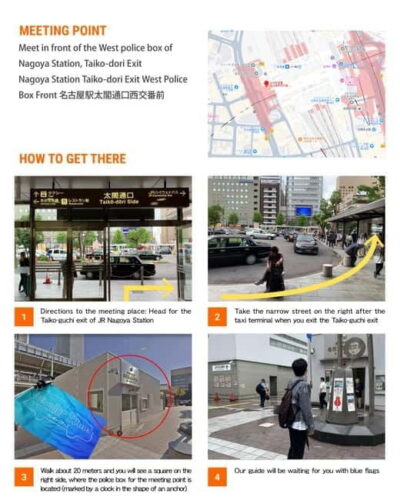
Shirakawago&HidaTakayama&GujoHachiman 1 Day Tour from Nagoya
Our verdict →Browse the lists this tour appears in