
Reviewed · MARKETS
Authentic Sapporo: Nijo Market Seafood Lunch & History Tour
The best part of this Sapporo walk comes at the end: a fresh seafood lunch at Nijo Market, the city’s Citizens’ Kitchen. Before you sit down to sushi or donburi, you trace Sapporo’s early story along the Sosei River, look over the city from the TV Tower, and visit a neighborhood shrine.
I like the way the tour connects food with place, rather than treating lunch as a separate stop. I also like the small-group format, which gives guides such as Tom and Iku room to answer questions and share personal Sapporo tips. The main drawback is pace: 150 minutes covers several stops, so you will walk outdoors and have little time for long visits.
Key points to know before you book
- Nijo Market lunch is the finish: Choose between sushi or donburi at a local restaurant, with the guide possibly leaving before you eat.
- The route links old and modern Sapporo: You see the Clock Tower, City Hall, TV Tower, Sosei River, and Sosei Bridge in one compact walk.
- The Sosei East Area gets attention: This lesser-visited part of central Sapporo helps you see more than the usual postcard sights.
- TV Tower admission is included: You get free time and city views without buying a separate ticket.
- Small groups matter: The maximum is eight people, and some departures may feel almost private.
- Plan for a proper walk: Comfortable closed-toe shoes, water, and weather-ready clothing are important.
Why this short Sapporo tour works
Sapporo is easy to approach as a list of big sights: Clock Tower, TV Tower, Odori Park, beer, ramen, seafood. This tour gives those sights a useful thread. You start with the civic center, move through the river corridor where the city developed, cross into the Sosei East Area, and finish with a meal tied to local shopping and fishing culture.
That order makes sense. You get your bearings first, then hear about Sapporo’s pioneering era before the seafood lunch. The guide can explain why the market matters to local life, so the meal feels connected to the city rather than simply added to a sightseeing package.
At $61 per person, the price is fair if you want a guided introduction rather than a self-guided stroll. It includes a live English-speaking guide, insurance, TV Tower admission, and lunch. You are paying for the guide’s time and the convenience of joining several central sights in a single route. It is less compelling if you already know Sapporo well, dislike walking, or would rather choose your own restaurant.
The tour lasts 150 minutes and ends at Nijo Market. That final detail matters. You are not taken back to the starting point, so plan your afternoon from the market area. The finish also gives you a useful chance to continue eating or exploring nearby on your own.
More Market Tours in Sapporo:
- Tokyo Tsukiji Fish Market Food and Culture Walking Tour
★ 5.0 · 3,184 reviews - Tokyo: Tsukiji Fish Market Food and Walking tour
★ 5.0 · 1,724 reviews - Tokyo: Tsukiji Fish Market Guided Walking Tour
★ 4.9 · 1,397 reviews
Meeting at the Clock Tower
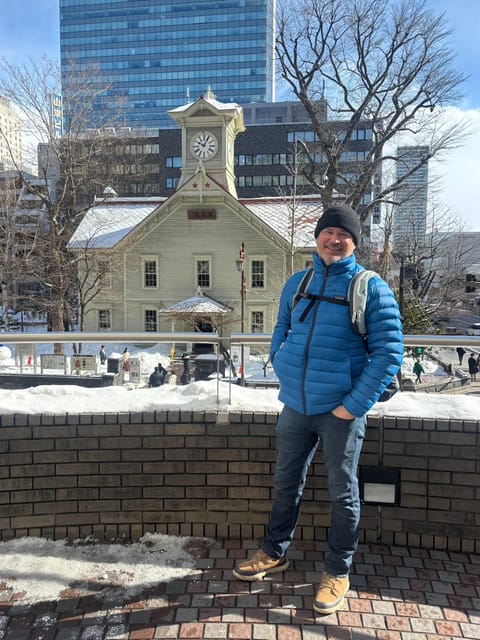
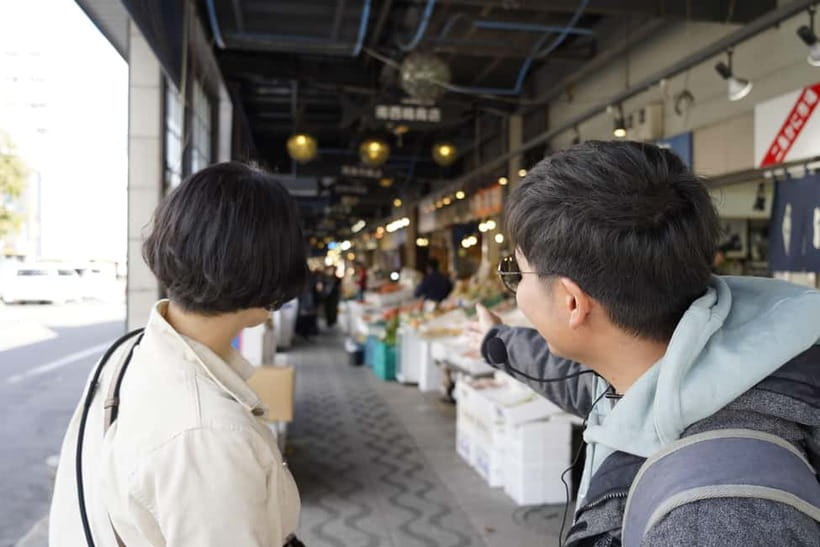
Your starting point is the entrance to Sapporo Clock Tower. Look for a guide holding a board marked KAPPO SAPPORO. The guide may also have a microphone, which should help you identify the group in a busy central area.
The Clock Tower is a sensible place to begin because it is one of Sapporo’s best-known symbols and an easy reference point. You get about 15 minutes for a photo stop, a short guided visit, and some walking nearby. Do not expect a long museum session here. The value is in hearing how the building fits into the city’s early development before you move on.
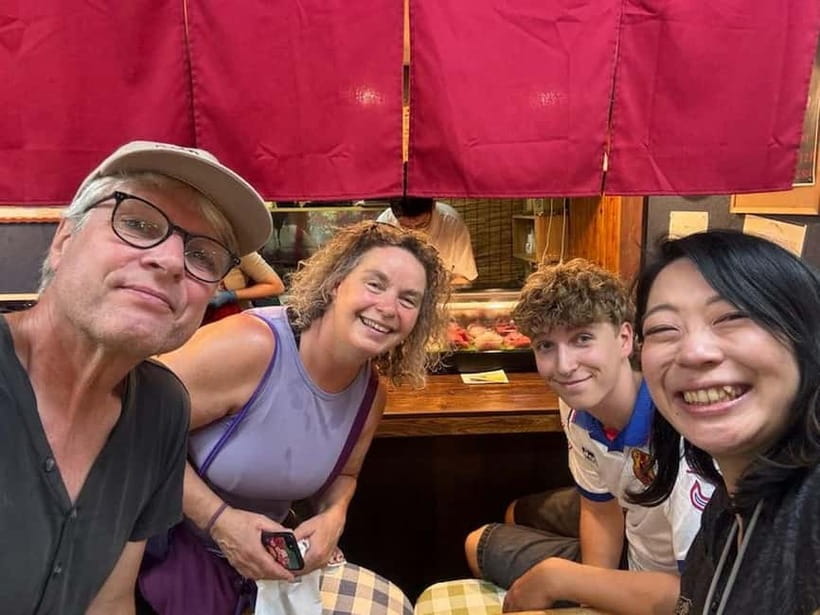
The short opening also lets you meet the guide and learn how the tour will run. Tom and Iku are among the guides associated with this experience. Tom is praised for a warm, personal approach, while Iku is described as enthusiastic about Sapporo and good at adding practical city suggestions. Your guide is not guaranteed to be one of them, but the small group gives any guide a good chance to keep the conversation personal.
City Hall and the modern civic center
A short walk takes you to Sapporo City Hall for about 10 minutes. The stop is brief, but it helps place the Clock Tower in the wider civic center. You are not simply jumping from one famous building to another. You are seeing how Sapporo’s public core fits together.
This is also where a guide can add context that a photo alone cannot provide. The tour focuses on Sapporo’s early days and local connections, so pay attention to the explanation rather than treating City Hall as a quick backdrop. If you enjoy urban planning and the story of how newer cities were organized, this portion will interest you.
The route between stops is on foot. Distances are not presented as difficult, but the tour keeps moving. In winter, rain, or strong sun, the short gaps can feel longer than they look on a map. Good shoes and suitable clothing are not optional extras here.
Going up Sapporo TV Tower
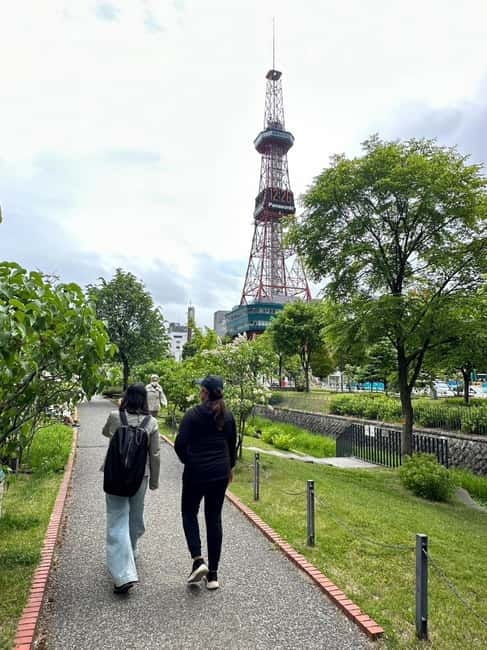
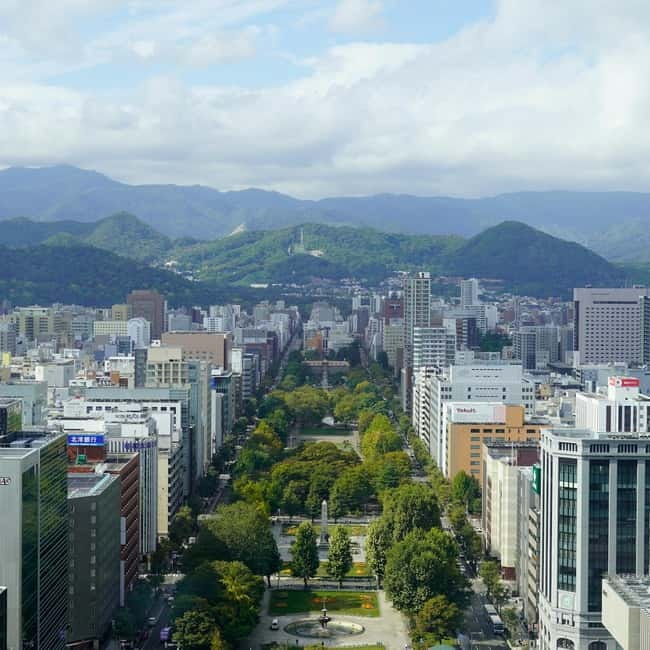
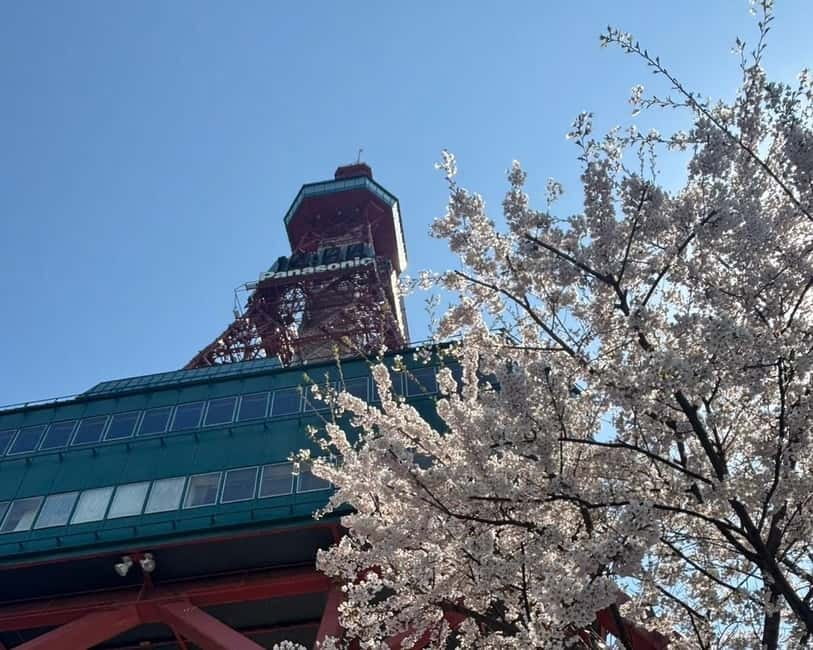
The TV Tower stop lasts about 35 minutes and includes admission, guided commentary, photo time, free time, and views along the way. This is the tour’s clearest high point, literally and visually.
From above, you can make sense of central Sapporo’s broad layout. The tower gives you a city view before the route turns toward the river and the market. I like this timing because the view comes early enough to help you recognize places as you walk, rather than saving every scenic moment for the end.
The stop is not only about taking photographs. Your guide can help connect the streets below with the route you are about to follow. You also get some free time, so you are not forced to stay shoulder to shoulder with the group for every minute.
Still, keep expectations measured. A 35-minute visit includes movement, commentary, and free time, not an extended observation-deck stay. If the weather is poor, the view may be less rewarding. The tour continues even if the day is wet, so bring a rain layer or other weather-appropriate clothing.
More Historical Tours in Sapporo:
- World Heritage Shirakawa-go and Experience Tours from Kanazawa
★ 5.0 · 4,049 reviews - Tokyo: Imperial Palace and Shogun Historical Walking Tour
★ 5.0 · 2,251 reviews - World Heritage Kyoto & Nara Uji Authentic Matcha Experience
★ 5.0 · 1,573 reviews - Kyoto Gion: 2-Hour Geisha Culture & History Walking Tour
★ 5.0 · 1,186 reviews
Following the Sosei River into early Sapporo
After the tower, the tour walks toward the Sosei River. This is where the experience becomes less like a standard city checklist. You hear about Sapporo’s very early age while walking beside a route tied to the city’s growth.
The walk lasts about 10 minutes before the next guided stop, followed by another short visit and more walking. The schedule suggests a steady rhythm: walk, pause for a story, walk again. That works well for a city introduction because you are seeing the setting as the guide explains it.
The Sosei River section is especially useful for anyone who wants more than modern shopping streets. Sapporo’s story is closely linked to planning, settlement, and the development of central routes. The guide’s local connections can turn an ordinary-looking stretch of water into a clue to how the city took shape.
Do not expect a long riverside nature walk. This is an urban history segment, not a countryside outing. The route uses the river as a way to understand the city, then moves on toward the bridge and shrine.
Crossing Sosei Bridge to Hokkaido Jingu Tongu
The group crosses Sosei Bridge and visits Hokkaido Jingu Tongu, a shrine loved by the local community. The shrine visit lasts about 15 minutes, including a photo stop and guided explanation.
This is one of the more appealing parts of the route for anyone interested in everyday local culture. Large landmarks tell you what a city wants visitors to see. A neighborhood shrine can show you what residents continue to value. The stop adds a quiet cultural note after the city views and before the market meal.
You should treat the visit respectfully. The supplied information does not promise a formal ceremony or an extended religious presentation. Instead, expect a short guided look at a place with local importance. Your guide may explain customs and local connections, but the exact conversation will vary by guide and group.
The shrine also marks a change in the feel of the walk. You are leaving the most familiar central sights and entering the Sosei East Area, described as an area not yet heavily discovered by tourists. That does not mean total isolation. It means the tour gives you a reason to look beyond Sapporo’s most repeated attractions.
Reaching Nijo Market for lunch
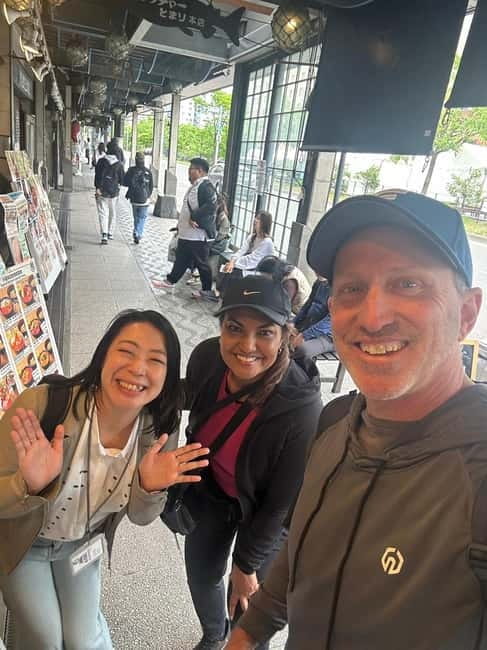
The route arrives at Nijo Market around 12:20, with lunch beginning around 12:30. You have about 40 minutes at the market for photos, a visit, guided help, free time, and the meal.
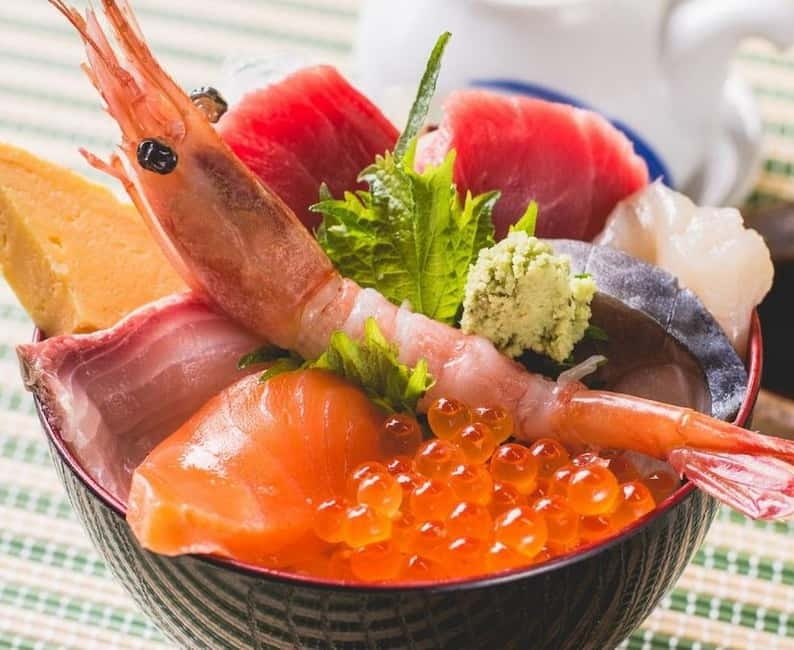
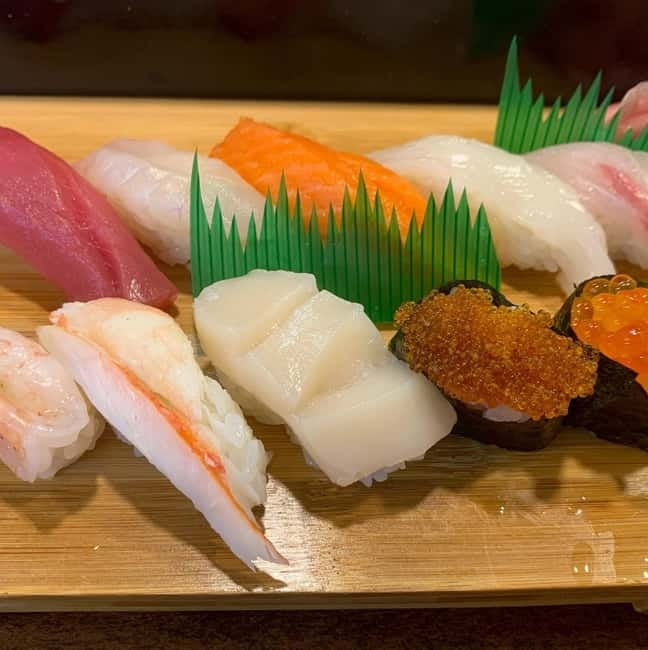
Nijo Market is known here as the Citizens’ Kitchen, and it is the tour’s practical reward. Your included lunch is seafood, with a choice of sushi or donburi. A donburi is a bowl topped with ingredients, while sushi offers a more familiar seafood-focused meal format. The exact restaurant and dishes are not specified, so you should think of the inclusion as a set local lunch rather than a restaurant-selection tour.
I like the placement of the meal. You have already heard about Sapporo’s early development and local ties, so the market feels like part of the story. Seafood is not treated as a generic Japanese meal. It is connected to the city’s market culture and to the guide’s understanding of where visitors can eat well.
The guide may not join you for lunch. This is important to know in advance. The guide can lead you to the restaurant and help with the transition, but you may eat independently after the tour portion is complete. If you want a long conversation over the meal, this arrangement may disappoint. If you prefer a little private time after a guided walk, it can be a welcome break.
Food allergies require care. Tell the tour provider about any allergy in advance, since alternative options may be possible. The experience is not suitable for people with food allergies according to the supplied restrictions, so do not assume an alternative can be arranged. The tour also is not designed for vegans.
A useful extra suggestion is Kotobuki Coffee, a recommended cafe. The available details do not specify its menu or exact position, so ask your guide for current directions rather than planning around a particular drink or dish. It is a handy idea if you want to extend the food portion after the market.
What the guide adds
The guide is the main reason to choose this tour instead of following a map. The route itself is easy to outline, but the links between the stops are harder to find on your own. A local guide can explain the pioneering era, point out connections to the community, and answer questions as they arise.
Tom receives especially warm praise for being attentive, personable, and willing to spend extra time with people. One booking became a private experience, and another included additional cherry blossom suggestions beyond the basic route. You should not count on extra hours or a private extension, but these details show how the small format can allow the guide to respond to the group.
Iku is praised for clear English, patience, humor, and practical recommendations. She has also taught visitors a few Japanese words and suggested food places around Sapporo. Again, the guide depends on the departure, but the tour is designed for Japanese and English speakers.
The group limit is eight people. That is small enough for questions to be realistic, unlike a large coach tour where you may only hear the guide during formal stops. If your departure has only one or two bookings, the experience may feel close to a private walking tour. That possibility is a real value at $61.
Walking, timing, and who should skip it
You need comfortable closed-toe shoes, water, comfortable clothes, and clothing suited to the weather. Sandals and flip-flops are not allowed. Large bags, oversize luggage, baby strollers, and non-folding strollers are also not allowed.
The tour is not suitable for pregnant women, wheelchair users, people with mobility impairments, babies under one year, or people with a low level of fitness. It is also not intended for anyone with a cold. These limits make sense for a compact walking route with several outdoor sections, but you should take them seriously before booking.
The schedule is fairly full. You will visit or pass by five main areas before lunch, with walking links between them. You will have time for photos, but not unlimited time at every sight. If you want slow photography, museum visits, or long shrine contemplation, choose a longer and less structured outing.
The free cancellation window is up to 24 hours before the start for a full refund, and you can reserve now and pay later. Those terms are useful if your Sapporo plans may shift, but the most important practical choice is the start time. Check availability carefully because the tour has a fixed 150-minute structure.
Should you book this Sapporo walk?
Book it if you want a compact first look at Sapporo that combines local food, early city history, a shrine, and a high view. The included TV Tower ticket and seafood lunch make the $61 price reasonable, especially if you value an English-speaking guide and do not want to arrange each stop yourself.
I would be most likely to choose it at the start of a Sapporo stay. The guide’s restaurant tips, comments on the Sosei East Area, and explanation of the river can help you make better choices later. It is also a good fit for food enthusiasts and history-minded visitors who want a meal with some context.
Skip it if you need step-free access, avoid seafood, want a vegan meal, or prefer to explore at a slow pace. Also skip it if you already plan to visit every stop independently and do not need a guide. For everyone else, this is a well-shaped introduction to Sapporo, with the market lunch giving the walk a satisfying finish.
FAQ
How long does the Sapporo tour last?
The tour lasts 150 minutes, or two and a half hours. It begins at the Sapporo Clock Tower and ends at Nijo Market.
Where do I meet the guide?
Meet the guide at the entrance to Sapporo Clock Tower. Look for a board marked KAPPO SAPPORO. The guide may also be carrying a microphone.
Which languages are available?
The tour is offered in Japanese and English, with a live tour guide.
What food is included?
Lunch is fresh seafood at a local restaurant in Nijo Market. The stated choices are sushi or donburi.
Does the guide eat lunch with the group?
The guide may not join your lunch. The guide can take you to the market restaurant, but the meal may take place without the guide.
Is admission to Sapporo TV Tower included?
Yes. Entry to Sapporo TV Tower is included in the tour price.
How large is the group?
The group is limited to eight participants. Some departures may therefore feel almost private, depending on bookings.
Can I cancel for a full refund?
You can cancel up to 24 hours in advance for a full refund. Reserve-now, pay-later booking is also available.
Just added around Sapporo
- Sapporo Walking Tour★ 4.9 · 17 reviews
- Sapporo TV Tower Admission Ticket★ 4.7 · 21 reviews
- Sapporo: The Indigenous Ainu People & Jozankei walking tour★ 4.9 · 25 reviews
- Sapporo: Furano Flower Sea & Biei Blue Pond Tour w/ Pickup★ 4.0 · 40 reviews
- Sapporo: Private Customized Guided Tour★ 4.9 · 30 reviews
- Sapporo: Furano Lavender & Biei Blue Pond Tour with Lunch★ 4.6 · 13 reviews
- Sapporo Highlights: Golden Route Morning Guided Walking Tour★ 4.9 · 16 reviews
- Sapporo: Custom Highlights and Hidden Gems Tour with a Local★ 4.9 · 21 reviews
Markets, compared.

Nishiki Market Brunch Walking Tour (7 Tastings + Brunch)
Our verdict →
Tokyo Washoku 4-hour Cooking Class: From Market to Table
Our verdict →
Kuromon Market Tour: All inclusive 6~8 Dishes & 3~4 samplings
Our verdict →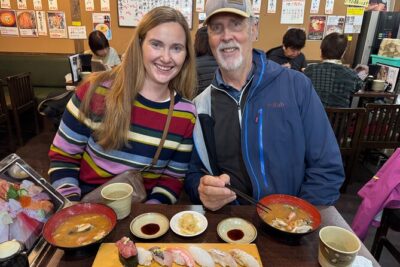
Browse the lists this tour appears in