
Reviewed · TEA CEREMONY EXPERIENCES
Japanese Tea Ceremony at Private Home in Yokohama, suburban Tokyo
The rarest part of this Yokohama tea ceremony is not simply drinking matcha. It is watching charcoal heat the water in a traditional procedure that even many Japanese people seldom see, then taking your place as a guest in a private tatami room.
I like the personal setting and the chance to speak directly with the Kono family. I also like the hands-on rhythm: you watch the tea master prepare one bowl, then mix a second bowl yourself while eating seasonal wagashi. The main consideration is location. You are traveling to suburban Yokohama, not central Tokyo, so allow time for the trip.
Key points to know before booking
- Private home setting: Only your group takes part, giving the workshop a calm, personal feel.
- Forty years of tea practice: The tea master has studied Japanese tea ceremony for more than 40 years and taught for over 15.
- Rare charcoal procedure: You can see charcoal added to heat the water, a detail many Japanese people never witness.
- Two bowls of matcha: One is prepared for you, and you make the second yourself.
- Seasonal handmade sweets: Wagashi may include nerikiri, gyuhi, or manjyu, with options suitable for vegan and gluten-free diets.
- Socks are required: You must wear or bring socks before entering the tatami room.
Why this Yokohama tea ceremony feels different
Many tea experiences show you the polished final act: a bowl, a whisk, a sweet, and a few formal movements. This workshop gives you more of the working ceremony. You see how the water is heated, how the room is used, how a guest behaves, and why each step matters.
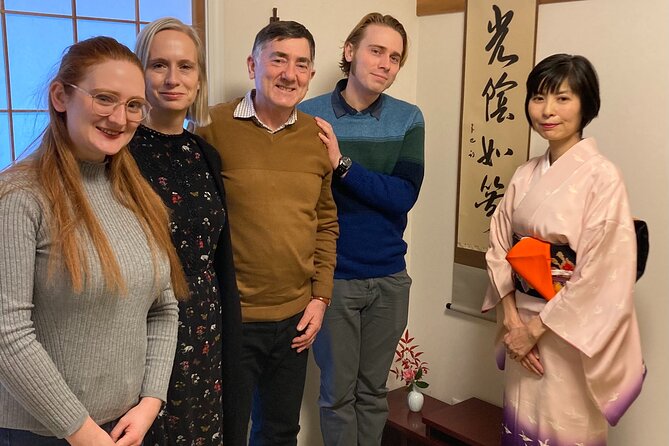
The private home changes the tone. You are not sitting in a large public venue with several groups arriving and leaving. Your group has the room to itself, and the format leaves space for questions. A family setting also makes it easier to connect tea practice with ordinary Japanese life, rather than treating the ceremony as a museum display.
The tea master brings substantial experience. More than 40 years of study and over 15 years of teaching mean you can ask about both the movements and the ideas behind them. The available information does not give the teacher’s personal name, but the family name connected with the home is Kono.
This is a good choice if you want context. You will not just copy a hand movement without knowing its purpose. You can ask about the ceremony’s history, the role of the guest, the sweets, and the tea itself.
More Tea Ceremony Experiences in Yokohama:
- Sencha-do the Japanese Tea Ceremony Workshop
★ 5.0 · 21 reviews - Kyoto: Tea Ceremony in a Traditional Tea House in Kiyomizu
★ 4.9 · 3,519 reviews - Kyoto: Tea Ceremony Ju-An at Jotokuji Temple
★ 4.9 · 3,207 reviews
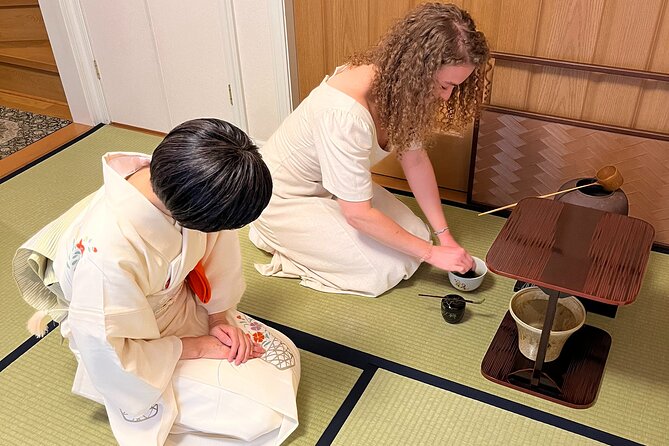
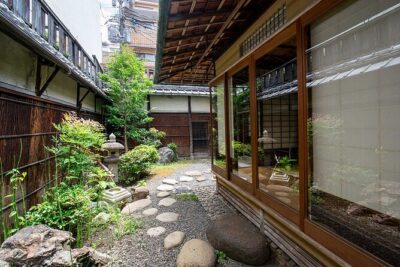
Entering the tatami room in a Yokohama home
The meeting point is at Dresse Azamino Gardens in Aoba Ward, Yokohama, at 〒225-0023 Kanagawa, Yokohama, Aoba Ward, Obacho. The activity returns to the same meeting point. Pickup is offered, but you should confirm the exact arrangement when your booking is accepted, since the supplied details do not specify the pickup area or schedule.
The setting is suburban rather than central. That is part of the appeal, but it affects your planning. If your day is built around Tokyo’s major sights, this workshop will take more effort than a tea experience near Asakusa or Ginza. On the other hand, you get a private-home visit in Yokohama instead of another activity in a busy tourist district.
You need socks to enter the tatami tea room. This is not a small fashion tip. Tatami is treated carefully, and bare feet are not appropriate for the room. Bring clean socks even if you plan to wear sandals. The information does not state other dress rules, so comfortable, respectful clothing is the sensible choice.
The room itself is part of the lesson. Tatami flooring, the arrangement of the tea space, and the way you sit all help explain why tea ceremony is a practice of attention. You do not need prior experience. The tea master demonstrates what to do before asking you to take part.
Watching the charcoal procedure
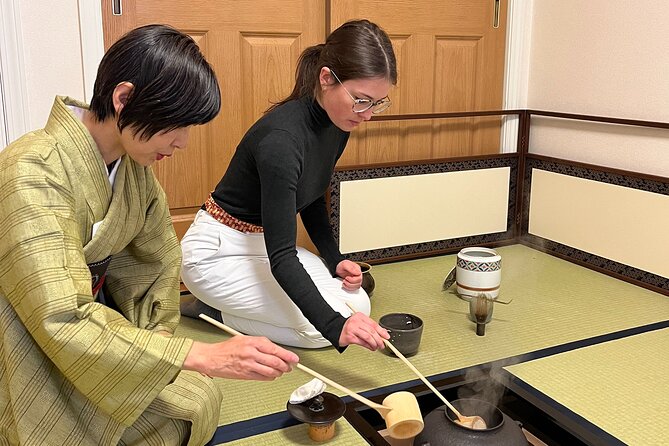
The workshop begins with a demonstration of the tea ceremony. One especially unusual feature is the charcoal procedure, in which charcoal is added to boil the water.
This step matters because it shows the ceremony as a complete process rather than a quick method for making green tea. Heat, timing, utensils, movement, and silence all become part of the preparation. You see that the bowl of matcha is the result of several deliberate actions.
The charcoal procedure is also a rare sight. Even many Japanese people do not see it in person, so it gives this short workshop a special focus. If you have already attended a basic matcha-making class, this is the part that may make this experience worth the extra trip to Yokohama.
The demonstration also gives you time to watch before you act. That is helpful for first-time participants who may feel nervous about using the bowl, turning it correctly, or following the expected behavior. The tea master shows the guest’s role first, then you can copy the movements with a clearer sense of what you are doing.
Learning how to be a guest
The workshop teaches you how to behave as a guest at a Japanese tea ceremony. This is more than learning to whisk powder into water.
You learn where your attention should go, how the sweets fit into the ceremony, and how to receive and drink the tea. The formal behavior may seem precise at first, but the teacher’s demonstration gives you a pattern to follow. You can ask questions instead of guessing.
The guest’s role is valuable because it changes how you see the ceremony. Rather than watching from outside, you become part of the exchange between host and guest. The host prepares the tea with care, and the guest responds with care. That relationship is one reason a private workshop can offer more than a standard food or drink tasting.
The setting also makes conversation easier. The experience is a private activity for your group only, so you do not have to perform in front of a large room. If you are traveling with family, friends, or a partner, you can share the lesson without being mixed into a larger class.
One family-focused review described enjoying the conversation with the Kono family, including a baby. That does not guarantee that every family arrangement will work in exactly the same way, but it shows that the atmosphere can be warm and personal rather than stiff or distant.
A few more Yokohama half-days worth comparing
- Tokyo 8hr Private Tour with Licensed Guide from Yokohama
★ 5.0 · 94 reviews - Shuttle Van Transfer, Yokohama(Port)⇒Tokyo, Narita, Haneda, TDR
★ 5.0 · 63 reviews - Yokohama Ramen Adventure From a Local Noodle Factory to Home
★ 5.0 · 60 reviews - Yokohama 4hr Private Tour with Government-Licensed Guide
★ 5.0 · 34 reviews
Seasonal wagashi before the matcha
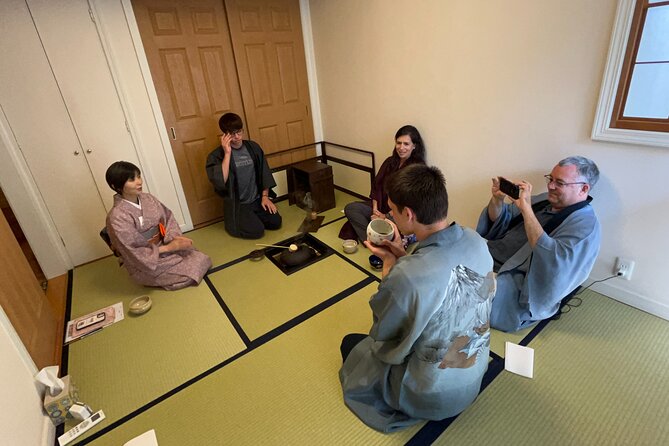
The tea master prepares wagashi, traditional Japanese sweets served with the tea. The exact sweet depends on the season, which gives the food a changing role instead of making it a fixed snack.
Possible examples include nerikiri, gyuhi, and manjyu. Nerikiri is a molded sweet often shaped to reflect seasonal ideas. Gyuhi has a soft mochi-like texture, while manjyu is another traditional sweet with its own texture and filling. The information provided does not promise a particular variety on your date, so go expecting a seasonal selection rather than a menu choice.
You eat the sweet as part of the tea ceremony. This helps balance the slightly bitter taste of matcha and gives you a better sense of the ceremony’s order. The sweet is not an afterthought. It prepares your palate and forms part of the guest experience.
The wagashi and dried Japanese sweets are suitable for vegan and gluten-free diets, according to the activity details. If your diet is strict, it is still sensible to mention your needs when booking or confirming, since the exact seasonal ingredients can change.
Making your own bowl of matcha
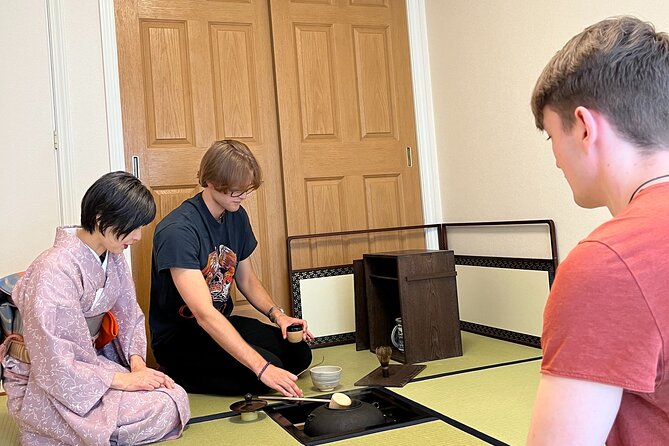
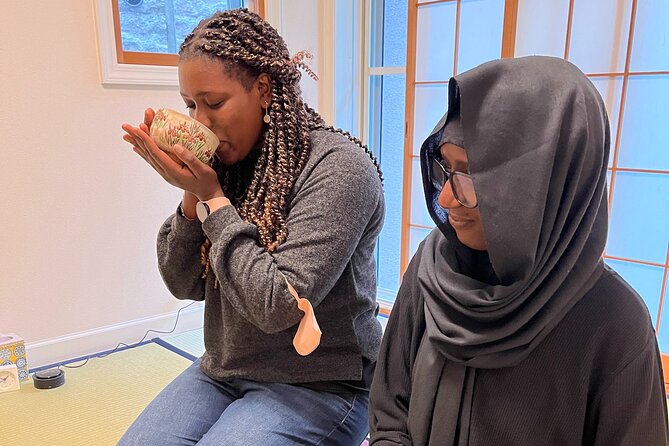
After watching the tea master, you get to make matcha yourself. You mix the green tea and drink the bowl you prepare.
This is the practical heart of the workshop. A demonstration can look easy because an experienced person makes every movement seem natural. Once the whisk is in your hand, you notice the small details. You must combine the tea and water properly, and you get a direct feel for the process rather than only hearing about it.
The experience includes two cups of matcha in total. The first is prepared for you during the demonstration. The second is made by you. That arrangement works well because you can taste the tea before attempting the technique yourself.
You should not expect to leave as a tea master after 90 minutes. The value is different. You gain an introduction to the movements, the etiquette, and the taste, with enough practice to understand what goes into one bowl. The teacher can also answer questions while the lesson is fresh in your mind.
If you find matcha bitter, the wagashi helps. The sweetness is meant to be eaten before the tea, and the contrast is part of the experience.
What the 90-minute schedule gives you
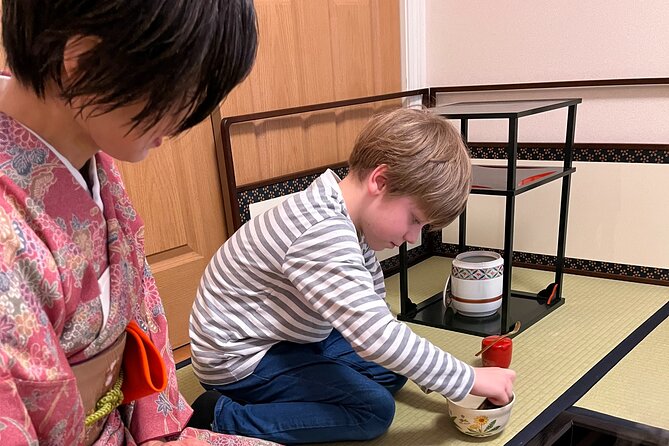
The complete workshop takes about 1.5 hours. That is long enough for a demonstration, the charcoal procedure, sweets, two bowls of matcha, hands-on preparation, and questions without turning the experience into a half-day commitment.
I like this length for a first introduction. A shorter demonstration might leave you with attractive photographs but little understanding. A much longer ceremony could be difficult if you are not used to sitting formally on tatami. Ninety minutes gives you substance while keeping the commitment manageable.
The exact order may follow the teacher’s pace, but the core sequence is clear:
- You arrive at the private home and enter the tatami tea room with socks.
- The tea master demonstrates the ceremony.
- You watch the charcoal procedure used to heat the water.
- Wagashi and dried Japanese sweets are served.
- You receive a bowl of matcha prepared by the tea master.
- You make and drink a second bowl yourself.
- The teacher explains the ceremony’s history and answers questions.
The itinerary is not built around sightseeing stops. The home and tea room are the destination. That makes the experience focused, but it also means you should not book it expecting a guided tour of Yokohama.
Is $52.71 a fair price?
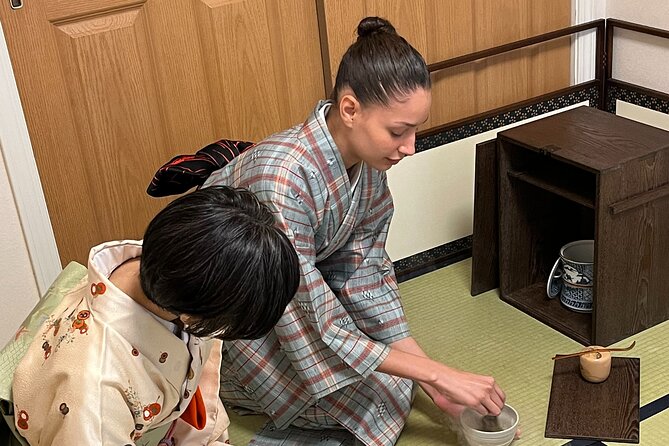
At $52.71 per person, this is not the cheapest way to taste matcha. You are paying for a private activity, personal instruction, handmade sweets, two bowls of tea, and access to a traditional tea room in a private home.
The value is strongest if you care about cultural explanation and direct contact with the teacher. A basic café visit may cost less, but it will not normally include the charcoal procedure, guest etiquette, a demonstration by a tea master with decades of study, and a chance to prepare your own tea.
The price is also easier to justify for a small private group. Since only your group participates, you are not sharing the lesson with a large class. That can make questions more useful and the pace more comfortable.
The value is weaker if you only want a quick cup of matcha or if you are already familiar with formal tea ceremony. In that case, the suburban location and travel time may outweigh the extra detail. The experience makes the most sense when you want a cultural lesson, not simply a drink.
The activity is often booked about 38 days ahead. That suggests you should not leave it until the last day of a short Tokyo visit, particularly if your schedule is fixed.
Getting there and adding a Yokohama stop
The meeting point is near public transportation, at Azamino in Yokohama. The supplied information does not give a full route from central Tokyo, so check the current rail and subway directions before you set out and allow extra time for transfers.
A useful nearby addition is the Yokohama Ramen Museum around Azamino. The information provided notes that it takes about 15 minutes from Azamino Station to the closest Shin-Yokohama Station by Yokohama subway. Treat this as a possible add-on rather than part of the tea ceremony. The activity itself ends back at the meeting point.
This pairing could make a good Yokohama day, but do not cram the schedule too tightly. The tea ceremony runs about 90 minutes, and the private-home format deserves punctuality. Build in time to reach the meeting point and to find your way afterward.
Pickup is listed as available, which may help, but the details are not specific enough to assume door-to-door service from your hotel. Confirm what pickup means for your location before relying on it.
Who should book this experience?
I would choose this workshop if you want a small, personal introduction to Japanese culture. It suits first-time visitors who would rather learn by doing than watch a stage-managed show.
It is also a good fit for:
- Couples looking for a quiet cultural activity
- Families interested in Japanese customs
- Visitors who enjoy food traditions and seasonal sweets
- Anyone curious about the guest’s role in tea ceremony
- People who want to ask questions directly
- Visitors with vegan or gluten-free food needs, since the listed sweets are suitable for those diets
The main drawback is the setting outside central Tokyo. If you have only one day in the capital and want to stay near major sights, the journey to suburban Yokohama may not be practical.
Sitting on tatami may also require some patience. The activity information does not describe seating arrangements beyond the tatami room, so anyone concerned about sitting on the floor should ask the provider before booking.
Cancellation and booking details
You receive confirmation within 48 hours, subject to availability. Free cancellation is available up to 24 hours before the local start time. Cancellations or changes made less than 24 hours before the activity are not accepted for a refund.
The experience is highly rated, with 100 percent recommending it and a five-star rating based on 32 reviews. The strongest praise centers on the personal family setting, the chance to learn Japanese culture, and the friendly conversation with the Kono family. Those points match the structure of the activity itself: it is designed as a cultural exchange, not just a demonstration.
Should you book the Yokohama tea ceremony?
Book it if you want a private, hands-on lesson with real attention to ceremony, sweets, etiquette, and charcoal preparation. The two cups of matcha give you both a guided tasting and a chance to try the craft yourself.
Skip it if you want a central Tokyo activity, a short drop-in tea tasting, or a broad Yokohama sightseeing tour. The location requires planning, and the value comes from the depth of the home setting rather than the number of sights.
For the right visitor, this is a thoughtful way to spend 90 minutes. Bring socks, leave room for questions, and treat the journey to Azamino as part of the price of getting beyond the usual tourist circuit.
FAQ
Where does the tea ceremony take place?
It takes place at a private Japanese home in Yokohama, in Aoba Ward near Azamino. The meeting point is Dresse Azamino Gardens, 〒225-0023 Kanagawa, Yokohama, Aoba Ward, Obacho.
How long does the experience last?
The workshop lasts approximately 1 hour and 30 minutes.
Is the activity private?
Yes. Only your group participates in the activity.
Do I need to bring anything?
You must bring socks to enter the tatami room. The activity details do not list any other required items.
How many bowls of matcha will I drink?
You will drink two bowls of matcha. The tea master prepares one, and you make the second yourself.
What sweets are served?
The tea master prepares seasonal wagashi and dried Japanese sweets. Possible wagashi include nerikiri, gyuhi, and manjyu. The sweets are suitable for vegan and gluten-free diets.
Can I cancel for a full refund?
Yes. You can cancel at least 24 hours before the local start time for a full refund. Changes or cancellations made less than 24 hours before the start time are not accepted.
Just added around Yokohama
- Tokyo/Yokohama: Private JDM Daikoku/大黒 Car Meet With Driver★ 4.7 · 20 reviews
- Yokohama Private Food Tours with a Local: 100% Personalized★ 4.5 · 21 reviews
- Yokohama Private Tour with a Local: Highlights & Hidden Gems★ 4.5 · 21 reviews
- Yokohama Ramen Adventure From a Local Noodle Factory to Home★ 5.0 · 60 reviews
- Tokyo Full Day Tour with Licensed Guide and Vehicle from Yokohama★ 5.0 · 26 reviews
- Yokohama Half Day Walking Tour with an Expert Local Guide★ 4.5 · 22 reviews
- Yokohama 4hr Private Tour with Government-Licensed Guide★ 5.0 · 34 reviews
- Shuttle Van Transfer, Yokohama(Port)⇒Tokyo, Narita, Haneda, TDR★ 5.0 · 63 reviews
Tea Ceremony Experiences, compared.

Tea Ceremony in a Traditional Tea House in Kiyomizu
Our verdict →


World Heritage Kyoto & Nara Uji Authentic Matcha Experience
Our verdict →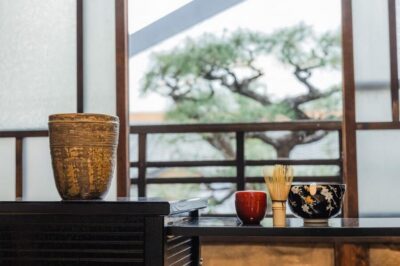

Arashiyama Bamboo Forest, Monkeys, Matcha & Temple Tour
Our verdict →
Browse the lists this tour appears in