
Reviewed · HIKING & TREKKING
Private Local Hiking to enjoy the nature and culture of Mt.Fuji
Mt. Fuji has a quieter side, and this private outing takes you there. You move from an ancient shrine and peaceful Lake Saiko to a lava cave, Aokigahara Forest, and the Sankodai viewpoint. The hike itself is moderate, but the day is just as much about local culture as walking.
I like the private transport and free hiking gear, especially if you are traveling light. I also like the food and garden finish: Yoshida Udon at a local restaurant, followed by optional matcha in a Japanese garden. The main drawback is weather. Fuji views are never guaranteed, and the tour may be canceled or rescheduled in poor conditions.
I also like the guide’s background. Yuki has climbed Mt. Fuji more than 40 times and works as a licensed local hunter, so you get more than directions on a trail. Keep in mind that pickup is limited to people staying in the Kawaguchiko or Fujiyoshida areas, or to those who can reach those areas independently.
Key points to know before booking
- Sankodai takes about one hour uphill, with roughly 30 minutes back down.
- Yuki combines mountain knowledge with local culture, including Mt. Fuji worship and forest life.
- The route includes Lake Saiko and Aokigahara, quieter places than the busy Lake Kawaguchiko area.
- Trekking shoes, poles, rain gear, and gloves are available at no extra cost.
- Lunch and matcha are extra, with Yoshida Udon costing about ¥1,000 and the optional tea service ¥1,000.
- The private format gives your group flexibility, including extra time when conditions and energy allow.
Why this Mt. Fuji hike feels different

Many Mt. Fuji outings focus on a single photo stop. This one connects several places that explain how the mountain shaped local life. You see Fuji as a scenic icon, but also as a force of fire, a sacred presence, and the center of old traditions.
The day begins at 9:00 a.m. and lasts about five to six hours. That gives you enough time for a moderate hike without turning the outing into a hard athletic challenge. The walking portion is about an hour up and 30 minutes down, with time for stops and a break at the top.
Because this is a private activity, only your group joins. That matters on a trail with changing weather or mixed fitness levels. You do not have to match the pace of a large group, and the guide can spend more time explaining a shrine, cave, or view that interests you.
More Hiking Tours in Fujikawaguchiko machi:
- Fushimi Inari Hidden Hiking Tour (Private Option Available)
★ 5.0 · 1,750 reviews - Kyoto: 3-Hour Fushimi Inari Shrine Hidden Hiking Tour
★ 4.9 · 270 reviews - Hiroshima Local guided Hiking Tour&Open-air Tea Ceremony
★ 5.0 · 213 reviews
Fuji Omuro Sengen Shrine and the mountain’s spiritual side
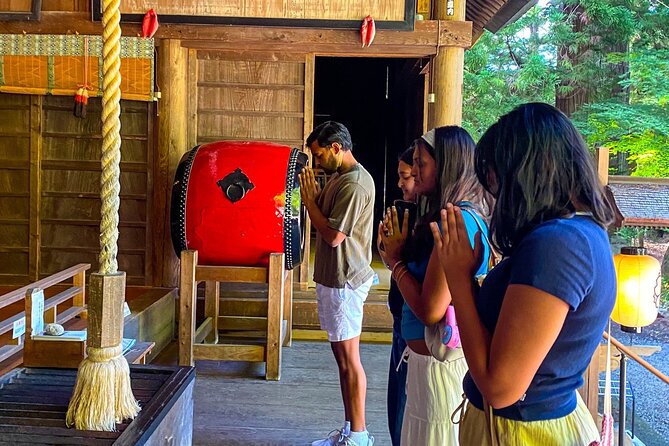
Fuji Omuro Sengen Shrine is a good first stop because it gives the day a cultural frame. The shrine is connected to Mt. Fuji worship and to one of the mountain’s major eruptions. Local ancestors built it in the hope of calming the volcano.
You spend about 15 minutes here, with no admission charge. That is not long enough for a full shrine visit, but it is enough to understand why Fuji was never just a mountain to the people living around it.
This stop also helps you read the rest of the day. The forest, caves, lakes, and trails are not separate sights pulled together at random. They are part of a region shaped by volcanic activity and religious practice.
Lake Kawaguchiko, then quieter Lake Saiko
Lake Kawaguchiko is the best-known of the Fuji Five Lakes. Its combination of water and Mt. Fuji draws large numbers of people, so it can feel busy, especially around popular viewing areas.
The tour uses the famous lake as a point of reference before moving toward Lake Saiko. At Saiko, you get a calmer setting and a different relationship with the mountain. The lake and Fuji can appear together in one view when the weather cooperates.
You spend about 10 minutes at Saiko. That is a short stop, so think of it as a scenic pause rather than a long lakeside walk. Bring your camera, but also give the view a moment without trying to force the perfect photo. Clouds can cover Fuji quickly.
The itinerary also includes a trail view of Fuji when the sky is clear. This is an important qualification: the mountain is often partly hidden by cloud. The route remains worthwhile for its forest, lake, and cultural stops, but you should book with flexible expectations about the summit view.
Aokigahara Forest and the story of lava
Aokigahara is known locally as Jukai, or the Sea of Trees. The name reflects how broad the forest appears from a viewpoint. Its distinctive ground and vegetation were shaped by one of Mt. Fuji’s major eruptions about 1,200 years ago.
You spend about 15 minutes in the forest area. This is not presented as a long forest trek, and that is useful to know. The main walking effort comes later on the Sankodai trail.
The value here is context. You can connect the dark volcanic rock, the forest, and the mountain above it. Yuki’s background as a local hunter also adds an unusual angle to the natural side of the tour. The information provided does not promise wildlife sightings, so you should come for the setting and explanation rather than expect animals.
A few more Fujikawaguchiko machi half-days worth comparing
- Mt Fuji Area Private Guided Tours in English-Nature up close, quiet, personal
★ 5.0 · 288 reviews - Explore Mt. Fuji Ice Cave in Aokigahara Forest
★ 5.0 · 243 reviews - Private guided hidden gems tour by local English speaking driver
★ 5.0 · 142 reviews - Ramen Cooking Class at Ramen Factory in Mt.Fuji
★ 5.0 · 101 reviews
Ryugudoketsu and a sacred lava cave
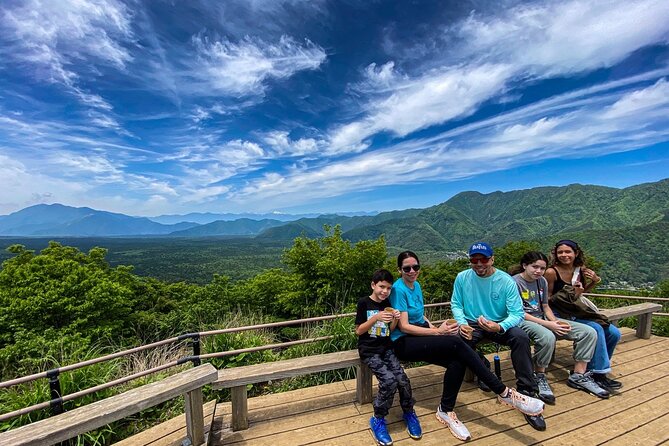
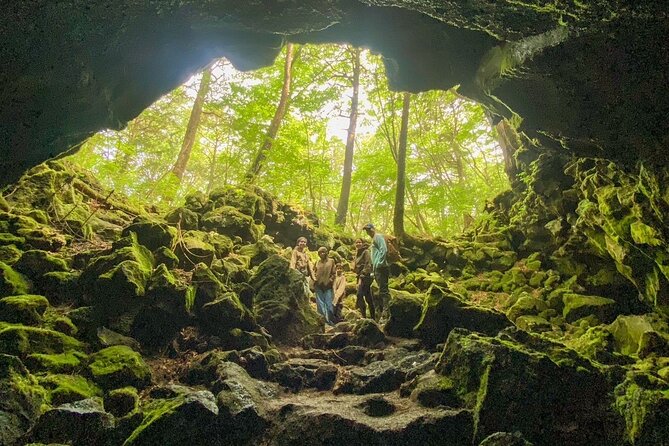
Ryugudoketsu-iriguchi leads you to a sacred cave associated with Mt. Fuji worship. People once visited this cave to pray to the goddess of Fuji before climbing the mountain. The belief was that the inside of the cave represented the inside of the goddess.
You spend about 30 minutes here. The cave is not simply a geological curiosity. Its meaning comes from the way volcanic ground became part of religious practice. That makes this one of the most distinctive stops of the day.
Wear sensible shoes even if you plan to use the free rental gear. The tour provides trekking shoes, poles, rain jackets and pants, and gloves, but you still want comfortable clothing for a moderate outdoor route. The exact condition of a trail can change with the weather, so the included rain gear is practical rather than decorative.
The Sankodai hike: one hour up, 30 minutes down
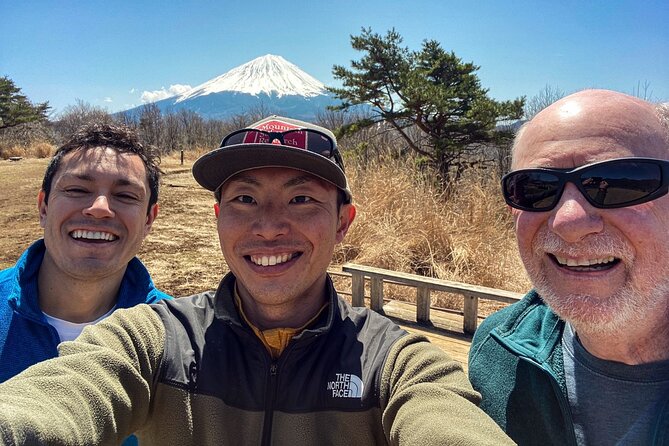
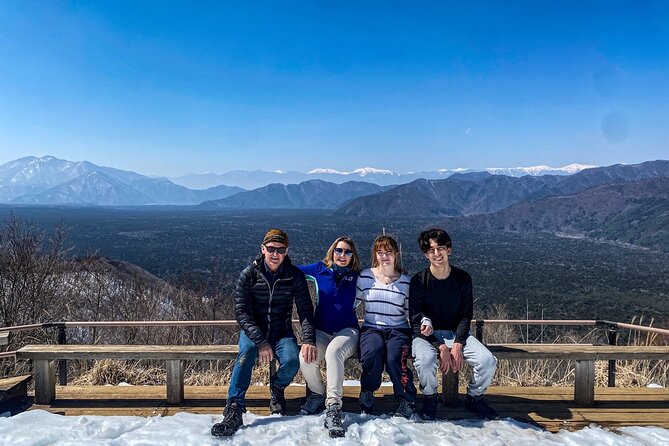
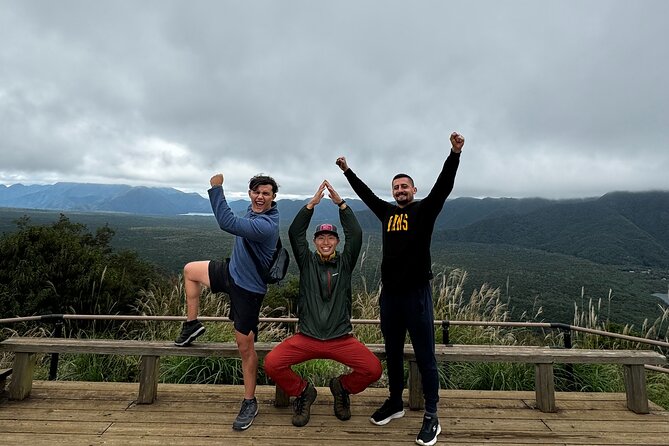
The main hike leads to Sankodai. It takes about one hour each way according to the route description, with the descent taking roughly 30 minutes. The trail is described as suitable for outdoor beginners, but you should still be ready for a steady uphill walk.
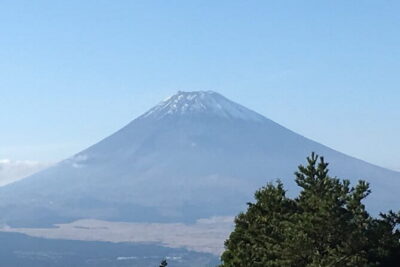
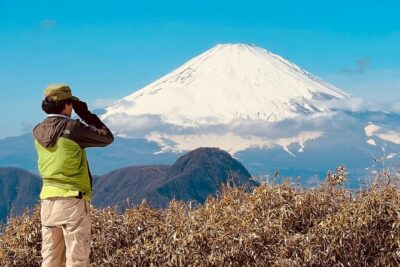
At the viewpoint, you can see Mt. Fuji, Lake Saiko, and the Sea of Trees at the same time. That combination is the reward for the climb. On a clear day, the view can include Japan’s tallest mountain above the lake and forest.
The route is moderate, not effortless. If you rarely hike, take the pace slowly and use the poles if helpful. The private format is a real advantage here. You can pause, drink water, and spend time at the top without worrying about holding up a busload of people.
Past participants have described Yuki bringing tea, coffee, chocolate, and snacks to the summit. Those extras are not listed as formal inclusions, so do not treat them as guaranteed. Still, they show the kind of small personal touch that can make a private hike feel relaxed.
The climb is also where weather matters most. A cloudy day can be comfortable for trekking, but Fuji may disappear. One useful feature of this route is that a good hike does not depend entirely on seeing the summit. The forest and lake views remain part of the experience.
A local bowl of Yoshida Udon
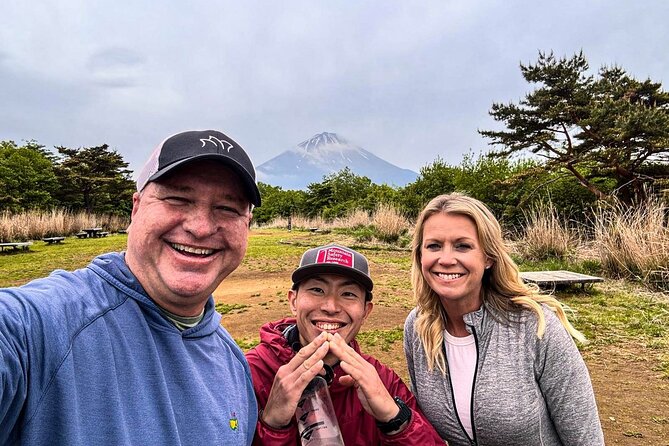
After the hike, you stop at a local restaurant for a regional meal. The signature dish is Yoshida Udon, and the guide chooses a place that is difficult for a visitor to find alone.
Lunch is not included. The expected cost is about ¥1,000 per person, which makes this an affordable addition to the tour price. You should carry enough yen for the meal and any other optional spending.
I like the timing here. A simple local meal after the climb makes more sense than a formal restaurant stop. It gives you a chance to sit down, eat something associated with the area, and ask Yuki about what you have seen.
The restaurant is described as a local choice rather than a tourist showcase. That means you should expect practicality over ceremony. The strength is the regional connection and convenience, not a long tasting menu.
A Japanese garden and optional matcha
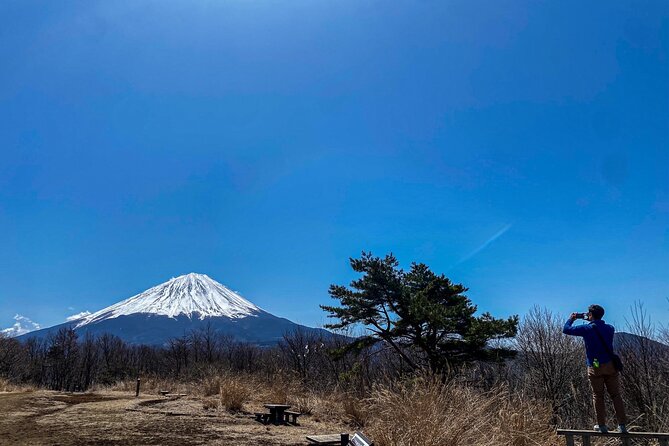
The final stop is Fujisan Onsen Hotel Kaneyamaen in Fujiyoshida. The hotel is described as one of the city’s oldest and has a large Japanese garden open to the public.
You can finish with matcha and a Japanese sweet for an additional ¥1,000 per person, or simply relax in the garden without ordering the tea. This is a calm ending after the uphill section, and it gives the schedule a pleasant change of pace.
The matcha is optional, which keeps the tour flexible. If you are watching costs, enjoy the garden and skip the tea. If you want a more traditional finish, the tea and sweet provide a small cultural ritual rather than another sightseeing stop.
What the $131 price includes
At $131.38 per person, this is not the cheapest way to see the Fuji area. It is also not just a guided walk. The price includes the guide, private transportation, and a useful set of hiking equipment.
That equipment can save you the trouble of packing trekking shoes, poles, rain gear, and gloves. It is especially useful for a short visit to Japan when you do not want to bring outdoor gear for one half-day outing.
Private transport adds value too. The stops are spread around the area, and you are not piecing together local transport between a shrine, lake, forest, cave, trailhead, restaurant, and garden. Pickup is offered only if you are already staying in Kawaguchiko or Fujiyoshida, or if you can make your own way there.
Lunch, insurance, and optional matcha are not included. The meal is about ¥1,000 per person, and the tea service is another ¥1,000. You should also check your own travel insurance, since the tour does not provide it.
For a private half-day with transport and gear, the price makes the most sense for couples, families, or small groups that value personal attention. Solo visitors may find the per-person cost harder to justify.
Who should book this experience
I would choose this tour if you want Mt. Fuji with more substance than a photo stop. It suits you if you like moderate outdoor activity, local food, shrine culture, and a guide who can explain how volcanic terrain shaped the area.
It also works well for mixed groups. One person can enjoy the cultural stops, another can focus on the scenery, and the hike remains manageable for people with basic outdoor fitness. The route is not aimed at experienced climbers seeking a demanding ascent of Mt. Fuji.
Families may find the private format helpful, but the supplied information only says most people can participate. It does not give a specific minimum age or detailed accessibility information. If your group has mobility concerns, ask the provider before booking.
You should be comfortable with the chance of changing views. Fuji may be hidden by cloud, and poor weather can lead to a cancellation or a different date. The operator offers a full refund or another date when weather causes the cancellation.
Communication appears to begin before the tour, and the provider is Yuki. A few past bookings also describe the guide allowing extra time and helping with later plans, but you should not assume that added time or a second drop-off is part of every booking.
Booking details that affect the day
The tour starts at 9:00 a.m. and runs for about five to six hours. A mobile ticket is accepted, and confirmation is sent when you book.
Free cancellation is available if you cancel at least 24 hours before the start time. Changes or cancellations inside that window are not accepted for a refund. Since weather can affect the experience, check the forecast and keep some flexibility in your Japan schedule.
Bring water and clothing suited to outdoor conditions. The tour supplies several pieces of hiking gear, but the supplied information does not specify sizes, brands, or how gear fitting works. If you need a particular size, ask ahead.
Should you book the Mt. Fuji nature and culture hike?
Book it if you want a private, well-rounded day that connects Mt. Fuji’s scenery with shrine traditions, volcanic ground, a quiet lake, local noodles, and a Japanese garden. Yuki’s experience, the included gear, and the private vehicle make the $131.38 price easier to justify for a small group.
Skip it if your only goal is a guaranteed Fuji photograph, a strenuous mountain climb, or a low-cost sightseeing ride. The best reason to choose this experience is the mix: a manageable hike, meaningful cultural stops, and a local meal in one carefully arranged outing.
FAQ
Where does the Mt. Fuji hiking experience take place?
The tour is based around Fujikawaguchiko and Fujiyoshida, at the foot of Mt. Fuji. Stops include Fuji Omuro Sengen Shrine, Lake Saiko, Aokigahara Forest, Ryugudoketsu-iriguchi, Sankodai, a local restaurant, and Fujisan Onsen Hotel Kaneyamaen.
What time does the tour start?
The stated start time is 9:00 a.m.
How long does the experience last?
The full experience lasts approximately five to six hours. The main hike takes about one hour uphill and around 30 minutes back down.
Is pickup included?
Pickup is available only for people staying in the Kawaguchiko or Fujiyoshida areas, or for those who can reach those areas independently.
What hiking equipment is provided?
Free rental equipment includes trekking shoes, trekking poles, rain jackets and pants, and gloves.
Is lunch included in the price?
No. Lunch costs approximately ¥1,000 per person and features Yoshida Udon at a local restaurant.
What happens if the weather is poor?
The experience requires good weather. If the operator cancels because of poor conditions, you can choose another date or receive a full refund.
Just added around Fujikawaguchiko machi
- Ramen Cooking Class at Lake Kawaguchiko (Short Course)★ 5.0 · 42 reviews
- Sushi Cooking Class at Sushi Factory -KIWAMI- Mt.Fuji★ 5.0 · 23 reviews
- Cute & Fun E-Car tour following guide around Lake Kawaguchiko★ 5.0 · 54 reviews
- Ramen Cooking Class at Ramen Factory in Mt.Fuji★ 5.0 · 101 reviews
- Fujisan Sushi Making Lesson★ 5.0 · 16 reviews
- Early Morning Kayaking With Views of Mt Fuji at Lake Kawaguchiko★ 5.0 · 69 reviews
- Hidden Fuji drive tour with a Local English speaking guide★ 5.0 · 43 reviews
- Mt Fuji Area: In-depth Guided Adventure in English or French★ 5.0 · 27 reviews
Hiking & Trekking, compared.

Fushimi Inari Hidden Hiking Tour (Private Option Available)
Our verdict →
Hiroshima Local guided Hiking Tour&Open-air Tea Ceremony
Our verdict →
Hiking the Historic Nakasendo Trail [1 Day Tour from Nagoya]
Our verdict →
Kyoto Hiking Tour: The Nature and Legends of Kurama and Kibune
Our verdict →
Traverse Outer Rim of Hakone Caldera and Enjoy Onsen Hiking Tour
Our verdict →
Browse the lists this tour appears in