
Reviewed · KOBE TOURS
Kyoto Full Day Tour from Kobe with Licensed Guide and Vehicle
Kyoto is a difficult city to sample in one day, especially from Kobe. This private tour solves the basic problem with a vehicle, a licensed guide, and a flexible plan built around three or four priority sights. I like the early planning contact and the chance to shape the day around places such as Fushimi Inari, Kiyomizu-dera, Gion, or Arashiyama.
I also like the tour’s usefulness for a cruise-port stop. Guides such as Kazuo, Yuka, Hiro, Kiriko, and Andy have adjusted routes for tight sailing times, arranged efficient pickups, and added practical touches such as restaurant suggestions and photos. The main caution is price: at $1,165.63 for up to two people, this is a premium outing, and admission fees, lunch, and personal costs are extra.
Key points to know before booking
- Choose three or four sights: The long attraction list is a menu for building your day, not a promise that you will visit every temple and district.
- Private vehicle from Kobe: Pickup is offered, and only your group participates, which saves time compared with public transport.
- Useful for cruise schedules: Several guides have worked around ship departure times, but you should give your exact return deadline when planning.
- Strong guide element: Kazuo, Yuka, Hiro, Kiriko, and Andy are among the named guides associated with highly praised tours.
- Admission fees are mostly extra: Some outdoor areas are free, but temple, castle, garden, and palace fees are not generally included.
- A demanding day: Kyoto and Kobe are separated by a substantial road journey, so expect a full schedule rather than a relaxed city stroll.
Why a private Kyoto day from Kobe makes sense
Kyoto rewards time, but a Kobe base gives you only one day to work with. The distance, city traffic, and spread-out sights can eat up hours before you see anything important. A private car does not erase those problems, but it gives you a better chance of using your limited time well.
You are not signing up for a fixed bus route. After booking, a guide contacts you to discuss your priorities. That matters because Kyoto has several distinct sightseeing zones. Fushimi Inari and Kiyomizu-dera work well together in the southeast. Kinkaku-ji, Ryoan-ji, and Ninna-ji make a logical northwestern group. Arashiyama needs its own time because the bamboo paths, temples, bridge, and hillside sites are spread out.
The price is easiest to justify for two people who value privacy, a direct vehicle, and help with decisions. At $1,165.63 per group of up to two, it is not a cheap way to see Kyoto. For a couple on a special port day, the cost may be reasonable compared with arranging separate transport, taxis, admission, and a guide. For one person, the value is much harder to defend.
The tour lasts about nine hours. That sounds generous until you count the drive from Kobe, the return journey, traffic, meals, and walking. Think of this as a fast but useful introduction, not a slow old-Kyoto day with time to linger in every garden.
More Full-Day Tours in Kobe:
- Shore excursion: Full Day Private Kyoto Tour From Osaka/Kobe Port
★ 4.5 · 36 reviews - From Tokyo: Mount Fuji Full-Day Sightseeing Trip
★ 4.5 · 4,970 reviews - Mount Fuji Full-Day Private Tour from Tokyo (Customizable)
★ 4.9 · 1,470 reviews
Build the day around a sensible route
The tour description presents a very long list of possible places. The practical detail is that your included tour is customized around three or four sites from that list. Do not arrive expecting to cover all 29 stops. Even a full day based only in Kyoto would not allow proper visits to Fushimi Inari, Arashiyama, Kinkaku-ji, Ginkaku-ji, Kibune, and the southern temples in one sweep.
I would choose one geographic cluster and perhaps one nearby district. For a first visit, a strong plan might include Fushimi Inari, Kiyomizu-dera, Gion, and Nishiki Market. That gives you a major shrine, a famous temple, historic streets, and food shopping.
A different plan could pair Kinkaku-ji with Ryoan-ji, Arashiyama, and the bamboo forest. This route gives you grand architecture, a famous Zen garden, wooded paths, and one of Kyoto’s best-known scenic areas. It also risks more traffic and crowds.
Tell the guide what matters most. If you care about gardens, say so. If you want a tea-related experience, traditional streets, family-friendly walking, or a quick photo stop, say that early. Guides such as Hiro and Kiriko have built days around specific requests, while Kazuo has been praised for explaining shrine and temple customs as well as history.
Fushimi Inari and the red torii paths
Fushimi Inari-taisha is one of Kyoto’s essential sights. Its long run of orange torii gates climbs into the wooded hills behind the shrine. The lower area is easy to reach, but the full climb takes far longer than a short photo stop.
The tour can help you decide how far to walk. One past itinerary made time to go higher up the mountain to see more gates. That is a good use of a guide because the first section can feel crowded, while the path gradually changes as you climb.
The shrine has no admission fee. Still, fifteen minutes is not enough for anything beyond a quick introduction and photographs. If Fushimi Inari is your top choice, ask for more walking time and cut another stop. Wear shoes suitable for stairs and uneven paths.
Kiyomizu-dera, Gion, and Higashiyama
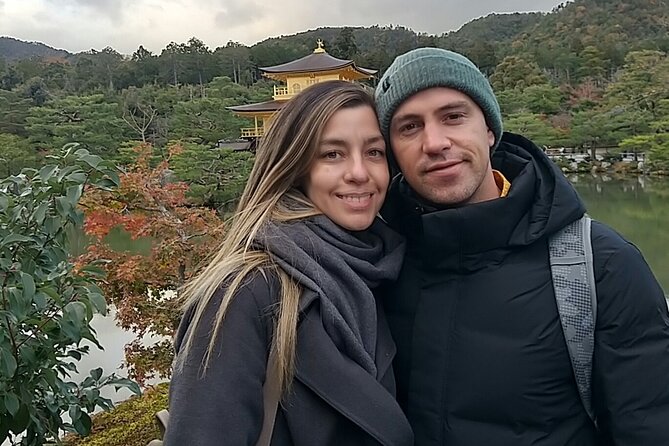
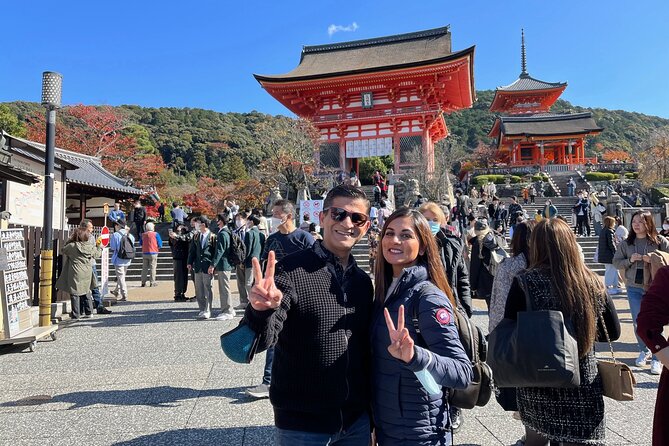
Kiyomizu-dera sits above Kyoto’s old eastern streets and gives the day a strong sense of place. Its wooden structures, temple grounds, and views over the city make it one of the best first temple visits. Admission is not included, so budget for an extra fee.
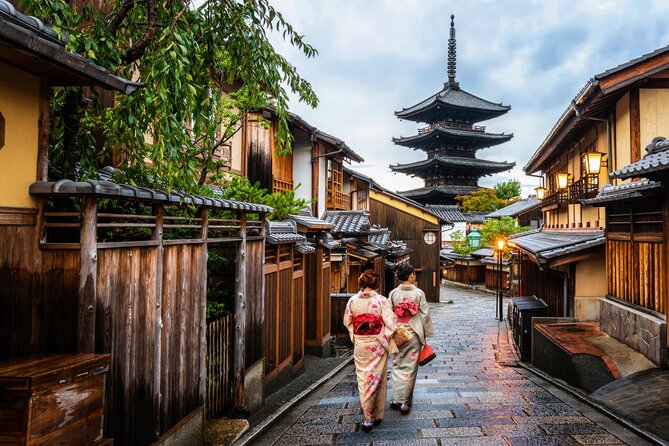
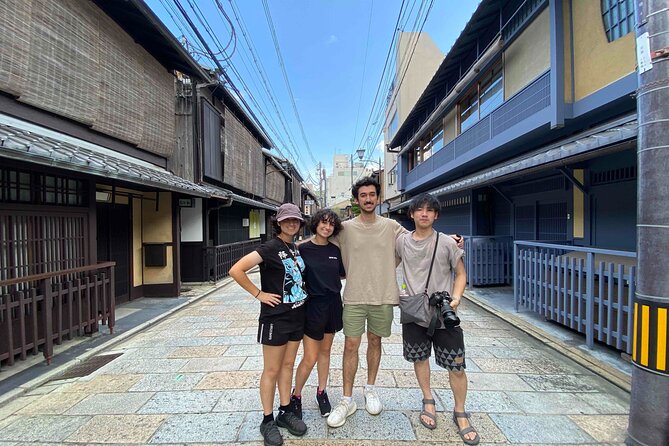
The approach through Higashiyama is as important as the temple itself. Traditional lanes, shops, and old-style buildings lead toward Kiyomizu-dera, though the area can be crowded. A guide helps you move with purpose instead of losing time at every storefront.
Nearby Gion adds another layer. Its narrow lanes and traditional architecture connect the modern city with Kyoto’s performing arts and geisha culture. Keep expectations sensible. Gion is a historic district, not a stage set, and you should respect private homes and working businesses.
Pontocho offers a different evening atmosphere, with a narrow lane of restaurants near the Kamogawa River. It is attractive as a short walk, but it is not the best substitute for a major temple if your day is already short.
A few more Kobe half-days worth comparing
- KOBE Sake Tasting Tour at Breweries (tasting fee included)
★ 5.0 · 154 reviews - Kobe Highlights & Hidden Gems: Private & Custom Tour with a Guide
★ 4.5 · 70 reviews - Kobe 4hr Private Tour with Government-Licensed Guide
★ 5.0 · 59 reviews - Kobe: Guided Sake Breweries Tour with Tastings
★ 5.0 · 55 reviews
Kinkaku-ji, Ryoan-ji, and Kyoto’s northwest
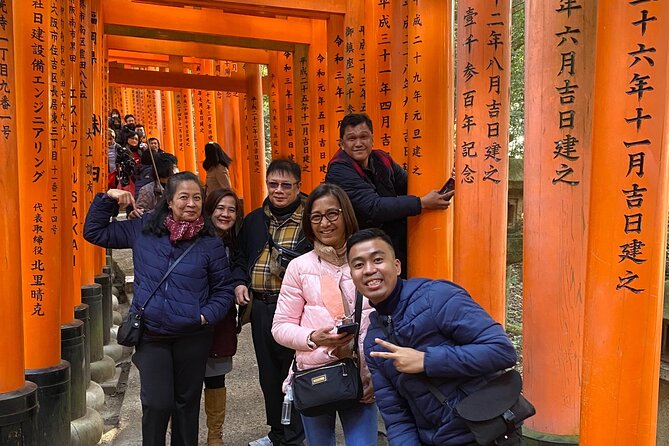
Kinkaku-ji, the Golden Pavilion, is one of Kyoto’s most recognizable sights. Its upper floors are covered in gold leaf, and the building reflects in the pond in front of it. The visit is visually powerful but usually brief. You follow a set path, take in the pavilion, and continue through the grounds.
The entrance fee is extra. Crowds can make the visit feel more like a carefully managed viewing line than a quiet temple experience. It remains a sensible choice for a first day because you can recognize its importance immediately.
Ryoan-ji offers a calmer and more thoughtful stop. Its famous rock garden is spare by design, with carefully placed stones set in pale gravel. Your guide can explain the temple setting and help you look beyond the standard photograph. Admission is extra, and the garden deserves more than a rushed quarter-hour if it is one of your main interests.
Ninna-ji is another strong choice in this part of town. Founded in 888, it is the head temple of the Omuro school of Shingon Buddhism and is listed as a World Heritage site. It is especially useful for you if you want a major temple that feels different from the Golden Pavilion.
Arashiyama, the bamboo grove, and Tenryu-ji
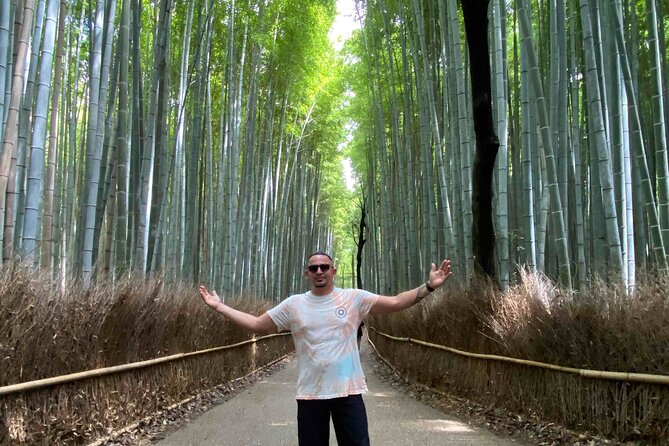
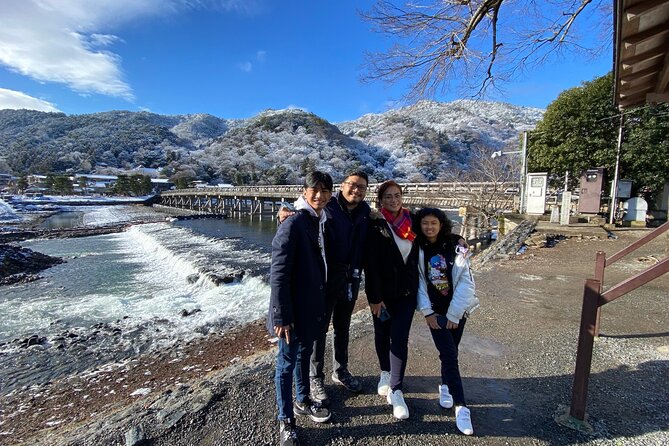
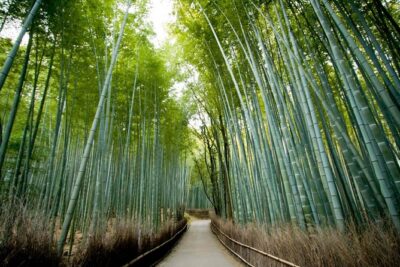
Arashiyama is one of Kyoto’s most popular areas, and for good reason. The district brings together the Togetsukyo Bridge, the bamboo paths, Tenryu-ji, hillside temples, and the wooded foothills west of the city.
The bamboo forest is free, but the main path can be crowded. A short walk gives you the famous view, while a longer visit allows time for nearby temples and gardens. If you want the bamboo grove, tell the guide clearly. It was a central part of several successful custom days.
Tenryu-ji is the leading temple in Arashiyama and a World Heritage site. Its gardens are a better reason to enter than simply checking off another temple. Admission is extra, and you should allow enough time to connect the buildings, garden, and mountain view.
The Togetsukyo Bridge is Arashiyama’s familiar landmark. It makes a good short stop, especially if you want a photograph or a view across the river. Okochi Sanso Garden, at the far end of the bamboo area, adds a former villa, gardens, and buildings, but it also has an additional admission fee.
Jojakko-ji, Nisonin, Gio-ji, Adashino Nenbutsu-ji, and Otagi Nenbutsu-ji offer quieter alternatives. They are appealing for moss, maple trees, small halls, preserved streets, and distinctive stone figures. The drawback is time. These sites are not quick add-ons to a day that already includes central Kyoto and the Golden Pavilion.
Nishiki Market and the city’s historic center
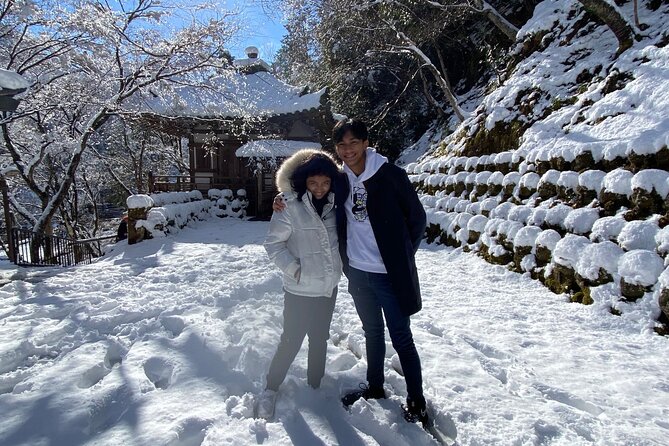
Nishiki Market is a narrow, five-block food street known as Kyoto’s Kitchen. It is a good place to see ingredients, snacks, pickles, seafood, sweets, and small shops in one compact stretch.
I would use Nishiki Market for lunch or a short food walk, not as a rushed box to tick. The lanes can be packed, and stopping for every interesting smell will quickly change your schedule. Lunch is not included, so ask the guide for help if you want a local restaurant rather than eating while walking.
Nijo Castle gives you a different look at Kyoto. Built in 1603 as Tokugawa Ieyasu’s Kyoto residence, it connects the city to the shogunate and the start of the Edo period. Admission is extra. The castle is a strong choice for you if political history and architecture matter more than scenic hills.
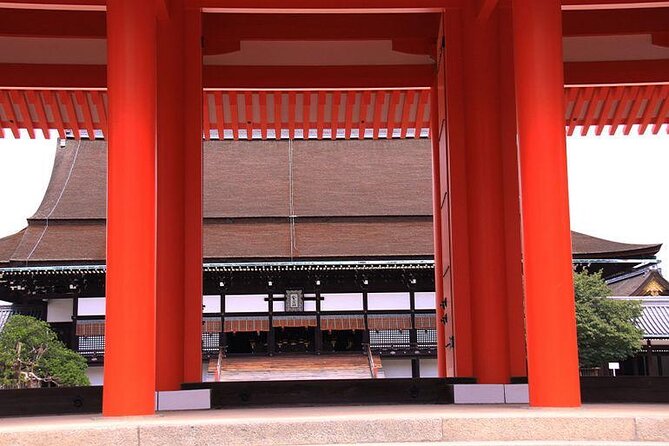
The Kyoto Imperial Palace occupies a large park and was the Imperial Family’s residence until the capital moved to Tokyo in 1868. It gives you a broad view of imperial Kyoto, but it is not as instantly dramatic as Kiyomizu-dera or Kinkaku-ji. Include it if the imperial story interests you.
Northern mountains and imperial villas
The optional northern sights change the character of the day. Kibune sits in a wooded valley around Kifune Shrine, while Kurama is known for Kurama-dera and a hot spring. These places offer a rural side of Kyoto, but their distance makes them poor choices alongside Arashiyama and Fushimi Inari.
Shugakuin Imperial Villa and Katsura Imperial Villa are also special-purpose selections. Both are tied to imperial architecture and garden design. They are best for you if planned access and formal gardens matter more than seeing several famous landmarks. Entrance arrangements and fees are not covered in the basic tour price, so confirm details with the guide before choosing them.
Nanzen-ji, Tofuku-ji, To-ji, Ginkaku-ji, Daikaku-ji, Yoshimine-dera, and Kennin-ji each offer a different temple experience. Nanzen-ji has spacious grounds and the striking Suirokaku aqueduct. Tofuku-ji is especially known for autumn color. Ginkaku-ji, the Silver Pavilion, began as a shogun’s retirement villa and is prized for its Zen setting.
To-ji is close to Kyoto’s southern side and dates from the early Heian period. Kennin-ji sits near Gion and has dry gardens, making it a useful pairing with the eastern districts. These are not interchangeable stops. Ask the guide to explain what you value, then choose rather than trying to collect them all.
The guide can make or break the day
The strongest feature here is not the car. It is the guide’s ability to turn a long list into a workable day. Kazuo Sumi has been praised for teaching the proper way to enter Shinto shrines and Buddhist temples, explaining customs, and adapting the route when extra time became available.
Yuka has handled cruise-port pickups and drop-offs, helped build fast-paced itineraries, and suggested restaurants. Hiro has shaped the day around personal requests and added cultural context. Kiriko has worked carefully backward from a ship’s sailing time, while Andy has been praised for clear explanations, photos, and considerate planning.
There is one important warning. One poor experience involved an English communication problem, difficulty answering basic questions, limited flexibility with children, and a request for extra payment after the tour. The overall rating is 4.6 from 19 reviews, with many five-star ratings, but that single complaint is worth taking seriously. Confirm the guide’s language ability, the exact inclusions, and any possible extra charges before departure.
The tour information describes a licensed English-speaking local guide, but guide assignments can vary. If clear English matters to you, say so when the guide contacts you. If you have children, discuss car seats and booster seats in advance. Only a limited number are available, and rear-facing seats are not provided.
Comfort, cost, and cruise-port timing
A private vehicle is a major advantage for a Kobe to Kyoto day. You avoid changing trains, finding stations, and carrying bags between far-flung sights. You also have somewhere to rest between walks, which matters after temple stairs and crowded market lanes.
The vehicle does not guarantee a relaxed schedule. Kyoto traffic can slow the route, and the nine-hour limit includes the return to Kobe. Give the guide your ship departure time, not just the time you hope to be back. The best guides have protected that final deadline, but you should not assume every route can absorb delays.
The base price covers the licensed guide, private vehicle, and a custom itinerary for three or four selected sites. It does not cover temple and castle admission, lunch, or personal expenses. Guide entry fees are covered only for sights listed among the tour’s included expectations, so ask for a cost breakdown if you select a less common site or a special villa.
Pickup is offered, the ticket is mobile, and this is a private activity for your group only. Free cancellation is available up to 24 hours before the start time. Changes or cancellations inside that window are not accepted for a refund.
Who should book this Kyoto tour?
I would book this tour if you are stopping in Kobe on a cruise, have only one Kyoto day, and want a private plan instead of managing several trains and taxis. It also suits couples who place a high value on an English-speaking guide, direct transport, and help choosing between too many worthwhile sights.
I would think twice if you want a slow day, dislike long drives, or are watching your budget. A train-based Kyoto visit can cost much less, though it requires more planning and leaves you to manage transfers and timing.
Before booking, decide on your top four sites and rank them. Ask for a route that keeps them in the same part of Kyoto. If Fushimi Inari or Arashiyama is non-negotiable, protect enough walking time and drop lesser stops. Confirm the guide’s language, vehicle details, child-seat needs, admission costs, lunch plan, and return time to Kobe.
For the right pair of people, this is a smart way to turn a difficult port day into a focused introduction to Kyoto. Just treat the huge attraction list as a planning tool, not a promise to see the whole city.
FAQ
How long is the Kyoto tour from Kobe?
The experience lasts approximately nine hours, including the private sightseeing day between Kobe and Kyoto.
How many people can join the tour?
The listed price is for a private group of up to two people. Only your group participates in the activity, and multiple tour groups cannot be combined.
Which sights can be included?
You can select three or four sites from the provided list. Options include Fushimi Inari-taisha, Kiyomizu-dera, Gion, Nijo Castle, Nishiki Market, Kinkaku-ji, Arashiyama, the bamboo forest, and many other Kyoto temples and districts.
Is lunch included?
No. Lunch and personal expenses are not included. Temple, castle, garden, and other entrance fees are also generally extra.
Is transportation provided?
Yes. The tour includes a private vehicle, and pickup is offered. The vehicle is useful for connecting Kyoto’s widely separated sightseeing areas and returning to Kobe.
Can I cancel the booking?
You can cancel for a full refund up to 24 hours before the experience start time. Cancellations or changes made less than 24 hours before the start time are not accepted for a refund.
Just added around Kobe
- Exploring Nada Sake Breweries Kobe Private Tour with Government-Licensed Guide★ 5.0 · 17 reviews
- Cruise Stop-Over: Private Custom Day trip to Kyoto from Kobe Port★ 4.5 · 12 reviews
- Kobe : Private Custom Tour (Excursion to Osaka / Kyoto possible)★ 4.5 · 12 reviews
- KOBE, SHIOYA, a quaint fishing town walking tour★ 5.0 · 19 reviews
- Private Shore Excursion Kobe Port – Best of Kobe with a local★ 5.0 · 19 reviews
- Kobe Half Day Tour – Private & Personalized with a Local Guide★ 4.5 · 18 reviews
- Kobe: 3-Hour Sake Breweries Tour with Special Tasting★ 4.4 · 25 reviews
- Kobe: Private Tour – Excursion to Osaka / Kyoto possible★ 4.7 · 27 reviews
Kobe Tours, compared.

KOBE Sake Tasting Tour at Breweries (tasting fee included)
Our verdict →
Kobe Highlights & Hidden Gems: Private & Custom Tour with a Guide
Our verdict →
Nijigen No Mori:Naruto & Boruto Theme Park Entry Ticket
Our verdict →
Shore excursion: Full Day Private Kyoto Tour From Osaka/Kobe Port
Our verdict →
4-Hour Multicultural Kobe Walking Tour with Genuine Kobe Beef
Our verdict →
Browse the lists this tour appears in