
Reviewed · FULL-DAY
From Tokyo: Full-Day Mount Fuji Tour in English or Spanish
Mount Fuji supplies the star power here, but the best part is the variety. In one long day, you move from the famous Chureito Pagoda view to a pilgrimage shrine, a traditional shopping street, flower gardens, and a boat ride on Lake Kawaguchiko. I especially like the chance to see Fuji from several angles rather than stopping for one photograph and heading back.
I also like that Spanish speakers can tour with a live guide such as Luis, who is praised for clear explanations, patience, and local suggestions. The main drawback is the pace: 10 hours is a full day, and the pagoda requires 400 steps unless you use the alternate sloping path. Cloud, rain, or mountain access rules can also change the plan.
Key points to know before booking
- Chureito Pagoda takes effort: The classic view requires 400 steps, with the first 100 leading toward the shrine and the next 300 continuing to the pagoda.
- Luis is a strong choice for Spanish speakers: His tours include explanations of the sites, practical advice, and help choosing local purchases.
- The day covers more than a photo stop: You visit two important Fuji shrines, Honcho Street, Oishi Park, and Lake Kawaguchiko.
- The $90 price is sensible for a long day: Transport, guiding, and listed entrance fees are included, while meals and personal spending are not.
- Fuji views depend on weather: Bring layers, water, sunscreen, and a camera, but keep expectations flexible on cloudy days.
Why this Fuji day trip works
Many Tokyo visitors want to see Mount Fuji but do not want to piece together regional trains, buses, shrine visits, and lake transport. This tour handles the movement for you, beginning near the Robert Indiana LOVE sculpture at 6-chōme-5-1 Nishishinjuku and returning to Nishishinjuku at 1-chōme-8-8.
The ride from the starting point to the first major stop is listed at about 30 minutes, though the full day can be affected by road conditions and mountain traffic. You should treat this as a sightseeing day with a firm start and finish, not as a quick side trip.
The route has a sensible theme. Fuji is not only a mountain for taking pictures. It is also a sacred place connected to pilgrimage, shrines, local legends, and communities that developed around the climb. The stops help you see those layers without giving up the famous views.
The tour is offered in English and Spanish. If you choose Spanish, Luis is the guide name most closely associated with the strong feedback for this experience. You can expect explanations at each stop, help with local recommendations, and a tour style that aims to avoid the thickest crowds by meeting early when possible.
More Full-Day Tours in Mount Fuji:
- From Tokyo: Mount Fuji Full-Day Sightseeing Trip
★ 4.5 · 4,970 reviews - Mount Fuji Full-Day Private Tour from Tokyo (Customizable)
★ 4.9 · 1,470 reviews - From Tokyo: Must-Visit Mount Fuji Highlight Full-Day Tour
★ 4.7 · 532 reviews
Arakurayama Sengen Park and the famous pagoda view
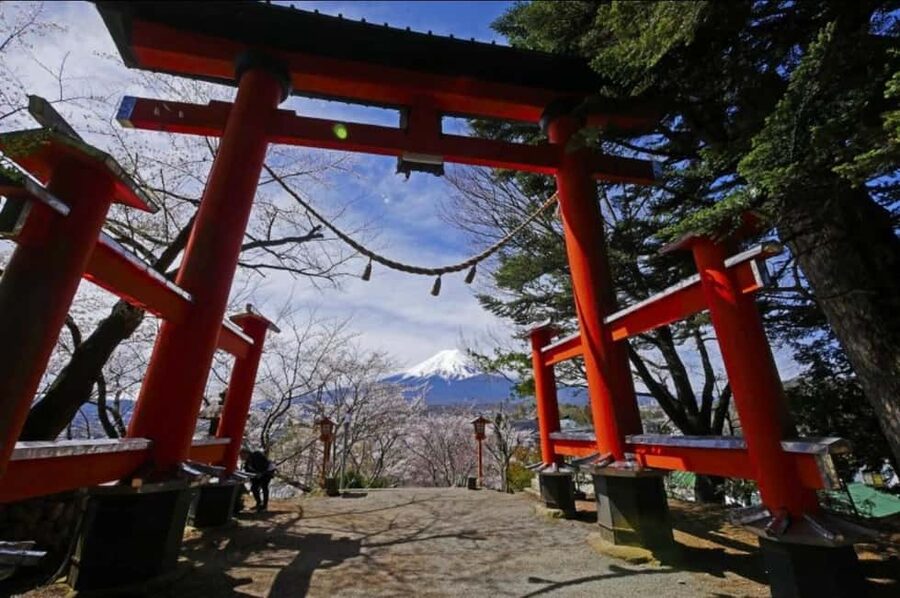
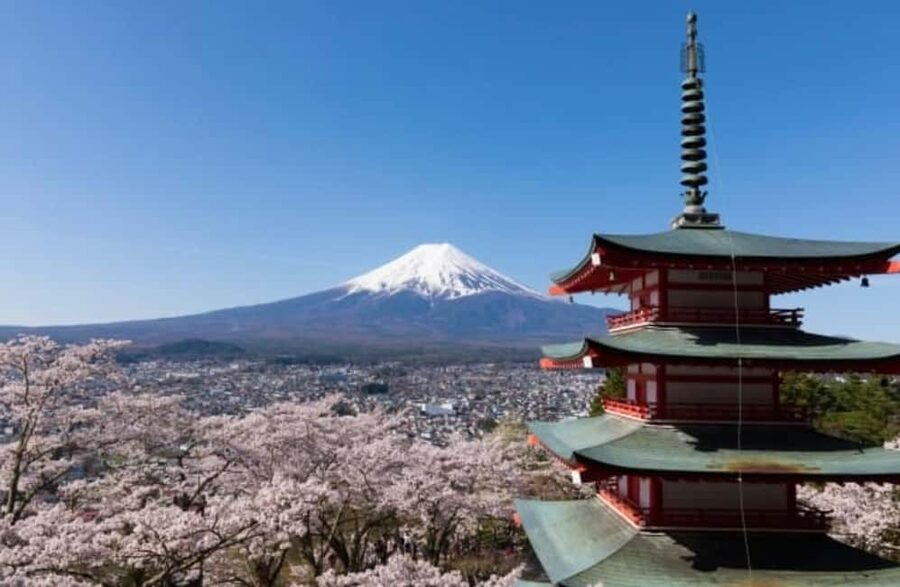
The first major stop is Arakurayama Sengen Park, a hilltop site known for the view of Mount Fuji framed by Chureito Pagoda. This is the image that appears in countless Japan travel photographs: red pagoda, wooded slope, and Fuji rising behind it when the weather cooperates.
The view is powerful because it combines several familiar symbols in one frame. It also requires some work. From the entrance, the route has about 400 steps. The first 100 take you toward Arakura Fuji Sengen Shrine, and the remaining 300 lead upward to the pagoda.
You do have another option. A path without stairs follows a pleasant slope and reaches the same general area. That route is worth considering if your knees are tired, you have limited mobility, or you simply want to save energy for the rest of the day. The tour is not suitable for people over 95, and the steep access makes comfortable shoes important for everyone.
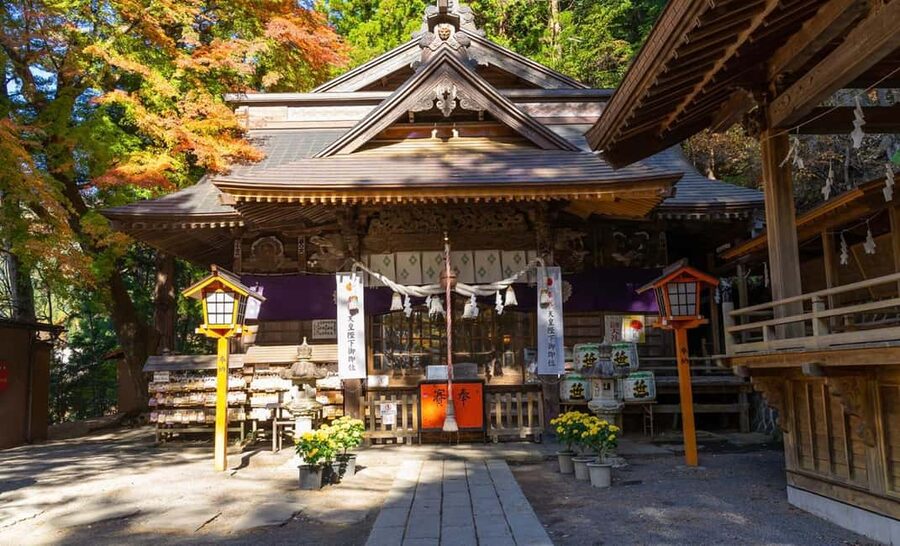
At the shrine, you get an introduction to the religious character of the mountain. Arakura Fuji Sengen Shrine is described as one of the oldest shrines in the area, with local tradition connecting it to Lord Takeda, the famous samurai associated with Yamanashi. Take time to notice the setting instead of rushing straight to the viewpoint.
The pagoda and park are not a quiet, private Fuji experience. This is one of the most photographed viewpoints in the region. Your guide can help put the site in context, but you will still need patience for photographs and a willingness to share the view.
Honcho Street and Fuji seen from street level
After the hill, the route changes mood with a walk along Shimoyoshida Honcho Street in Fujiyoshida. This is a traditional shopping street with local shops and older-style architecture. Its importance comes from its place along Fuji Michi, an historic access route used by people heading toward the sacred mountain.
The street gives you a different kind of Fuji photograph. Instead of looking up from a formal park, you see the mountain aligned with an everyday town setting. Storefronts, utility lines, and the road itself become part of the picture.
That contrast is valuable. Japan sightseeing can sometimes reduce a place to its most polished viewpoint. Honcho Street gives you a look at the town that developed around Fuji pilgrimage and local commerce. The walk is scheduled for about 40 minutes, so you should expect a focused stroll rather than a long shopping session.
Keep your camera ready, but remain mindful of local businesses and residents. The famous view is best treated as part of a working neighborhood, not merely as a backdrop.
Kitaguchi Hongu Fuji Sengen Shrine and the pilgrimage story
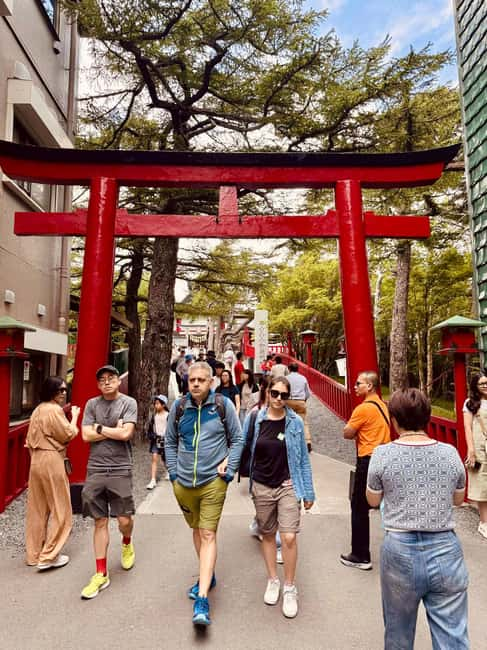
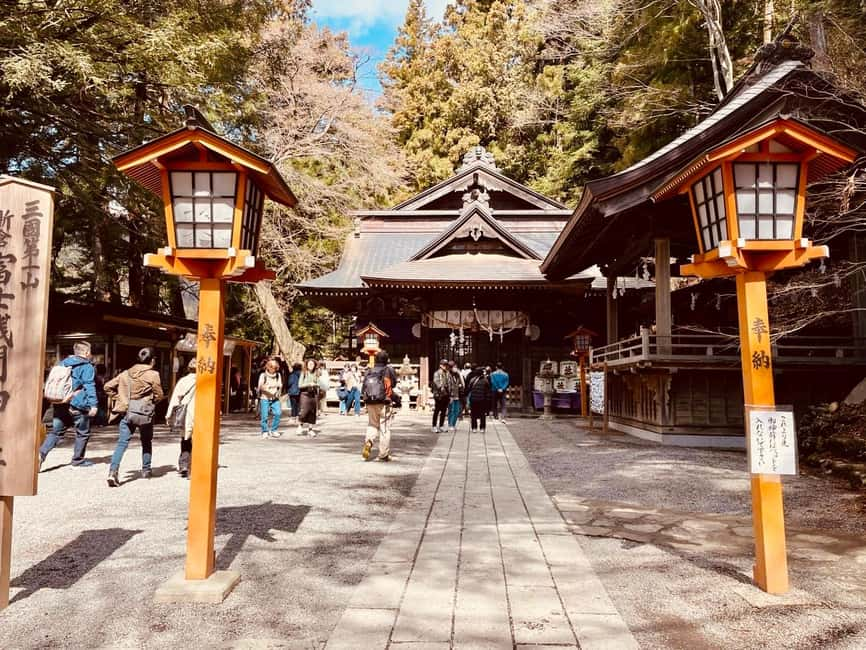
Next comes Kitaguchi Hongu Fuji Sengen Shrine, one of the day’s most meaningful cultural stops. It is part of the Mount Fuji UNESCO World Cultural Heritage site, designated in 2013, and is linked to the old northern approach to the mountain.
The shrine is said to have origins reaching back more than 1,900 years, with an early foundation connected to the legendary prince Yamato Takeru around 100 AD. The supplied information also describes it as the ancient northern entrance and starting point for a pilgrimage route up Fuji.
Those details matter because they explain why the shrine is here. It is not simply another attractive religious building added to a sightseeing circuit. The site connects the town, the forested approach, and the sacred mountain beyond it.
You have about 50 minutes here. That is enough to walk through the grounds and hear the main historical and religious points, though not enough for a slow, unstructured visit. This is one place where a good guide makes a real difference. Luis is praised for explaining each location clearly, and his background in local history is especially useful at a shrine with such a long story.
The shrine also matters as a backup. If access to Mount Fuji is closed or not permitted for reasons outside the operator’s control, this shrine becomes part of the alternative plan. It is a worthwhile substitute, though it cannot replace a clear view from the mountain itself.
A few more Mount Fuji half-days worth comparing
- Mt Fuji and Hakone 1-Day Bus Tour Return by Bullet Train
★ 5.0 · 26,383 reviews - Mt Fuji & Hakone Cruise, Drum Show Bullet Train 1 Day from Tokyo
★ 4.0 · 7,413 reviews - Tokyo Mt Fuji 5th St & Hakone Cruise Bus Tour w/Bullet Train
★ 4.4 · 5,024 reviews - Tokyo: Mt. Fuji Tour, Hakone Ropeway, Owakudani, Lake Ashi
★ 4.7 · 4,002 reviews
Oishi Park, gardens, and local treats
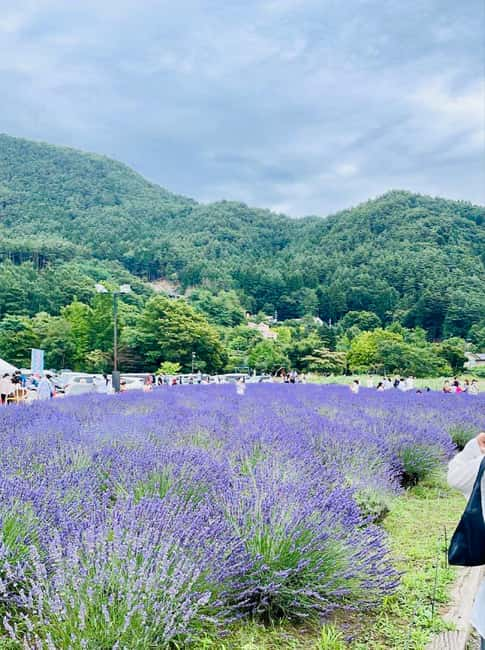
Oishi Park sits beside Lake Kawaguchiko and is one of the more relaxed stops. The park has seasonal flowers and gardens, so the exact color and appearance depend on when you go. You can walk through two garden areas, take pictures across the lake, and enjoy another open view of Fuji if the clouds allow it.
The park’s story is also tied to Fuji’s eruptions. Local stone recovered around Lake Kawaguchiko was used in its construction, and the park serves as a reminder of the powerful eruptions that shaped the area. This gives the stop more substance than a simple flower garden visit.
You will have about 50 minutes. That is enough for a walk and photographs, with some time for shopping. The park offers 14 flavors of creamy ice cream, local fruit, and souvenirs. These purchases are not included, so bring cash along with a card if you like to snack or shop.
This is a good place to slow down after the stairs, shrine visits, and street walk. It also gives you a chance to buy something local without turning the entire day into a shopping trip.
Cruising Lake Kawaguchiko
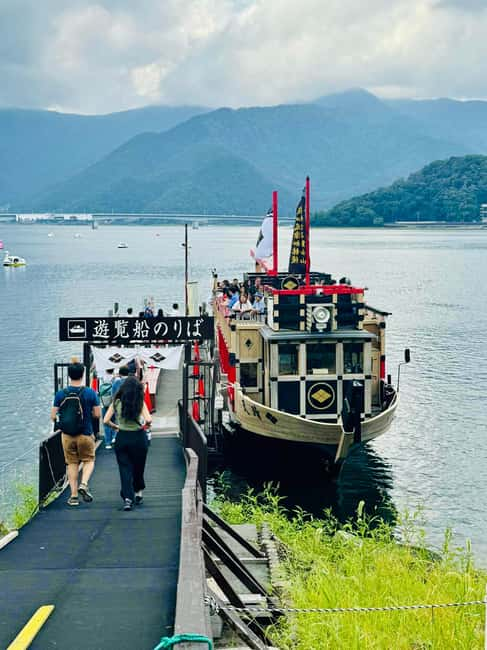
The final major activity is a cruise on Lake Kawaguchiko, described as the second largest lake around Mount Fuji. The boat ride lasts about 40 minutes and gives you a moving view of the lake and its surrounding scenery.
I like the change in viewpoint. Fuji photographs from land can become repetitive after several stops. On the water, the shoreline shifts as you travel, and the lake becomes part of the picture rather than just a foreground strip.
The cruise is also a pleasant way to finish a demanding day. You can sit, look outward, and let the guide-led sightseeing pause for a while. Bring a jacket or extra layer because weather can change quickly around the mountain and open water.
As with every Fuji stop, visibility is not guaranteed. A clear day can make the cruise memorable, but cloudy weather still leaves you with the lake, gardens, and surrounding towns. The experience is strongest when you view the boat ride as part of the day rather than as a promise of a perfect mountain photograph.
What the $90 price really covers
At $90 per person, the tour offers fair value for a visitor who wants a structured Fuji day from Tokyo. Bus or coach transportation, the guide fee, entrance costs, the listed sightseeing stops, and the Lake Kawaguchiko cruise are included.
That matters because arranging the same collection of places independently would require more planning. You would need to coordinate transport to the Fuji area, find the mountain viewpoints, reach both shrines, visit Oishi Park, and arrange the lake activity. A guided day also gives you explanations that signs alone may not provide.
The cost does not include lunch, snacks, drinks, ice cream, or personal purchases. Plan to carry food and water, or set aside money for what you buy during the day. Cash is specifically recommended, which is useful for small purchases at parks and local shops.
The value depends on your priorities. If you want maximum free time, long meals, or a single location explored slowly, the schedule may feel too full. If you want several of the region’s main sights without managing the transport yourself, the price is easier to justify.
Practical advice for a smoother day
Wear comfortable shoes, especially if you plan to climb to Chureito Pagoda. The alternative sloping path avoids the 400 steps, but you will still be walking through several sites over a long day.
Pack water, snacks, sunscreen, and comfortable clothing. Bring layers because conditions around Fuji can shift quickly. A camera is obvious, but a phone with spare battery power is also useful if you take many photographs.
Arrive at the correct meeting point, in front of the Robert Indiana LOVE sculpture. The guide will carry a sign showing JP Travelers and will identify the Spanish departure with Fuji tour in Spanish.
The tour operates in both English and Spanish. Confirm the language you want when booking so you are placed with the right guide. Spanish is especially useful if you want detailed explanations without relying on translation.
The route begins in central Tokyo and ends back in Nishishinjuku. Since it lasts about 10 hours, avoid scheduling a tight evening reservation afterward. Traffic, weather, and mountain access can affect the day.
The advertised highlights include a Mount Fuji fifth station, but the detailed stop sequence centers on Arakurayama, Honcho Street, Kitaguchi Hongu Fuji Sengen Shrine, Oishi Park, and Lake Kawaguchiko. Ask for the exact operating-day route if the fifth station is essential to your plans. When Fuji is closed or entry is not allowed, the northern shrine is used instead.
Who should book this Fuji tour?
I would choose this tour if you are staying in Tokyo and want a broad introduction to the Fuji area in one day. It suits first-time visitors, couples, families who can manage a long walking day, and Spanish-speaking visitors who want a guide able to explain the history and customs directly.
It is also a good match for photographers who want several angles: the pagoda view, the town street, shrine grounds, Oishi Park, and the lake. Just remember that weather controls the mountain portion.
I would hesitate if you dislike fixed schedules, stairs, or long transport days. The tour includes many stops, so you will not have unlimited time at any one site. People seeking a quiet mountain hike should choose a different experience.
Free cancellation is available up to 24 hours before departure, and you can reserve now and pay later. Those terms help if the weather forecast is uncertain, but they do not remove the basic risk that Fuji may be hidden by clouds.
Should you book it?
Book this tour if you want many Fuji-area highlights in one organized day, especially with Spanish guidance. The combination of Chureito Pagoda, pilgrimage shrines, Honcho Street, Oishi Park, and a lake cruise gives you more than a single viewpoint, while the $90 price includes transport and the main listed fees.
Skip it if you want a slow, independent visit or if climbing and walking for much of the day would be uncomfortable. For everyone else, this is a practical way to see Mount Fuji’s cultural and scenic sides without spending your holiday planning every connection.
FAQ
How long does the Mount Fuji tour last?
The tour lasts 10 hours, including transportation from Tokyo and the return to Nishishinjuku.
Where does the tour start?
The meeting point is in front of the Robert Indiana Sculpture LOVE at 6-chōme-5-1 Nishishinjuku.
Where does the tour finish?
The tour finishes at 1-chōme-8-8 Nishishinjuku.
Which languages are available?
The tour is conducted in English and Spanish.
Who will I look for at the meeting point?
The guide will carry a sign with the company name JP Travelers. For the Spanish tour, the guide will say Fuji tour in Spanish.
Is Mount Fuji’s fifth station included?
The experience highlights mention views from Mount Fuji’s fifth station, but the detailed route lists Arakurayama, Honcho Street, Kitaguchi Hongu Fuji Sengen Shrine, Oishi Park, and Lake Kawaguchiko. Confirm the exact route before booking if the fifth station is essential.
How many steps lead to Chureito Pagoda?
The route from the entrance has about 400 steps. The first 100 lead toward the shrine, and the next 300 continue to the pagoda.
Is there a route without stairs?
Yes. An alternate path follows a slope without stairs and reaches the same area.
Is lunch included?
No. Lunch, snacks, drinks, ice cream, and personal expenses are not included.
What happens if Mount Fuji is closed?
If Mount Fuji is closed or entry is not permitted for reasons beyond the operator’s control, the tour visits Kitaguchi Hongu Fuji Sengen Shrine instead.
Just added around Mount Fuji
- Ramen Cooking Class at Lake Kawaguchiko (Short Course)★ 5.0 · 42 reviews
- Private Fuji Full-day Car Tour with Hotel Pickup -Local Guide★ 5.0 · 12 reviews
- Sushi Cooking Class at Sushi Factory -KIWAMI- Mt.Fuji★ 5.0 · 23 reviews
- Private Local Hiking to enjoy the nature and culture of Mt.Fuji★ 5.0 · 22 reviews
- Cute & Fun E-Car tour following guide around Lake Kawaguchiko★ 5.0 · 54 reviews
- Ramen Cooking Class at Ramen Factory in Mt.Fuji★ 5.0 · 101 reviews
- Fujisan Sushi Making Lesson★ 5.0 · 16 reviews
- Early Morning Kayaking With Views of Mt Fuji at Lake Kawaguchiko★ 5.0 · 69 reviews
Full-Day, compared.
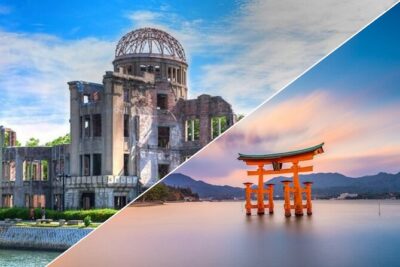
Hiroshima / Miyajima Full-day Private Tour with Government Licensed Guide
Our verdict →

5 Top Highlights of Kyoto Full Day Bike Tour (E-bike option)
Our verdict →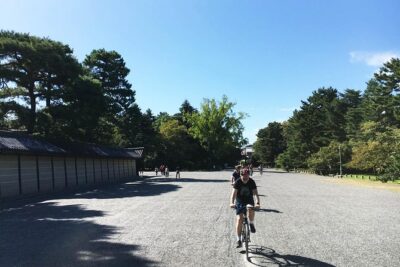
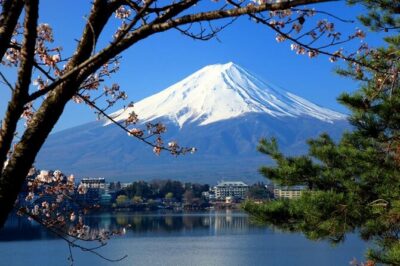
Mt. Fuji, Hakone Full-Day Private Tour with English Driver Guide
Our verdict →
Full Day Guided Tour to Kyoto and Nara from Osaka by Van
Our verdict →
Browse the lists this tour appears in