
Reviewed · YOKOHAMA TOURS
Tokyo Full Day Tour with Licensed Guide and Vehicle from Yokohama
Tokyo is too large for a proper first look in one day, yet this private tour makes a useful attempt. From Yokohama, you ride with a licensed guide and driver, then choose three or four Tokyo sights instead of following a fixed route. That freedom matters when your time is tied to a cruise schedule or a short stay.
I like the private vehicle for two reasons: it saves you from figuring out Tokyo’s huge subway network, and it gives you a comfortable base between far-flung districts. I also like the human touch. Guides such as Atsushi Kayukawa, Toshi, An, Fumiko, and Noripy have shaped days around food, gardens, shopping, temples, and family interests.
The main drawback is price. At $854.91 per group of up to two, this is a costly day out, and entrance fees, lunch, and personal spending are extra. You also need to choose wisely, since three or four stops cannot cover every neighborhood on the long menu.
Key points to know before booking
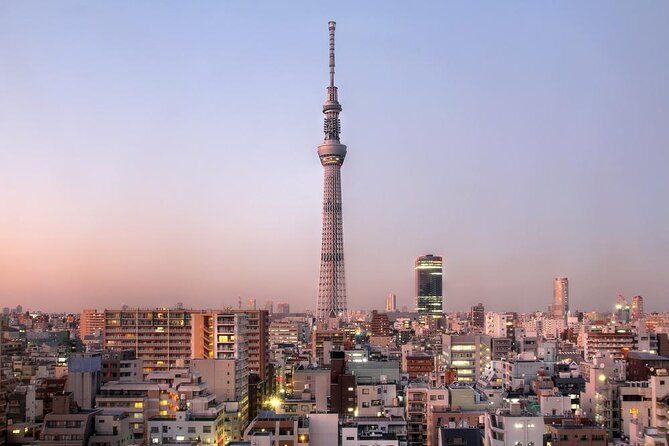
- Three or four stops are yours to choose: Pick a traditional day with Asakusa and Meiji Shrine, or mix temples with Shibuya, Tsukiji, and Akihabara.
- A private car links Yokohama and Tokyo: You avoid subway transfers, though traffic can still limit how much you see.
- The guide can shape the day around you: Previous days have included local dining, drugstore shopping, gardens, cherry blossom viewing, and cruise-port timing.
- The tour lasts about eight hours: That is enough for a strong introduction, not a full survey of Tokyo.
- Most sightseeing time is short: Many listed stops allow 15 to 30 minutes, so tell your guide if you prefer fewer places and more time at each.
- Entry costs are separate: Some stops are free, but gardens, museums, the Imperial Palace interior, and Tokyo Skytree may involve fees or restricted access.
Why a private car helps on a Tokyo day trip
Tokyo rewards public transportation, but the first ride can feel like a puzzle. Stations are huge, lines use different operators, and a day linking Asakusa, Shibuya, Harajuku, and Tsukiji can mean several changes. With this tour, your guide and driver handle the movement from Yokohama.
That convenience is most useful when you have only one day or when you are coming off a cruise. One guide and driver even worked around delayed disembarkation, according to the details shared after the tour. That kind of flexibility is hard to get from a group excursion with a fixed departure.
Still, a car does not remove Tokyo’s traffic. The city’s size is the basic challenge. A road trip can be slower than a train at busy times, and every minute spent crossing town reduces time on foot. I would not try to squeeze in all 17 suggested areas. Select a compact route and let the guide build around it.
The tour is private, so only your group takes part. The advertised rate covers up to two people, which makes the cost easier to judge for a couple than for a solo visitor. If your party is larger, confirm the applicable price and vehicle arrangement before booking.
More Full-Day Tours in Yokohama:
- Yokohama Full Day Tour with a Local Expert Guide
★ 4.3 · 23 reviews - From Tokyo: Mount Fuji Full-Day Sightseeing Trip
★ 4.5 · 4,970 reviews - Mount Fuji Full-Day Private Tour from Tokyo (Customizable)
★ 4.9 · 1,470 reviews
Building a sensible three-stop or four-stop plan
The long choice of sights is useful, but it can also tempt you into an exhausting checklist. I would group stops by area and mood.
For a first taste of old Tokyo, choose Asakusa, Tokyo Skytree, and Tsukiji Fish Market. Add the Imperial Palace if you want a quick look at the city’s central civic core. For modern Tokyo, combine Shibuya, Harajuku, and Roppongi Hills. For a quieter day, choose Meiji Shrine, one garden, and Nezu or Shibamata.
The guide can help you decide how much ground to cover. Past tours have been adjusted to include Shinjuku, drugstore shopping, souvenirs, local meals, and specific family interests. That is the real value of a private guide: you can change the balance instead of spending the whole day at places that do not suit you.
Keep your priorities clear. If you want a museum visit, say so early. If food matters more than monuments, ask for time at Tsukiji or a suitable lunch stop, remembering that lunch is not included. If your main goal is photography, allow longer at fewer places.
Asakusa and Senso-ji: Tokyo’s traditional opening
Asakusa is the strongest choice for a first stop. This old downtown district preserves a feel from earlier Tokyo, and Senso-ji gives you an immediate introduction to Japanese Buddhist architecture and popular religious life.
The temple area is colorful and accessible, with free admission listed for both Asakusa and Senso-ji. A 30-minute visit can cover the main approach and temple grounds, while a shorter 15-minute stop gives you only a quick look. If this is your first Tokyo visit, I would give Asakusa more time than the shortest suggested slot.
The nearby Tokyo Skytree provides a sharp contrast. The tower is a major Tokyo landmark and sits not far from Asakusa. The outside view is free, but access to observation areas is not included. A half-hour stop works for seeing the structure and nearby area, but a proper tower visit would need more time and a separate admission.
Tsukiji is another good partner for Asakusa. The former wholesale market site now has narrow lanes lined with shops, restaurants, and food stalls. It is a place to eat and browse, not a formal museum. Since lunch is extra, settle the food plan with your guide before the day gets moving.
Imperial Palace and Tokyo’s central core
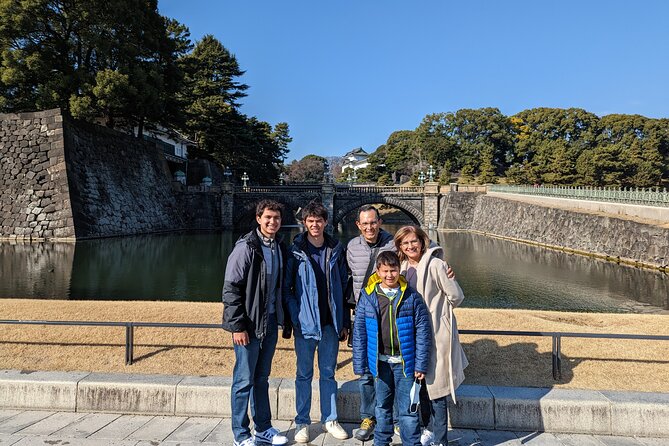
The Imperial Palace occupies the former site of Edo Castle, surrounded by a large park, moats, and heavy stone walls. It offers a sense of Tokyo’s political center and earlier military past, even on a short visit.
Be clear about the limits: this tour does not include access inside the Imperial Palace. The suggested 30-minute stop is for the surrounding grounds and exterior views. Admission is also listed as not included, so ask the guide exactly what part of the area your chosen visit covers.
This is a good stop for people who want a broad city orientation rather than a long indoor visit. It is less useful if your main interest is palace rooms or detailed castle history, since the tour specifically excludes the interior.
A few more Yokohama half-days worth comparing
- Tokyo 8hr Private Tour with Licensed Guide from Yokohama
★ 5.0 · 94 reviews - Shuttle Van Transfer, Yokohama(Port)⇒Tokyo, Narita, Haneda, TDR
★ 5.0 · 63 reviews - Yokohama Ramen Adventure From a Local Noodle Factory to Home
★ 5.0 · 60 reviews - Yokohama 4hr Private Tour with Government-Licensed Guide
★ 5.0 · 34 reviews
Shinjuku, Shibuya, and Harajuku: modern Tokyo in three flavors
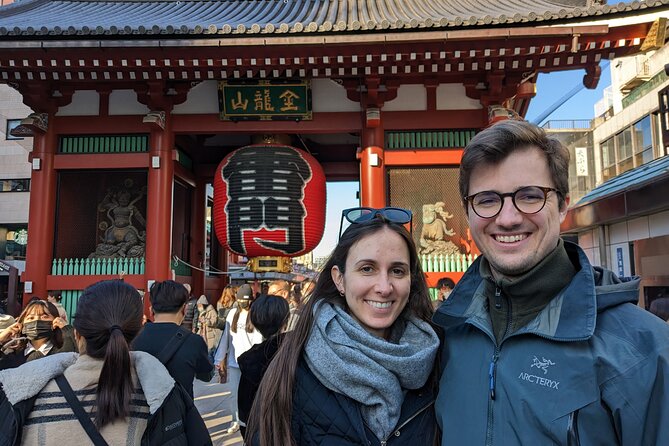
Shibuya Scramble Crossing is Tokyo’s famous pedestrian intersection near Shibuya Station’s Hachiko exit. It is a quick, memorable look at the city’s modern energy. The stop is listed without a set duration, so your guide can fit it into the day, but do not expect a full Shibuya visit unless you choose it as one of your main stops.
Harajuku offers two very different experiences. Meiji Jingu is a shrine dedicated to Emperor Meiji and Empress Shoken, set beside busy Harajuku Station. The shrine is free and receives a 30-minute slot. It gives you a calmer setting and a strong contrast with the surrounding shopping streets.
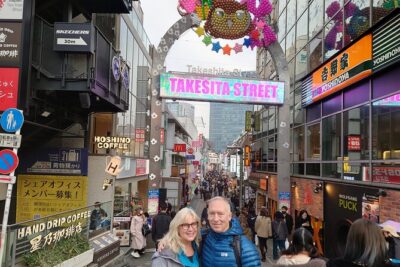
Takeshita Street shows Harajuku’s youth fashion and shopping culture. A 30-minute stop is enough to walk through and get a taste, but shopping can easily expand beyond that. If your group includes young adults, this may be one of the better choices. One family day was shaped around adults and young adults, with the guide organizing the route to suit the whole group.
Shinjuku Gyoen National Garden offers spacious lawns, walking paths, and a break from dense city streets. The suggested 15-minute visit is very brief, and admission is not included. I would select it only if you want a quick garden pause, or give it more time by dropping another stop.
Gardens for a slower side of Tokyo
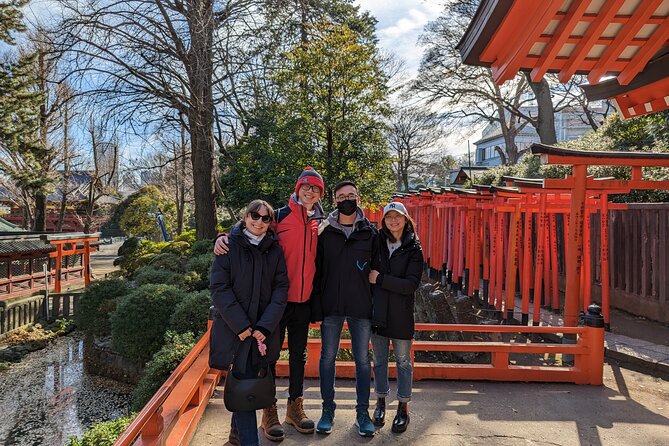
Tokyo’s gardens are easy to undervalue when you are racing between famous districts. They show a careful, quieter side of the city and can make a private day feel less like a parade of photo stops.
Koishikawa Korakuen is one of Tokyo’s oldest Japanese gardens, created in the Edo period for the Mito branch of the ruling Tokugawa family. It is listed with a 15-minute visit and separate admission. That is enough for a glance, not a full walk.
Rikugien is another major Japanese garden, created around 1700 for the fifth Tokugawa shogun. Its name refers to six poetic themes, which hints at the designed scenes you will find inside. The suggested 30 minutes gives you a better chance to enjoy it, though you will still see only part of the garden.
Hama Rikyu sits beside Tokyo Bay and includes seawater ponds that change with the tides, along with a teahouse. The listed 15-minute stop is short, and admission is not included. Choose it for the setting and the contrast between garden paths and central Tokyo buildings, not for an extended garden walk.
Museums, electronics, and shopping stops
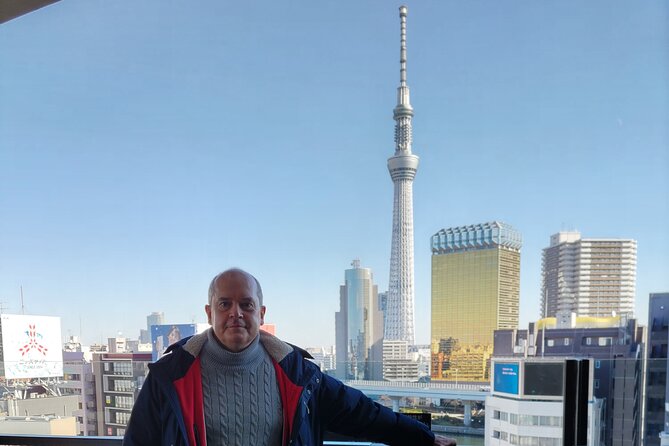
The Tokyo National Museum is Japan’s oldest and largest national museum. It is in the Ueno area and offers a major collection of Japanese art and culture. Yet the suggested 15-minute visit is plainly a preview. If you care about museums, make this one of your main stops and ask about the entrance fee and time available.
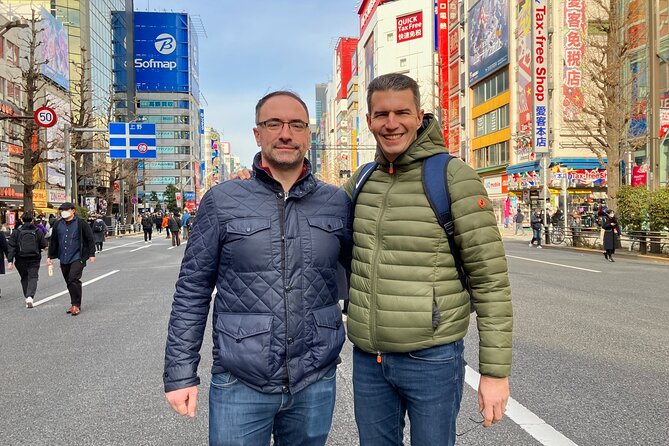
Akihabara is famous for electronics and is also a center of Japanese popular culture. A 30-minute stop lets you see the district’s character and browse, but it will not cover every shop. It works well for a group with a specific interest in electronics, anime, games, or souvenir hunting.
Roppongi Hills is a large city complex with offices, apartments, shops, restaurants, a hotel, and art spaces. It is a modern city-within-the-city stop, best chosen if you want shopping, dining, or contemporary Tokyo rather than temples and gardens.
Odaiba, Shibamata, and Nezu for a different Tokyo
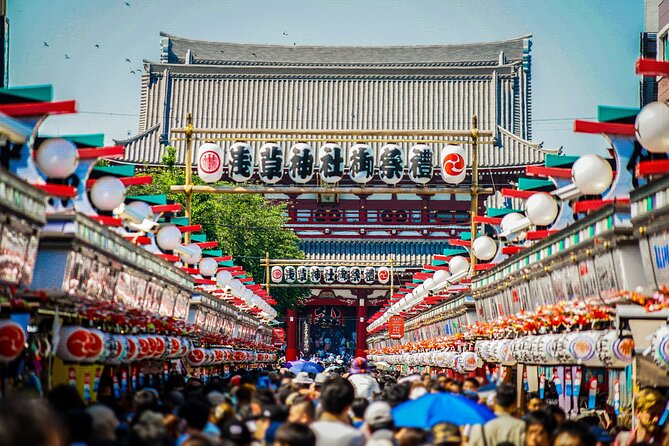
Odaiba is a shopping and entertainment district on a man-made island in Tokyo Bay. Its origins as fortified islands give the area an unusual backstory, while the current appeal is modern recreation and waterfront space. A 30-minute stop can provide an overview, but getting there may take valuable road time from Yokohama.
Shibamata, on Tokyo’s eastern edge near the Edogawa River, keeps an old-fashioned neighborhood feel. It is less predictable than the famous central sights and may suit you if you have already seen major temples or want a more local-feeling district.
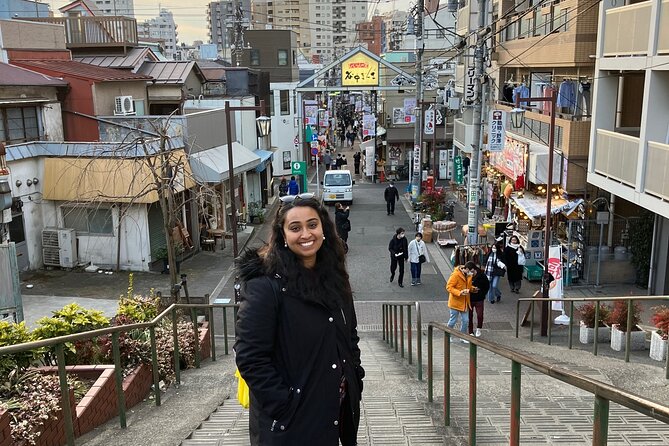
Nezu, along with nearby Yanaka, belongs to old Tokyo’s shitamachi area. These neighborhoods escaped major damage from wars and natural disasters and retain much of their earlier street character. Choose Nezu for atmosphere and a slower walk, not for a single headline monument.
Guides, meals, and personal attention
The guide is central to the experience. The tour provides a licensed local English-speaking guide, and named guides connected with past days include Atsushi Kayukawa, Toshi, An, Fumiko, Minoru, Ryuta, Seizo Kamiuto, Izumi, and Noripy. Availability depends on the date, so do not assume you can request a particular person unless the provider confirms it.
The strongest pattern is personal planning. An contacted the group before the day and adjusted the route. Fumiko organized a busy schedule for a family with young adults. Noripy helped arrange a day with a good lunch and the places the group wanted most. Other guides added Shinjuku, shopping, temples, gardens, and local dining when time allowed.
Food is not included, but it can become part of the plan. One guide felt apologetic about choosing a casual ramen restaurant instead of a traditional one, yet the meal still fit the group well. The lesson is practical: tell your guide what kind of meal you want, and set aside money and time for it.
Price, inclusions, and practical limits
At $854.91 per group of up to two, this is not a budget tour. The value comes from private transportation, a full day, a licensed guide, and the ability to shape the route around your interests. For two people with limited time from Yokohama, the cost may compare well with buying several separate transfers and arranging a guide yourself.
The price does not cover lunch, entrance fees, or other personal costs. Free stops include Asakusa, Senso-ji, Meiji Shrine, Akihabara, Takeshita Street, Roppongi Hills, Odaiba, Shibamata, and some outdoor viewing. The Imperial Palace interior is specifically excluded.
Service animals are allowed, and most people can take part. Only a limited number of car seats and booster seats are available, and rear-facing seats are not available. Contact the provider directly if you need child seating.
Free cancellation is available up to 24 hours before the start time for a full refund. Changes or cancellations inside that window are not accepted for a refund.
Should you book this Tokyo day?
Book this tour if you are staying in Yokohama, arriving by cruise, traveling with family, or simply want a private guide to handle the city’s scale. It is especially useful if you want to combine traditional Tokyo, modern districts, and a meal without wrestling with the subway.
Do not book it expecting a slow, detailed visit to every major sight. The tour works best when you choose three or four priorities and accept that each stop may be brief. For the price, I would ask for a clear route before departure, confirm which entrance costs apply, and request the kind of food and shopping you want.
If that sounds right, this is a practical way to get a strong first taste of Tokyo in one demanding but flexible day.
FAQ
How long does the Tokyo tour last?
The tour lasts approximately eight hours.
Where does the tour begin?
The experience is based in Yokohama and offers pickup.
Is transportation included?
Yes. A private vehicle and licensed local English-speaking guide are included.
How many people can join at the advertised price?
The advertised price is $854.91 per group of up to two people.
How many Tokyo sights can I choose?
You can customize the day around three or four sites from the provided selection.
Is the Imperial Palace interior included?
No. The tour does not include access to the inside of the Imperial Palace.
Are entrance fees included?
Entrance fees are not generally included. Guide entry fees are covered only for sights listed under the tour’s included sightseeing choices.
Is lunch included?
No. Lunch and other personal expenses are separate.
Can children use car seats?
A limited number of car seats and booster seats are available. Rear-facing car seats are not available, so contact the provider directly if you need child seating.
What is the cancellation policy?
You can cancel at least 24 hours before the experience start time for a full refund. Cancellations or changes made less than 24 hours before the start time are not accepted for a refund.
Just added around Yokohama
- Tokyo/Yokohama: Private JDM Daikoku/大黒 Car Meet With Driver★ 4.7 · 20 reviews
- Japanese Tea Ceremony at Private Home in Yokohama, suburban Tokyo★ 5.0 · 32 reviews
- Yokohama Ramen Adventure From a Local Noodle Factory to Home★ 5.0 · 60 reviews
- Yokohama Half Day Walking Tour with an Expert Local Guide★ 4.5 · 22 reviews
- Yokohama 4hr Private Tour with Government-Licensed Guide★ 5.0 · 34 reviews
- Shuttle Van Transfer, Yokohama(Port)⇒Tokyo, Narita, Haneda, TDR★ 5.0 · 63 reviews
- Yokohama Private Tour★ 5.0 · 21 reviews
- Yokohama Full Day Tour with a Local Expert Guide★ 4.3 · 23 reviews
Yokohama Tours, compared.
Tokyo 8hr Private Tour with Licensed Guide from Yokohama
Our verdict →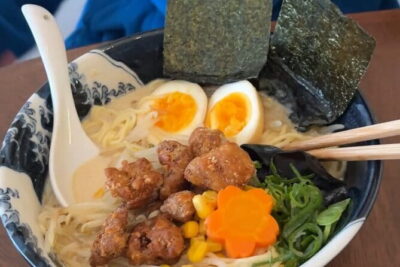
Yokohama Ramen Adventure From a Local Noodle Factory to Home
Our verdict →
Browse the lists this tour appears in