
Reviewed · FULL-DAY
Full Day Tour to Mount Fuji in Spanish
The best thing about this Mount Fuji day trip is its range. In one long day, you visit waterfalls, five-lake viewpoints, a reconstructed village, a forest, a shrine, a pagoda, and a lava cave. This is not simply a drive to one photo stop. It is a broad look at the area around Japan’s most famous mountain, explained in Spanish by guides such as Dario and Tito.
I like the small maximum group of nine, which should make it easier to ask questions and keep the day friendly. I also like the guides’ flexible approach: the route can change with the weather and daylight, giving you a better chance of seeing Mount Fuji instead of following a rigid schedule.
The main drawback is the pace. Eleven stops in 10 to 11 hours means many visits last only 30 to 45 minutes. You should also remember that Mount Fuji may stay hidden behind clouds, and lunch is not included.
Key points before you book
- Spanish guidance with cultural context: Guides explain Japanese culture, religion, local life, and the meaning of important sites in Spanish.
- Eleven stops in one day: You see far more than a single Fuji viewpoint, including lakes, shrines, caves, waterfalls, and villages.
- Weather-based planning: Dario and his team may adjust the order or selection of stops to make better use of the day.
- Small-group format: The tour accepts a maximum of nine people, a useful advantage on a full-day route.
- Mishima departure: Meet at the Tokai Bus Mishima Information Office at 8:00 am and return there at the end.
- Good value for a full day: The $96.17 price includes drinks, snacks, taxes, and the admission fees listed for Saiko Iyashi no Sato Nemba and Fugaku Wind Cave.
Why this Mount Fuji tour feels different
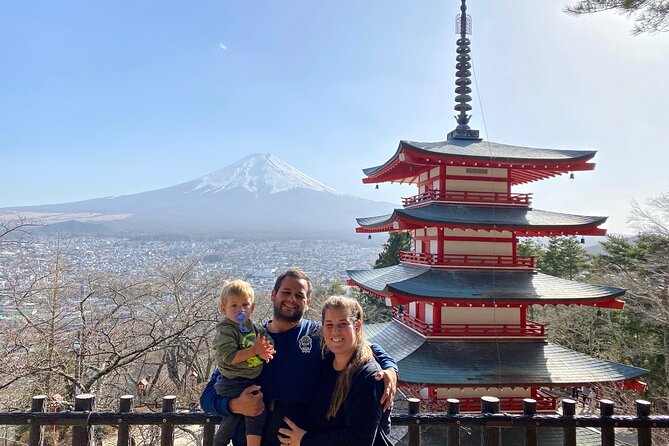
Many Mount Fuji outings are built around one famous photograph. This one gives you a fuller day around the mountain. You still get the classic Chureito Pagoda view, but you also see places tied to volcanoes, pilgrimage, local food, traditional buildings, and the five lakes.
The Spanish language service is a major reason to choose it. The guides include Japanese-Peruvian team members, and the explanations cover more than dates and names. You can ask about Japanese customs, religion, local traditions, and the role of Mount Fuji in the area. Dario is also described as having years of experience on this route and helping with later Japan travel questions.
The group size matters here. A day with eleven stops can feel tiring if you are stuck in a large coach. With no more than nine people, the setting should be more personal, and it is easier to stay connected with the guide when the group moves from one place to the next.
Still, this is an ambitious schedule. Some stops are short, and you should expect a sightseeing circuit rather than long walks or extended free time. If you prefer to spend half a day at one lake, this will feel too busy. If you want to cover a large section of the Fuji area in one day, the pace makes sense.
More Full-Day Tours in Mount Fuji:
- From Tokyo: Mount Fuji Full-Day Sightseeing Trip
★ 4.5 · 4,970 reviews - Mount Fuji Full-Day Private Tour from Tokyo (Customizable)
★ 4.9 · 1,470 reviews - From Tokyo: Must-Visit Mount Fuji Highlight Full-Day Tour
★ 4.7 · 532 reviews
From Mishima to Shiraito Falls
The day begins at 8:00 am at the Tokai Bus Mishima Information Office, at 17-1 Ichibanchō in Mishima. The activity returns to this same meeting point, so you do not need to arrange a separate end location.
Shiraito Falls is the first major stop. Water from Mount Fuji and nearby mountains emerges in a wide curtain of clear streams. The falls are linked to past eruptions of Fuji, so this is an early reminder that the mountain is not just a pretty cone. It shaped the water, rock, and towns around it.
You have about 30 minutes here, with no admission fee. That is enough for photographs and a quick look, but not for a long walk or a slow morning visit. Wear shoes that are comfortable on wet or uneven ground, since waterfalls are best appreciated close to the viewing area.
Motosuko and Saiko: Fuji in money and memory
Next comes Lake Motosu, one of the most recognizable Fuji viewpoints in Japan. Its image appears on the back of the ¥1,000 bill, giving the stop a useful connection to everyday Japanese life. Seeing the actual view helps you understand why this particular angle became so familiar.
The visit lasts around 30 minutes and costs nothing to enter. As with every outdoor stop, clear conditions matter. You may get the famous mountain profile, a partial view, or only a lake framed by cloud. The tour’s flexible planning is useful here, since the order of stops can change with weather and daylight.
At Saiko Iyashi no Sato Nemba, the focus shifts from scenery to local life. This ancestral village between the mountains was destroyed and later rebuilt. Its traditional appearance gives you a chance to think about how rural communities looked and how they recovered.
You have about an hour here, the longest scheduled stop of the day. Admission is included. This is one place where the guide’s explanation adds real value, since the buildings and setting mean more when you know the story behind their reconstruction.
Saiko Lake and the edge of Aokigahara
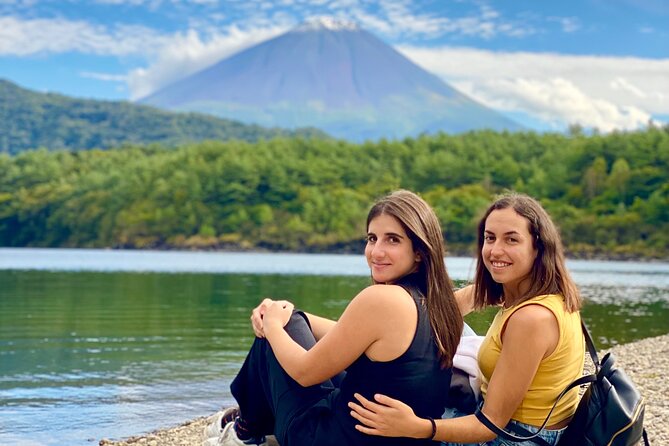
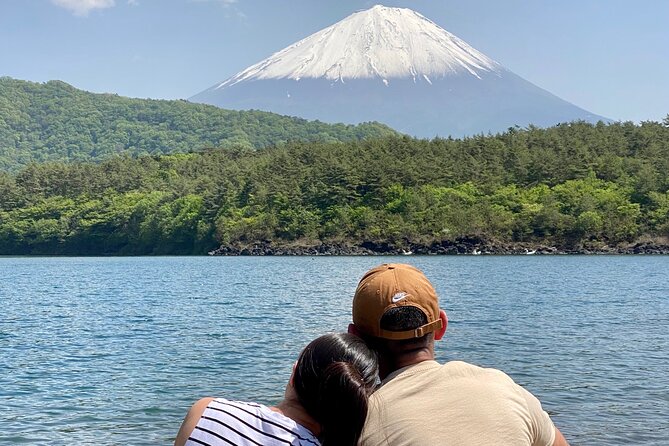
Lake Saiko is visited for about 30 minutes. It sits beside Aokigahara Forest and has also been used as a setting for films. The stop connects the calm surface of the lake with the dense woodland nearby, two very different sides of the same volcanic region.
Aokigahara is introduced with care as the forest associated with suicide. The subject has tragic associations, but the tour presents it as a real forest, not a stage for ghost stories. You should approach this stop respectfully and avoid treating its reputation as entertainment.
The scheduled forest visit lasts about 45 minutes. The supplied details do not specify the exact walking route, so you should expect a guided stop rather than assume a long hike. Stay with the group and listen to the guide’s explanation. The forest’s difficult history is part of the area, but it should not overshadow its natural setting.
A few more Mount Fuji half-days worth comparing
- Mt Fuji and Hakone 1-Day Bus Tour Return by Bullet Train
★ 5.0 · 26,383 reviews - Mt Fuji & Hakone Cruise, Drum Show Bullet Train 1 Day from Tokyo
★ 4.0 · 7,413 reviews - Tokyo Mt Fuji 5th St & Hakone Cruise Bus Tour w/Bullet Train
★ 4.4 · 5,024 reviews - Tokyo: Mt. Fuji Tour, Hakone Ropeway, Owakudani, Lake Ashi
★ 4.7 · 4,002 reviews
Kawaguchiko and the hunt for a clear Fuji
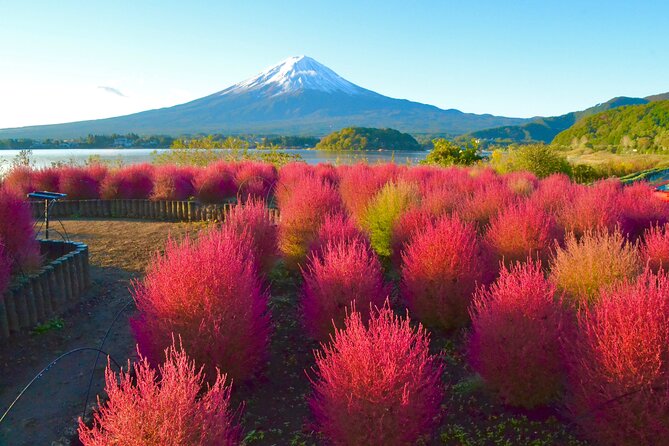
Lake Kawaguchiko is one of the best-known areas around Mount Fuji, yet this tour does not limit you to the standard roadside view. The guide has developed two less obvious places around the lake and shares them with the group. The stop lasts about 50 minutes and has no admission fee.
This is where the tour’s weather strategy matters most. The guides describe the day as a search for Mount Fuji, not a promise that the mountain will appear. Cloud, haze, daylight, and seasonal conditions can change the view quickly. If Fuji is hidden, the lake and surrounding area still give you something to see, but you should book with realistic expectations.
Several participants specifically valued Dario’s ability to find a better viewing spot when conditions were poor. That does not guarantee a clear mountain, but it is a sensible advantage over a fixed route with no room to adjust.
Oshino Hakkai and traditional food
Oshino Hakkai brings you into an older village setting, with ponds and a selection of traditional Japanese foods. You have around 45 minutes here, and admission is free.
This is a useful place to sample local snacks or simply watch how the area presents its regional food culture. Lunch itself is not included, so you should plan to buy or arrange your midday meal during the day. The tour includes snacks and drinks, which helps, but they are not a substitute for lunch.
Because this is a popular area, your free time may feel short if you want to eat, shop, take photos, and listen to the guide all at once. Choose your priority before arriving. If food interests you, save time for it rather than trying to see every corner.
Chureito Pagoda and Fujiyoshida’s symbol
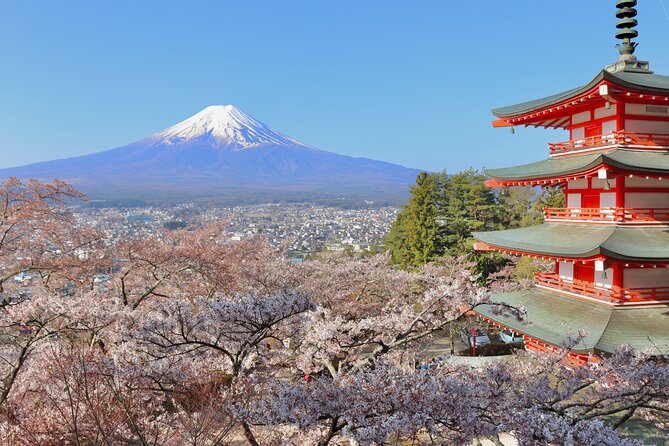
Chureito Pagoda is the postcard stop. The red pagoda, Mount Fuji, and the surrounding city are among the most widely used images of Japan. It is also a symbol of Fujiyoshida, the city connected with this viewpoint.
The stop lasts about 45 minutes and has no admission fee. The main practical issue is the climb. The experience details do not state the number of stairs or a walking distance, so you should allow for some uphill effort and wear sensible shoes.
This is one of the places where weather can make a dramatic difference. On a clear day, the familiar composition can be excellent. In cloud, you may see the pagoda and town without Fuji. It is still an important cultural and visual stop, but do not treat the famous photograph as guaranteed.
Fuji Sengen Shrine and the path toward the mountain
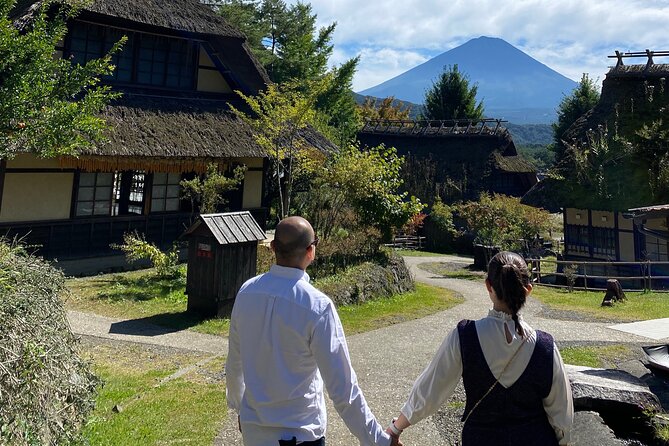
Kitaguchi Hongu Fuji Sengen Jinja Shrine is dedicated to Mount Fuji and to those who climb it. It is also connected with the route toward the mountain, giving you a religious and historical angle that a viewpoint alone cannot provide.
The visit takes about 30 minutes and is free. The short stop is enough for an introduction, but not for a long religious visit or a detailed architectural study. Listen for the connection between pilgrimage and climbing. Mount Fuji has long been more than a scenic object, and this shrine helps explain that idea.
The shrine also balances the day. After several photo stops, you get a place where the mountain is treated with respect and ritual. That cultural context is one of the strongest reasons to take this tour with a Spanish-speaking guide rather than visit every location without explanation.
Yamanakako, swans, and the final lake
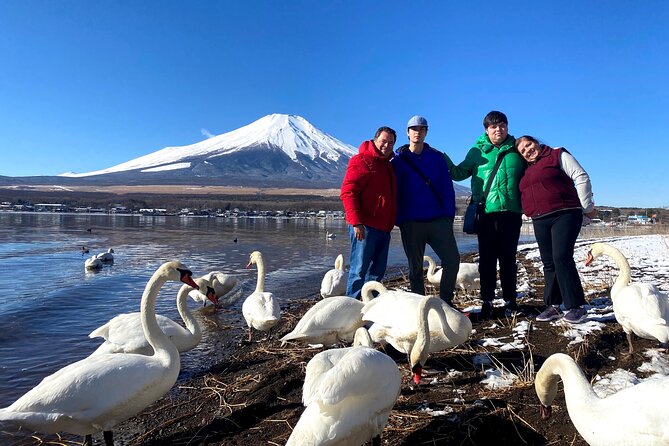
Yamanakako-mura surrounds the largest of the five lakes near Mount Fuji. The stop lasts around 30 minutes. The lake is home to swans, koi, and other birds, and you may be able to feed them.
This is a gentler stop after the pagoda and shrine. It gives you another angle on the mountain and a chance to watch local wildlife around the water. The details do not state that bird food is included, so treat feeding as a possible activity rather than a guaranteed part of the tour.
The short timing means you will not explore the whole lake. Think of this as a focused visit to the shoreline rather than a full lake excursion.
Fugaku Wind Cave and Fuji’s volcanic past
The final listed stop is Fugaku Wind Cave, a natural underground formation created by past eruptions of Mount Fuji. The cave still contains traces of volcanic lava, making this a strong finish for a tour that has repeatedly shown how the volcano shaped the region.
You have about 30 minutes here, and admission is included. Underground sites can feel cool even when the day outside is warm, so an extra layer is sensible. The visit is brief, but it provides physical evidence of the volcanic forces behind the waterfalls, lakes, and caves you have seen all day.
After this, the activity returns to the Mishima meeting point. The full schedule runs approximately 10 to 11 hours, so expect to spend most of the day on the road and at short sightseeing stops.
What the $96.17 price includes
At $96.17 per person, the value depends on how much of this route you would otherwise try to arrange yourself. You get a full day, Spanish-speaking guidance, transportation as part of the organized excursion, snacks, drinks, all taxes, and the listed admission fees.
The two paid attractions included in the schedule are Saiko Iyashi no Sato Nemba and Fugaku Wind Cave. The other stops are listed with free admission. Lunch is the main extra cost to plan for.
For me, the strongest value is not the entrance fees. It is the route design and the guide’s ability to explain why each place matters. Getting to eleven locations around Mount Fuji in one day would require careful timing and local transport planning. The tradeoff is less time at each stop.
Who should book this day trip?
I would recommend it to you if:
- You want Spanish explanations throughout the day.
- You are staying near Mishima or can reach the meeting point for 8:00 am.
- You want many different Fuji-area sights instead of one viewpoint.
- You enjoy cultural context as much as photographs.
- You are comfortable with a long day and a brisk schedule.
- You want a small group, with no more than nine participants.
I would think twice if you want a slow, quiet day beside one lake, a serious hike, or guaranteed views of Mount Fuji. The tour depends on weather, and the mountain can disappear behind clouds. The route may change to suit conditions, but no guide can control the sky.
The tour has a 4.9 rating from 279 ratings and a 98 percent recommendation rate. The praise centers on punctual organization, clear Spanish explanations, thoughtful weather adjustments, photography help, and the guides’ warmth. Dario, Tito, Riomy, and Min are named among the team, though the exact guide on your date may differ.
Free cancellation is available up to 24 hours before the 8:00 am start time for a full refund. Cancellations or changes within 24 hours are not refunded. If bad weather or an insufficient number of bookings cancels the activity, you can receive a different date or a full refund.
Should you book it?
Book this Mount Fuji tour if you want an active, wide-ranging day with Spanish guidance and strong cultural detail. The combination of lakes, waterfalls, villages, forest, shrine, pagoda, and cave gives you a much broader sense of the region than a single photo stop.
The best way to approach it is to treat Fuji as a possibility, not a promise. If the mountain appears, you may collect several memorable views. If clouds cover it, the villages, shrine, volcanic sites, and lakes still give the day purpose. For Spanish-speaking visitors who want local context and do not want to build this complicated route alone, the $96.17 price is a sensible buy.
FAQ
Where does the Mount Fuji tour begin?
It begins at the Tokai Bus Mishima Information Office, 17-1 Ichibanchō, Mishima, Shizuoka 411-0036, Japan.
What time does the tour start?
The tour starts at 8:00 am.
How long does the activity last?
The full-day experience lasts approximately 10 to 11 hours.
Where does the tour end?
The activity ends back at the meeting point in Mishima.
Is lunch included?
No. Lunch is not included. Snacks and drinks are included.
How many people can join the tour?
The maximum group size is nine participants.
Can I cancel for a full refund?
Yes. You can cancel at least 24 hours before the start time for a full refund. Cancellations within 24 hours are not refunded. If poor weather or an insufficient number of participants cancels the tour, you will be offered another date or a full refund.
Just added around Mount Fuji
- Ramen Cooking Class at Lake Kawaguchiko (Short Course)★ 5.0 · 42 reviews
- Private Fuji Full-day Car Tour with Hotel Pickup -Local Guide★ 5.0 · 12 reviews
- Sushi Cooking Class at Sushi Factory -KIWAMI- Mt.Fuji★ 5.0 · 23 reviews
- Private Local Hiking to enjoy the nature and culture of Mt.Fuji★ 5.0 · 22 reviews
- Cute & Fun E-Car tour following guide around Lake Kawaguchiko★ 5.0 · 54 reviews
- Ramen Cooking Class at Ramen Factory in Mt.Fuji★ 5.0 · 101 reviews
- Fujisan Sushi Making Lesson★ 5.0 · 16 reviews
- Early Morning Kayaking With Views of Mt Fuji at Lake Kawaguchiko★ 5.0 · 69 reviews
Full-Day, compared.
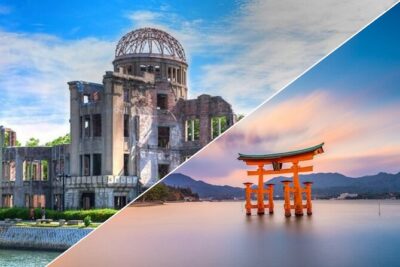
Hiroshima / Miyajima Full-day Private Tour with Government Licensed Guide
Our verdict →

5 Top Highlights of Kyoto Full Day Bike Tour (E-bike option)
Our verdict →
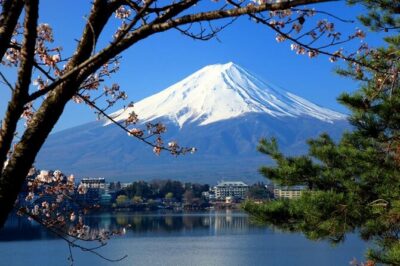
Mt. Fuji, Hakone Full-Day Private Tour with English Driver Guide
Our verdict →
Full Day Guided Tour to Kyoto and Nara from Osaka by Van
Our verdict →
Browse the lists this tour appears in