
Reviewed · SPA & HOT SPRINGS
Snowshoeing and Onsen Adventures in a Winter Wonderland -Sapporo.
The best part of this Sapporo outing is the quick change from subway platform to silent, snow-covered forest. Guide Chris leads a maximum group of five, providing snowshoes, poles, gaiters, route advice, and a safety briefing before you set off. The forest can feel far removed from the city, even though the trailhead is reached by a short private ride.
I like the small group and the gentle skill level. Chris adjusts the pace and route to the weather and your ability, which matters when snow depth and footing change. I also like the warm finish at Koganeyu Onsen, where tired legs get a proper soak. The main consideration is that this is still a mountain walk, not a stroll in a city park. Deep snow, steep sections, cold wind, and changing weather can make the outing harder than the 4/10 rating suggests.
Key points to know before booking
- Meet at Makomanai Station at 7:30am: You start on the south side of Sapporo, then ride about 30 minutes to the trailhead.
- Small groups change the feel: The maximum is five people, allowing Chris to adjust the pace, route, and advice.
- Equipment is supplied: Snowshoes, snow trekking poles, and gaiters are included.
- Lunch breaks up the trek: A lunch stop is included, with past outings featuring packed food, curry, hot cocoa, or a camp-style meal.
- Koganeyu Onsen finishes the day: Admission is covered, and Chris can explain basic onsen etiquette.
- Bring your own winter kit: Cold-weather clothing and suitable footwear are not included.
From Makomanai Station into the Hokkaido woods
Your morning begins at Makomanai Subway Station at 7:30am. This meeting point is useful if you are staying in central Sapporo because it is connected by public transportation, but you need to be ready early. Pickup is offered, yet the stated starting point is Makomanai, so confirm the exact arrangement before you set your alarm.
From the station, private transport takes about half an hour to the trailhead. That short ride matters. You do not spend the morning changing buses or trying to find a remote starting point with snowshoes strapped to your pack. Chris handles the transfer, then checks the equipment and explains how the day will work.
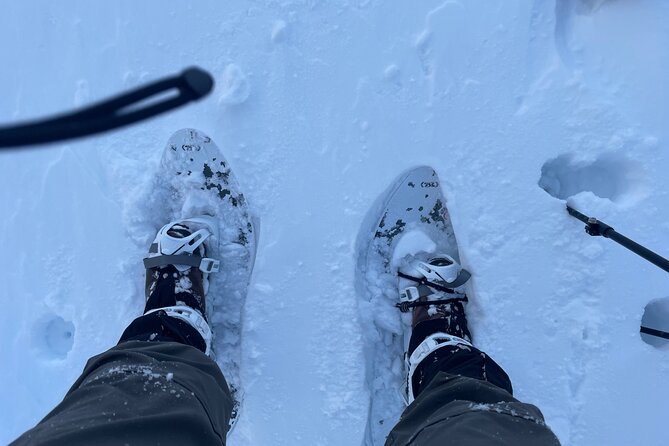
Before walking, you are fitted with snowshoes, poles, and gaiters. The gaiters help keep loose snow from filling your boots, while the poles give you extra balance on slopes and in soft powder. The safety talk is not filler. Chris points out how to handle uphill and downhill sections, and he changes the route when weather, snow, or footing calls for it.
More Winter Tours in Hokkaido
- Full Day Private Skiing / Snowboarding Tour in Sapporo
★ 5.0 · 30 reviews - Sapporo Winter : Asahiyama Zoo (Penguin Fun & Snowmobile)
★ 5.0 · 28 reviews - Snowshoe Hike Tour from Sapporo include hotel p/up & drop off
★ 5.0 · 16 reviews
Five hours of snowshoeing, not a quick photo stop
The trek is planned as a roughly five-hour circuit with lunch along the way. One outing covered about 6 kilometers, but the exact distance and summit goal can change. Snow conditions, fitness, and the weather all have a say.
I like this flexible approach. A fixed route can look fine on paper and be a poor idea after heavy snowfall or a sudden weather change. Chris has sometimes shortened a climb when conditions became difficult, and he has also taken small groups toward two peaks or a summit when the route and ability allowed.
The official difficulty is 4 out of 10. That makes the trip suitable for many people who can walk comfortably, including first-time snowshoers. Still, do not read the rating as effortless. Fresh powder makes every step more demanding than a firm summer trail. One outing stopped short of a summit because the climb was tougher than expected, while another reached a 532-meter peak.
Your best preparation is simple: walk at a steady pace, listen to the safety advice, and speak up if you need a break. Chris is praised for checking pace and adapting the outing rather than treating every group the same. That is especially useful if one person in your party is stronger or less confident than the others.
What makes the forest walk special
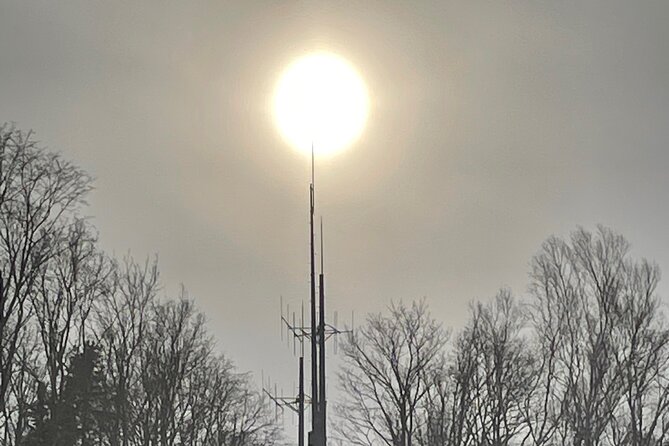
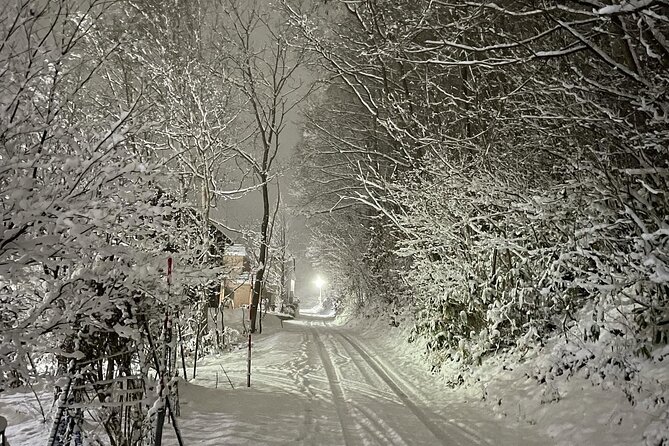
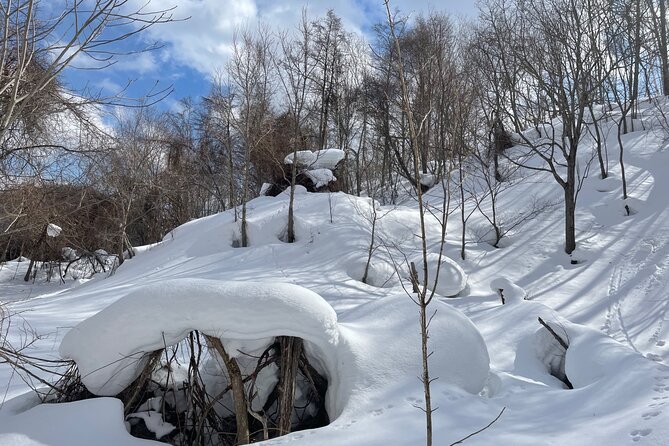
The appeal here is quiet. Once you leave the trailhead, the city drops away and the route leads through snow-heavy trees, open views, and powder that may be largely undisturbed. The point is not to race to a summit. It is to notice how winter changes the woods.
Depending on the route and conditions, you might see tracks from Japanese squirrels, raccoons, or foxes. You may also hear small birds in the bare branches. Chris has a good eye for Hokkaido trees and wildlife, and he uses pauses to point out local spruce and other northern species.
Those pauses are valuable. Snowshoeing can turn into a sweaty march if you focus only on reaching the top. Stopping to listen to birds, watch snow fall from branches, or study animal tracks gives the outing a slower, more local feel.
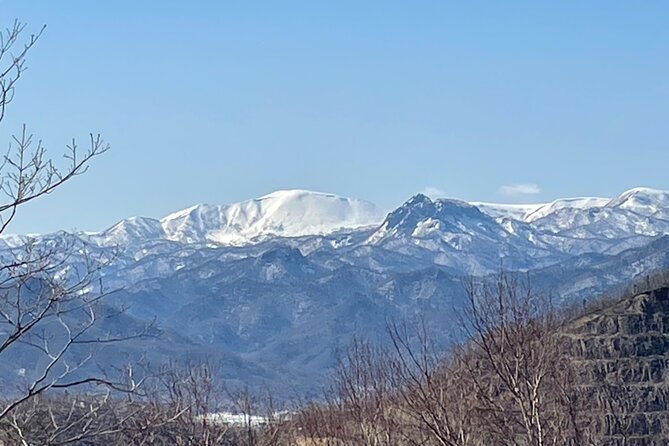
The views can be excellent, with forest, mountains, and lakes appearing between the trees. Yet weather is part of the deal. Snowfall can soften distant views, and wind can make a lunch stop cold. The reward is a winter setting that feels real rather than carefully staged for sightseeing.
Lunch in the snow
Lunch is included, but the exact setup can vary. Past outings have featured prepared meals, curry, hot cocoa, and food cooked with a camp stove. Some groups have eaten at a quiet trail spot, while heavy snowfall has made it more practical to return to the vehicle.
That variation is worth understanding before you book. This is not a restaurant lunch with a heated dining room. You may eat outside while wearing layers and standing or sitting in snow. On a cold day, the food and hot drink can taste excellent, but you need to keep moving and dress properly when you stop.
The lunch break also gives you a chance to recover before the return section. Snowshoeing uses more effort than ordinary walking, particularly on climbs and in soft snow. Bring water and any extra snack you prefer, since the supplied meal details are not fully fixed.
More Winter Tours in Sapporo:
- Penguin Fun & Snowmobile : Sapporo Winter (Asahiyama Zoo)
★ 4.8 · 14 reviews - 1-Day Snow Monkeys, Zenko-ji Temple & Sake in Nagano
★ 5.0 · 1,020 reviews - Nagano: Snow Monkeys, Zenkoji Temple & Sake Day Trip
★ 4.9 · 833 reviews - From Tokyo: Snow Monkey 1 Day Tour with Beef Sukiyaki Lunch
★ 4.6 · 295 reviews
Koganeyu Onsen is the right finish
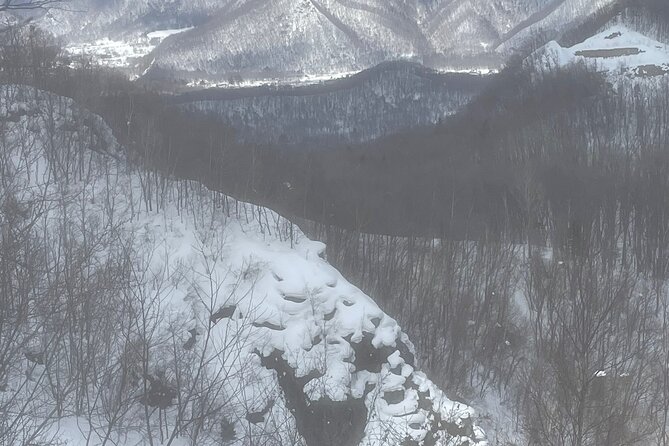
After the circuit, you return to the transport and head to Koganeyu Onsen. Admission is included, so you do not need to budget an extra entry fee. The change from cold boots and snow gear to hot water is one of the strongest parts of the experience.
If you have never used an onsen, Chris can explain the basic etiquette. You wash before entering the baths, keep towels out of the water, and follow the facility’s rules. This guidance is useful because the routine can feel unfamiliar at first.
The setting has been praised for attractive views, including a peaceful outlook toward a lake. You should not expect the onsen to feel like a private bath. It is a local bathing facility, and the appeal comes from using it as a natural part of a Japanese winter day.
The onsen choice can also be practical for people with tattoos. Tattoo policies vary widely in Japan, and Chris has helped arrange a suitable option for a heavily tattooed participant. Do not assume every facility will accept tattoos, but it is worth raising the issue before departure so the correct plan can be made.
Chris and the value of a tiny group
Chris is the guide named throughout this experience, and the strongest part of his role is personal attention. He communicates before the outing, gives clear meeting instructions, checks clothing and equipment, and adjusts the plan to the group.
His style is friendly without forcing constant conversation. You get explanations about trees, animals, and snow travel, but there is also room to enjoy the forest quietly. That balance is important on a nature outing.
A group limit of five is a real advantage. On a large coach excursion, the pace is usually set by the slowest person and the guide may have little time for individual help. Here, Chris can show you how to angle your feet on a slope, how to use poles, or how to move downhill without sliding.
The small group also makes the ride and lunch feel more relaxed. The tradeoff is that the experience depends more on the mix of people who book the same date. If you want a fully private outing, ask about that option before booking rather than assuming the five-person limit means private service.
Is $224.02 a fair price?
At $224.02 per person, this is not the cheapest way to see snow near Sapporo. The price becomes easier to justify when you add up what is handled for you: transport from Makomanai to the trailhead, snowshoes, poles, gaiters, guiding, safety advice, lunch, and onsen admission.
You also avoid buying winter equipment for one holiday. Snowshoes and gaiters are awkward items to rent or transport on your own, and choosing a safe route in deep snow takes local judgment. For a first snowshoe outing, the guide and equipment may be worth more than a lower-cost self-guided plan.
The value is strongest for you if you want a half-day nature experience with a local guide and a Japanese bath afterward. It is weaker if you already own snow gear, know the local trails, or only want a short snowy photo walk.
The published score is 5 out of 5 from 30 reviews, with 100 percent recommending the experience. Those numbers suggest a strong record, but they do not remove the practical limits. The activity is weather dependent, clothing is your responsibility, and a mountain route can feel strenuous even with a modest difficulty rating.
What to wear and pack
Cold-weather clothing is not included. You need warm layers, gloves, a hat, and clothing that can handle snow and movement. Wear hiking footwear made for cold or snowy conditions, since ordinary sneakers are not suitable.
You should also bring water, a small personal snack, and a dry layer if you tend to sweat. The provided gaiters help, but they do not replace proper winter footwear. If you wear glasses, a lens cloth can be useful in falling snow.
The onsen requires a change of mindset and clothing. Bring whatever personal items you need after the walk, and ask about tattoo rules in advance if relevant. Since lunch arrangements can vary, check whether you want to carry an extra snack for added security.
Who will enjoy this most?
This outing suits you if you want to get beyond Sapporo’s urban sights without committing to a technical mountain expedition. First-time snowshoers can learn the basics with an experienced guide, and people with moderate fitness can usually manage a route rated 4/10.
It is also a good choice for couples and small groups. One couple used the outing as an anniversary adventure, and the quiet forest, shared lunch, and onsen make the day feel more personal than a standard city tour.
You should think twice if you dislike cold weather, struggle with uneven ground, or want a guaranteed summit. The route can change, heavy snow can slow progress, and one group found the climb harder than expected. The flexibility is a strength, but it means you need to accept that the day may not follow a perfect postcard plan.
The activity is suitable for most people according to the supplied participation guidance, but no one should confuse that with zero exertion. Tell Chris about your pace and experience level before setting off. Good communication is the simplest way to make the day work.
Booking details and cancellation
You can cancel for a full refund up to 24 hours before the local start time. Changes or cancellations within 24 hours are not accepted for a refund.
The tour requires suitable weather. If poor conditions force cancellation, you are offered another date or a full refund. That policy is sensible for a snow activity, since safe transport and trail conditions matter more than keeping to a calendar.
Confirmation is provided at booking. The experience is near public transportation, begins at Makomanai Station, and uses mobile tickets. Group discounts may be available, so check the current price if you are booking for several people.
Should you book the Sapporo snowshoe and onsen day?
Book it if you want quiet Hokkaido scenery, a very small group, and a hot onsen after an active morning. The combination is the real draw. You get more than equipment rental and a marked trail, but you also avoid signing up for a serious mountaineering day.
Chris’s flexible guiding is especially useful for beginners, mixed-ability pairs, and anyone unsure how to move through deep snow. The included gear and transport add practical value, while Koganeyu Onsen gives the outing a satisfying Japanese finish.
Skip it if you need a guaranteed summit, dislike outdoor lunches, or do not want to buy and pack proper winter clothing. For everyone else, this is one of the more useful ways to trade Sapporo’s streets for Hokkaido forest without spending a whole expedition on logistics.
FAQ
Where does the snowshoeing tour begin?
The stated meeting point is Makomanai Subway Station in Minami Ward, Sapporo. The start time is 7:30am.
How long does the experience last?
The experience is advertised as approximately five hours. The snowshoe circuit itself is described as a five-hour route that includes a lunch stop, followed by transport to the onsen and return to Sapporo.
How many people can join the tour?
The maximum group size is five travelers. This allows the guide to adjust the pace and route more easily.
What equipment is included?
Snowshoes, snow trekking poles, and gaiters are included. Cold-weather clothing and suitable winter hiking footwear are not included.
Is lunch included?
Yes. Lunch is included as part of the outing. The exact format can vary, with past meals including packed food, curry, hot cocoa, and camp-style cooking.
What is the difficulty level?
The stated difficulty is 4 out of 10. Deep snow, slopes, and weather can still make the walk physically demanding.
Which onsen does the tour visit?
The listed onsen stop is Koganeyu Onsen. Admission is included in the tour price.
Can beginners join the snowshoeing trip?
Most people can participate, and first-time snowshoers are supported with equipment instruction and route guidance. You should still be comfortable walking in snow and on uneven ground.
What happens if bad weather cancels the tour?
You can choose a different date or receive a full refund if the experience is canceled because of poor weather. For your own cancellation, a full refund is available when you cancel at least 24 hours before the start time.
More Onsen & Hot Springs in Sapporo
- From Osaka: Himeji Castle, Arima Onsen & Mt. Rokko Day Tour
★ 4.6 · 339 reviews - Osaka: Nara and Uji Day Trip with Deer Park and Hot Spring
★ 4.4 · 302 reviews - From Tokyo: Private Tour to Fuji/Hakone – Onsen, Art, Nature
★ 5.0 · 116 reviews - Mt. Fuji, Hakone Private Tour from Tokyo – Onsen, Arts and Nature
★ 5.0 · 79 reviews
Just added around Sapporo
- Sapporo Walking Tour★ 4.9 · 17 reviews
- Sapporo TV Tower Admission Ticket★ 4.7 · 21 reviews
- Sapporo: The Indigenous Ainu People & Jozankei walking tour★ 4.9 · 25 reviews
- Sapporo: Furano Flower Sea & Biei Blue Pond Tour w/ Pickup★ 4.0 · 40 reviews
- Sapporo: Private Customized Guided Tour★ 4.9 · 30 reviews
- Sapporo: Furano Lavender & Biei Blue Pond Tour with Lunch★ 4.6 · 13 reviews
- Sapporo Highlights: Golden Route Morning Guided Walking Tour★ 4.9 · 16 reviews
- Sapporo: Custom Highlights and Hidden Gems Tour with a Local★ 4.9 · 21 reviews
Spa & Hot Springs, compared.
Nara and Uji Day Trip with Deer Park and Hot Spring
Our verdict →

Private Nagano 1-Day Tour:Snow Monkeys,Zenko-ji,Obuse,Sake,Onsen
Our verdict →
Tokyo: Mt Takao Tour with Ramen and Tattoo-Okay Hot Spring
Our verdict →
[Seasonal Limited] Mt. Fuji 5th Station &Hot Spring Day Tour
Our verdict →
Browse the lists this tour appears in