
Reviewed · CABLE CAR TRIPS IN MOUNT FUJI
Mt. Fuji Tours with Kawaguchi Lake Ropeway View English Speaking
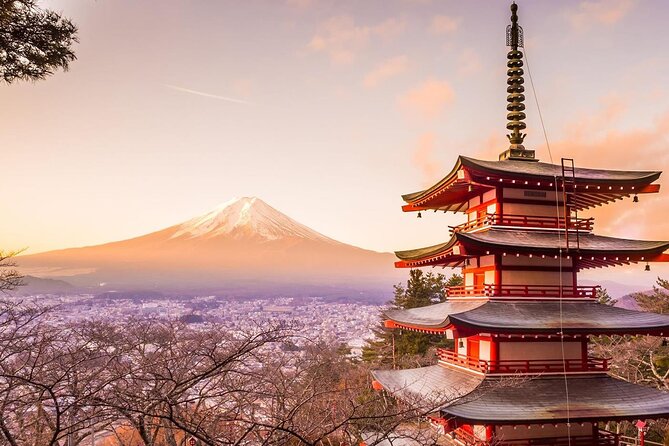
The payoff here is simple: on a clear day, you get several different views of Mt. Fuji instead of gambling everything on one lookout. The Lake Kawaguchi ropeway gives you a high view over the lake, while Oishi Park, the lakeshore, and Oshino Hakkai offer lower and more intimate angles.
I like the practical route from Tokyo, with fuel, tolls, transport, and a driver included. I also like the guides’ personal touch. Sawaki, Erina, Vivienne, Louis, and others are praised for clear English, good timing, helpful messages, and lively explanations. The catch is just as important: clouds can hide Fuji completely, and weekend traffic can turn a well-planned day into a rushed one.
Key points at a glance
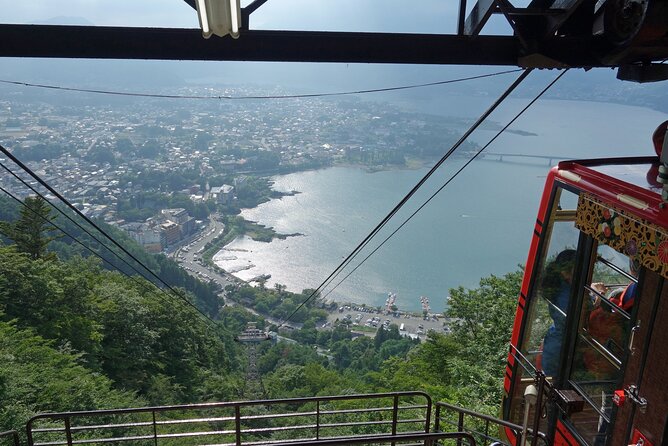
- Several Fuji viewpoints: The ropeway, Lake Kawaguchi, Oishi Park, and Oshino Hakkai give you more than one chance for a good photograph.
- A 10-hour Tokyo day trip: Transport, highway tolls, fuel, and the driver are included, saving you the work of arranging a complicated route.
- English-speaking guidance: Guides such as Sawaki and Erina have been praised for clear explanations, friendly help, and strong communication.
- Matcha with a shopping stop: The tea experience adds a small cultural touch, though some visitors find the nearby merchandise expensive.
- Weather matters greatly: Rain and low cloud may block Mt. Fuji, even when the rest of the tour goes ahead.
- Traffic affects the schedule: Avoid weekends and Japanese public holidays if you want more time at each stop.
What this Mt. Fuji day trip actually delivers
This is a sightseeing circuit, not a quiet mountain retreat. You leave central Tokyo, travel by road toward the Fuji Five Lakes area, and spend the day moving between scenic stops. The tour lasts about 10 hours, including driving time, so expect a full day rather than a short excursion.
At $81.41 per person, the price is fair for visitors who want transport handled from start to finish. You are paying for the vehicle, fuel, tolls, driver, and a ready-made route. Food, drinks, personal purchases, and accommodation are not included.
The main value is convenience. Getting from Tokyo to Lake Kawaguchi and Oshino Hakkai by public transport is possible, but it takes planning and careful timing. This tour removes that burden. In exchange, you give up some freedom and accept the pace set by the group.
The standard arrangement can hold up to 45 people. A small-group option offers hotel or accommodation pickup in some parts of Tokyo between about 7:00 and 8:30, with fewer people and a more comfortable vehicle. If you choose that option, send your hotel or bed-and-breakfast address after booking so the operator can confirm that it is within the pickup area.
More Cable Car Trips in Mount Fuji
- Tokyo: Mt. Fuji Tour, Hakone Ropeway, Owakudani, Lake Ashi
★ 4.7 · 4,002 reviews - Tokyo: Hakone Fuji Day Tour w/ Cruise, Cable Car, Volcano
★ 4.2 · 724 reviews - Tokyo: Mt. Fuji 5th Station, Kawaguchiko Tour w/ Cable Car
★ 4.5 · 570 reviews
The Lake Kawaguchi ropeway gives you the best first look
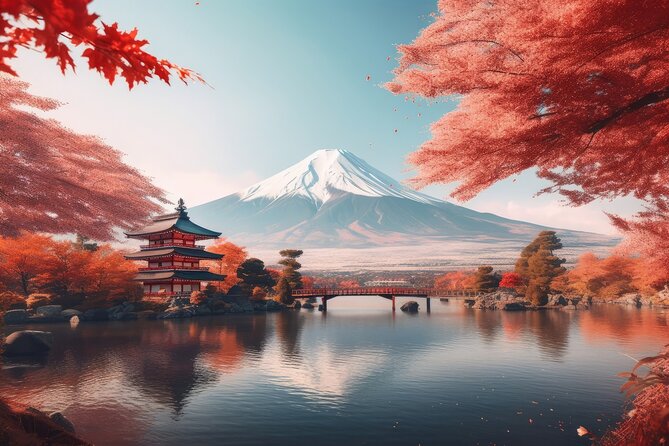
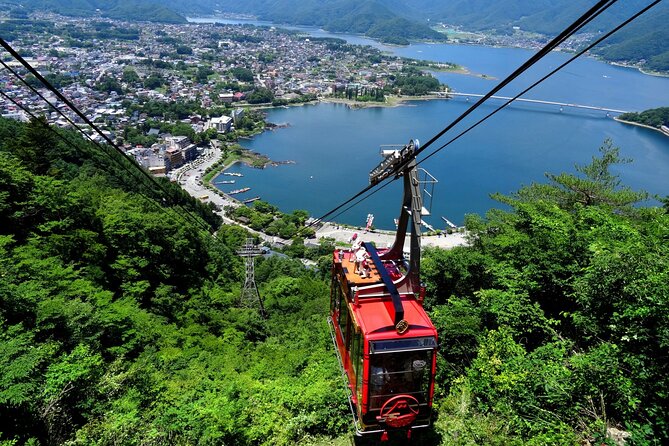
The Mt. Fuji Panoramic Ropeway, also called the Kachikachi Mountain Cable Car, is the tour’s headline stop. The gondola climbs above Lake Kawaguchi and reaches an observatory at altitude, giving you broad views over the lake and the surrounding area.
You get about 90 minutes for this part of the visit, and the ropeway admission is included. On a clear day, this is likely to be the strongest photographic stop of the day. You can see the lake below and, if the air cooperates, Mt. Fuji rising beyond it.
The ride itself is short, but queues can be long. The ropeway operates from 9:00 a.m. to 4:00 p.m. on weekdays, with the last descent at 4:20 p.m. On Saturdays, Sundays, and holidays, it runs until 5:00 p.m., with the last descent at 5:20 p.m.
Strong wind, lightning, or other poor conditions can stop the ropeway. If that happens, the schedule may switch to a Sengoku Warrior Boat ride on Lake Kawaguchi, or the ropeway ticket cost may be refunded. From December 10 through December 20, the gondola is scheduled for repair and the boat is used instead. If riding the gondola is essential to you, check the date carefully before booking.
Lake Kawaguchiko adds time beside the water
Lake Kawaguchiko sits at about 830 meters and covers roughly 5.7 square kilometers. The lake stop gives you a different feel from the ropeway. Instead of looking down from above, you can take in the water, shoreline, and mountain views at a slower level.
The listed time for the lake and cable car portion is about 90 minutes, though the exact balance depends on queues and traffic. This is one place where you should keep an eye on your watch. The itinerary covers a lot of ground, and delays earlier in the day can shorten later stops.
The lake is especially rewarding on a clear morning, when Fuji may appear reflected across the water. On a cloudy day, the lake still offers pleasant scenery, but the main reason for coming here is the mountain view. Bring a light jacket, since the higher elevation can feel cooler than Tokyo.
The matcha stop is cultural, brief, and partly commercial
At the Lake Kawaguchi Konohana Museum area, you get about an hour for a matcha experience. It is a small cultural pause in a day dominated by views and bus travel. You can expect an introduction to matcha and a chance to taste it, but do not picture a long tea-school lesson.
The tea portion can be shortened if traffic causes delays. Some visitors have found the actual serving brief, followed by time to browse nearby merchandise. That makes this stop more useful if you enjoy Japanese sweets, tea, and souvenirs than if you want a detailed ceremony.
Prices at scenic-area shops can be higher than in Tokyo supermarkets or ordinary local stores. I would treat the matcha stop as a pleasant extra, not the main reason to book the tour. You can enjoy the experience without buying anything.
Same trip, a completely different kind of day:
- Mt Fuji and Hakone 1-Day Bus Tour Return by Bullet Train
★ 5.0 · 26,383 reviews - Mt Fuji & Hakone Cruise, Drum Show Bullet Train 1 Day from Tokyo
★ 4.0 · 7,413 reviews - Tokyo Mt Fuji 5th St & Hakone Cruise Bus Tour w/Bullet Train
★ 4.4 · 5,024 reviews - From Tokyo: Mount Fuji Full-Day Sightseeing Trip
★ 4.5 · 4,970 reviews
Oishi Park is the prettiest relaxed pause
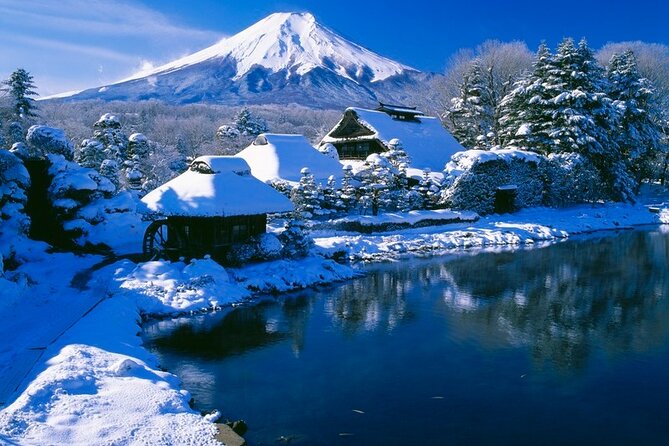
Oishi Park sits beside Lake Kawaguchi and is scheduled for about 30 minutes. It is known for seasonal flowers, especially lavender in summer, which creates a purple foreground against the lake and Mt. Fuji when visibility is good.
Thirty minutes is enough for photographs and a short walk, but not enough for a long garden visit. If you enjoy taking your time with plants, shops, or lakeside paths, this will feel short. If you have already spent much of the day on the road, the compact stop can be welcome.
The park is one of the places where bad weather changes the experience sharply. With Fuji visible, the view has real drama. With low cloud, you still have flowers and the lake, but the famous mountain backdrop disappears.
Oshino Hakkai feels more traditional than the lake stops
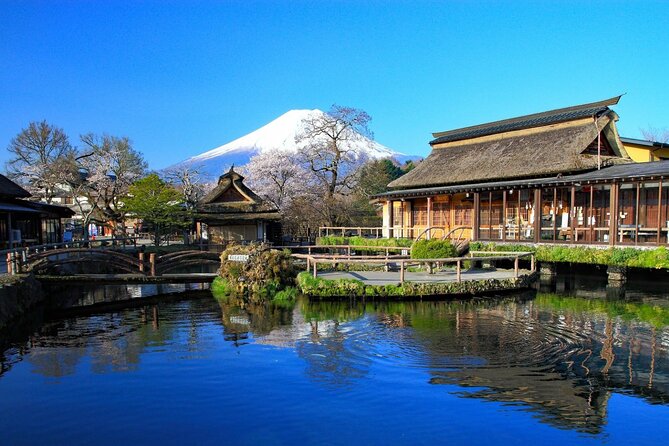
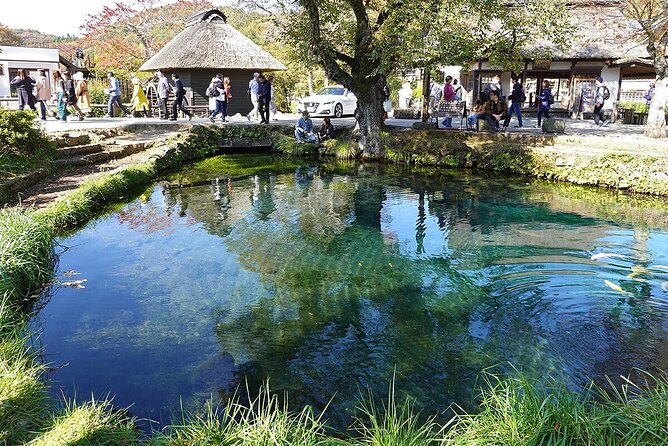
Oshino Hakkai is the final major attraction, with about an hour to explore. Its eight clear spring ponds are fed by snowmelt from Mt. Fuji. The water, old-style buildings, small paths, and food stalls create a more village-like setting than the polished viewpoints around Lake Kawaguchi.
This is often the stop where you most want extra time. The ponds are easy to enjoy at a walking pace, and the setting rewards looking beyond the main photo spots. You might find local snacks, souvenirs, and small shops around the site, but prices can vary.
The tour’s schedule does not allow for a long, unhurried visit. Traffic or ropeway queues may reduce the time available. Still, Oshino Hakkai provides welcome variety. You are not looking at the same type of view all day, and the springs offer a closer connection to the mountain’s water and local culture.
Guides can make the difference
The strongest part of this experience is often the person leading it. Sawaki has been praised for fluent English, Japanese, and Mandarin, along with humor, clear explanations, and careful timing. He has helped people find the vehicle, guided them back when they became disoriented, and used quizzes and small rewards to keep the bus ride lively.
Erina is also praised for fluent English, organization, and useful answers. Vivienne has helped people stay on schedule with messages during the day. Other guides named in feedback include Louis, Wanting Feng, Young, Joe, Brewski, Peter, Sia, and Niklas.
That list does not mean you can request a particular guide or expect the same style every day. It does show that guide quality is a major part of the product. A good guide can explain what you are seeing, help when pickup points are confusing, and keep the group moving without making every stop feel like a lecture.
Communication before departure is important. The night before, you should receive a reminder with the vehicle registration number, guide contact information, and pickup time. Save those details. Tokyo pickup areas can be crowded, with several tour vehicles and colored flags in the same place.
Traffic is the main practical risk
The road from Tokyo to Mt. Fuji can become heavily congested on weekends and Japanese public holidays. These holidays are often called red days because they appear in red on Japanese calendars.
Traffic causes more than a late arrival. It can reduce time at the ropeway, shorten the matcha experience, and make Oshino Hakkai feel rushed. The bus also has a maximum daily operating limit of 10 hours, so the guide cannot simply keep extending the day indefinitely.
If your schedule allows, choose a weekday that is not a public holiday. Start early, arrive at the pickup point before the stated time, and do not plan an important evening reservation immediately after the tour. The advertised duration is about 10 hours, but road conditions can affect the actual return time.
Some pickup locations are crowded and confusing. Look for the correct vehicle registration number rather than relying only on a flag or guide’s clothing. Keep the guide’s contact details available on your phone.
Weather decides how much you will enjoy the day
Mt. Fuji visibility is never guaranteed. Rain, haze, and low cloud can hide the mountain from every viewpoint. The rest of the itinerary may still run, but the central attraction will be missing.
Check the forecast and visibility outlook before choosing your date. If you have flexibility, select the clearest day available instead of automatically choosing the cheapest or most convenient date. A sunny day can produce views from almost every stop. A wet day can leave you with a pleasant lake, gardens, and village, but no Fuji.
The tour may be canceled because of poor weather, in which case you should be offered another date or a full refund. That is different from a tour operating in cloudy weather where Fuji simply cannot be seen.
What to bring and what not to bring
Wear comfortable shoes. You will walk around the park, village, lake areas, and ropeway facilities, often on uneven or crowded ground. Carry a jacket or rain layer because conditions around Lake Kawaguchi can differ from central Tokyo.
Bring breakfast or a substantial snack. Lunch and drinks are not included, and the meal timing may be around early afternoon. Do not assume an included restaurant meal, even though food options may be arranged or available during the day.
One piece of luggage per person is allowed, but this is a sightseeing day rather than a transfer service. Extra luggage may cost 100 Chinese yuan per piece if it was not declared or exceeds the allowance. A foldable stroller can be carried if you tell customer service when booking.
Keep your passport and valuables with you. Loss, theft, or damage is your responsibility.
Who gets the best value from this tour
This tour suits you if you are staying in Tokyo and want to see Mt. Fuji without renting a car, planning train connections, or working out a full Lake Kawaguchi route. It is also useful for first-time visitors who want the major sights covered in one day.
You will probably enjoy it most if you value variety and convenience over long visits at one location. The route gives you a ropeway, lake, park, tea experience, and spring-fed village in one outing.
It is less suitable if you dislike group schedules, shopping-oriented stops, or long bus rides. It is also a poor choice for a very tight evening plan, or if seeing Fuji clearly is the only reason you are willing to spend the money.
The small-group upgrade is worth considering if comfort and hotel pickup matter to you. The standard group can reach 45 people, and a larger group means more time spent gathering people at each stop.
Booking, cancellation, and final advice
You can cancel for a full refund up to 24 hours before the local start time. Changes or cancellations inside that window are not accepted for a refund. The tour also requires a minimum number of participants, so a cancellation by the operator should lead to another date, another experience, or a full refund.
I would book this tour if you want a simple, good-value introduction to the Mt. Fuji area and can choose a clear weekday. The ropeway, Oishi Park, and Oshino Hakkai make a strong mix, and a helpful guide can turn a long day into an enjoyable one.
I would skip it if you need a slow pace or have only one chance to see Fuji and cannot tolerate weather risk. In that case, wait for the best visibility forecast, avoid red days, and consider the small-group option. For most visitors with limited time in Tokyo, though, this is a practical way to cover a lot of ground without wrestling with the transport system yourself.
FAQ
How long does the Mt. Fuji tour from Tokyo last?
The tour lasts approximately 10 hours, including travel time between Tokyo and the Mt. Fuji area.
How much does the tour cost?
The listed price is $81.41 per person.
Is transportation included?
Yes. Vehicle service, fuel, tolls, highway tolls, and the driver service fee are included.
Is the Lake Kawaguchi ropeway ticket included?
Yes. The Kachikachi Mountain Cable Car admission is included when the gondola is operating.
What happens if the ropeway is closed?
The tour may replace the gondola with a Sengoku Warrior Boat ride on Lake Kawaguchi, or the ropeway ticket fee may be refunded.
Can I see Mt. Fuji in any weather?
No. Rain, cloud, and poor visibility can hide Mt. Fuji. Check the forecast before booking or choosing your travel date.
Is food included?
No. Food and drinks are not included in the listed tour inclusions. Bring breakfast or a snack, since the meal timing may be later in the day.
Are hotel pickups available?
Hotel or accommodation pickup is available only with the small-group option and only in some districts of Tokyo. You must provide your address so the operator can confirm coverage.
How large can the tour group be?
The tour can have a maximum of 45 participants. A small-group package is also available.
What is the cancellation policy?
You can cancel for a full refund at least 24 hours before the local start time. Cancellations or changes made less than 24 hours before departure are not accepted for a refund.
Just added around Mount Fuji
- Ramen Cooking Class at Lake Kawaguchiko (Short Course)★ 5.0 · 42 reviews
- Private Fuji Full-day Car Tour with Hotel Pickup -Local Guide★ 5.0 · 12 reviews
- Sushi Cooking Class at Sushi Factory -KIWAMI- Mt.Fuji★ 5.0 · 23 reviews
- Private Local Hiking to enjoy the nature and culture of Mt.Fuji★ 5.0 · 22 reviews
- Cute & Fun E-Car tour following guide around Lake Kawaguchiko★ 5.0 · 54 reviews
- Ramen Cooking Class at Ramen Factory in Mt.Fuji★ 5.0 · 101 reviews
- Fujisan Sushi Making Lesson★ 5.0 · 16 reviews
- Early Morning Kayaking With Views of Mt Fuji at Lake Kawaguchiko★ 5.0 · 69 reviews
Cable Car Trips in Mount Fuji, compared.
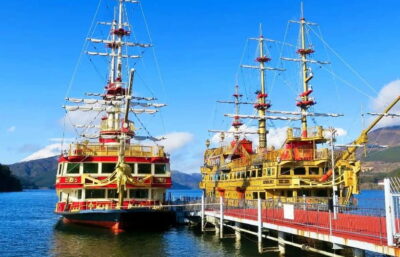
Mt. Fuji Tour, Hakone Ropeway, Owakudani, Lake Ashi
Our verdict →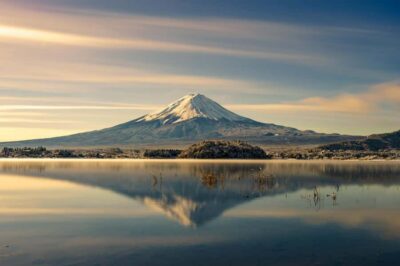
Mt. Fuji 5th Station, Kawaguchiko Tour w/ Cable Car
Our verdict →Browse the lists this tour appears in